
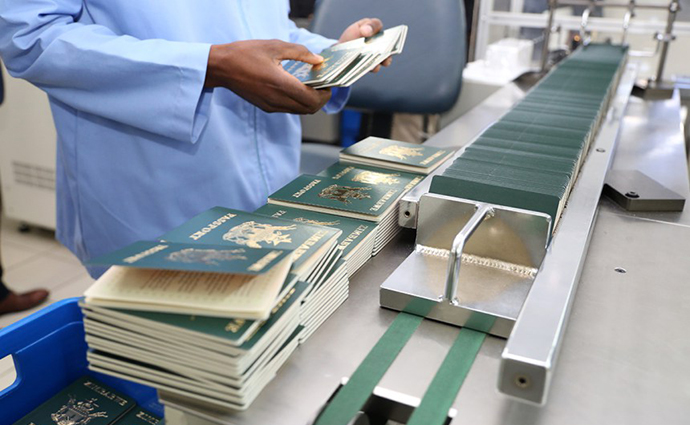
Zimbabwe Human Rights Commission: High Passport Fees Deny Freedom of Movement
Summary
- The Zimbabwe Human Rights Commission (ZHRC) argues that the US$170 passport fee is unconstitutionally high and the most expensive in the SADC region.
- The ZHRC notes the fee has more than tripled since 2020, making it unaffordable for many of the 6 million Zimbabweans living in extreme poverty.
- The commission contends that requiring foreign currency payment for passports violates Statutory Instrument 60 of 2024 and the Finance Act, 2024.
- High passport costs contribute to irregular migration and hinder diaspora remittances, according to the ZHRC.
- The ZHRC recommends fee reductions, cheaper passport options, concessionary pricing for vulnerable groups, and the right to pay in local currency.
Exorbitant Passport Fees Spark Human Rights Concerns
The Zimbabwe Human Rights Commission (ZHRC) has issued a policy brief asserting that the nation's high passport fees effectively deny citizens their constitutional right to freedom of movement.
The Zimbabwe Human Rights Commission (ZHRC) has issued a policy brief asserting that the nation's high passport fees effectively deny citizens their constitutional right to freedom of movement. An ordinary Zimbabwean passport currently costs US$170, while an emergency version is priced at US$270. This places Zimbabwe's passport among the most expensive in the Southern African Development Community (SADC) region, with an average ordinary 32-page passport in other SADC states costing approximately US$17.39. This makes Zimbabwe's fee roughly 878 percent higher than the regional average, significantly surpassing costs in neighboring countries like Zambia, where a 48-page booklet is US$18.21, or Eswatini, which charges US$16.10 for a similar document.
The ZHRC highlights a rapid escalation in these costs, noting that an ordinary passport was US$53 in 2020, indicating a more than threefold increase over six years. This surge in price disproportionately affects a population already facing severe economic hardship; the Zimbabwe Statistics Agency's 2019 mini poverty survey revealed that 6 million Zimbabweans, or 36.8 percent of the population, lived in extreme poverty, a rise from 4.5 million in 2017. While acknowledging improvements in service delivery, such as decentralization, digitization, and the introduction of e-passports that have reduced processing times to seven working days, the commission contends that this efficiency comes at an unaffordable price for most citizens.
Legal Challenges and Economic Repercussions
A significant point of contention raised by the ZHRC concerns the requirement for passport fees to be paid exclusively in foreign currency. Despite Zimbabwe operating a multi-currency system where both Zimbabwe Gold (ZWG) and US dollars are accepted for salaries, farm sales, and retail transactions, passport services remain an exception. The commission argues that this foreign currency-only mandate contravenes Section 6 of Statutory Instrument 60 of 2024 and Section 25 of the Finance Act, 2024, both of which establish ZWG as legal tender for all transactions.
Beyond the immediate financial burden, the ZHRC warns of broader economic and social consequences. The prohibitive cost of obtaining a passport is believed to push individuals towards irregular migration, exposing them to risks such as detention, financial exploitation, and physical assault. Furthermore, this barrier to legal travel could impede the flow of diaspora remittances, which the 2025 national budget had projected to reach US$2.51 billion this year, thereby impacting a vital source of foreign currency for the country.
Calls for Comprehensive Reform
In response to these concerns, the Zimbabwe Human Rights Commission has put forth five key recommendations to the government. These include advocating for a reduction in passport fees to levels comparable with other SADC nations, the introduction of a more affordable passport option with fewer than 48 pages for individuals who travel infrequently, and the implementation of concessionary pricing for vulnerable groups such as persons with disabilities and senior citizens. The commission also proposes lower fees for children's passports, which are currently priced the same as adult passports despite being valid for only five years, and crucially, the right for citizens to pay for these services in local currency. Mauritius, for instance, charges senior citizens, disabled individuals, and children approximately US$8.55 (Rs400), which is just over half the adult fee.
These recommendations are directed at various state entities. The Ministry of Home Affairs and Cultural Heritage is urged to implement fee reductions and introduce cheaper passport alternatives. The Ministry of Finance is called upon to scrutinize the cost drivers in the passport production process, consider subsidizing production, and increase budgetary support to the Civil Registry Department to lessen its reliance on passport fees for revenue. Additionally, Parliament's Portfolio Committee on Defence and Home Affairs and the Thematic Committee on Human Rights are encouraged to debate the proposed fee reductions.
Unaddressed Production Contract Background
The issue of who produces Zimbabwe's passports and under what terms has been a subject of public scrutiny in recent years, though the ZHRC's brief does not address it directly. In 2021, reports from ZimLive indicated that the government had selected the Belgian firm Semlex to produce biometric passports through a build-own-operate-transfer arrangement, bypassing a public tender process. Investigations by the Organised Crime and Corruption Reporting Project and Reuters had previously linked Semlex to allegations of bribes-for-contracts in several other countries.
At the time of this contract, an ordinary Zimbabwean passport cost US$60. Home Affairs Minister Kazembe Kazembe stated that the investor would “recoup from the revenue” generated. When questioned about potential price increases, he did not offer a firm guarantee, noting that prices would be “agreed by the ministry of finance and the investor” and that “citizens will be protected.” The current significant increase in passport fees has occurred since these assurances were made.
Practical Implications
Lawyers should note the Zimbabwe Human Rights Commission's legal arguments challenging the constitutionality of high passport fees and the legality of foreign currency-only payment under SI 60 of 2024 and the Finance Act 2024. This could set a precedent for challenging other government service fees or payment requirements, and lawyers may need to advise clients on potential legal avenues or compliance risks related to these issues.
Source
How does this affect you?
Get an AI analysis of this article grounded in your jurisdictions, practice areas, and any policy documents you've uploaded to Wansom.
Finish Reading the Full Story and the Expert Analysis.
Get the latest legal & regulatory intelligence in Zimbabwe
Wansom is AI and can make mistakes.