
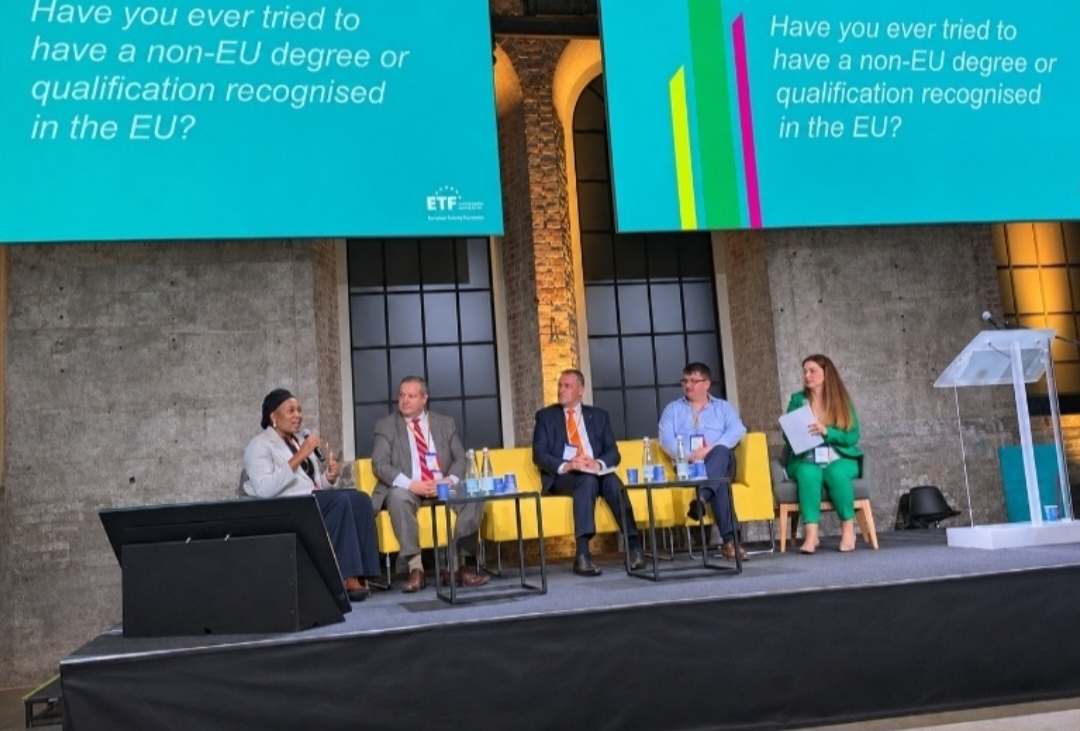
ZAQA: Urges Global Nations for Faster Qualifications Recognition in Zambia
Summary
- Zambia Qualifications Authority Director General Mercy Ngoma urged countries to expedite qualification recognition.
- This initiative aims to enhance skills mobility and prevent individuals from losing employment and study opportunities.
- Ngoma highlighted that current delays cause people to wait for decisions, hindering their progress.
- The Director General also called for stronger international cooperation to streamline the recognition process.
A Call for Expedited Recognition
Her remarks point to a systemic issue where bureaucratic hurdles can effectively sideline qualified professionals and students, preventing them from contributing their expertise or advancing their learning in new environments.
Mercy Ngoma, the Director General of the Zambia Qualifications Authority (ZAQA), has issued a strong appeal to nations globally, urging them to accelerate the process of recognizing academic and professional qualifications across borders. This plea underscores a critical need to enhance skills mobility, a key factor in global economic integration and individual career progression. Ngoma emphasized that current delays in this process are causing significant setbacks for individuals, often leading to the forfeiture of valuable employment and educational prospects.
The ZAQA Director General highlighted that prolonged waiting periods for qualification assessments directly impede individuals from pursuing their chosen paths, whether in the workforce or in higher education. Her remarks point to a systemic issue where bureaucratic hurdles can effectively sideline qualified professionals and students, preventing them from contributing their expertise or advancing their learning in new environments. This directly impacts the potential for ZAQA faster qualifications recognition Zambia.
Ngoma’s intervention also included a call for intensified international collaboration. She advocated for stronger cooperative frameworks among countries to streamline and standardize the recognition of qualifications, thereby mitigating the current challenges. Such cooperation is deemed essential to create a more fluid and responsive global system for assessing and validating credentials.
The Landscape of Cross-Border Qualification Assessment
The Zambia Qualifications Authority (ZAQA) plays a pivotal role within Zambia, tasked with ensuring the integrity and comparability of qualifications, both domestic and international. The process of evaluating foreign credentials involves a detailed assessment to determine their equivalence to Zambian standards, a task that is inherently complex due to varying educational systems and accreditation methodologies worldwide. This complexity often contributes to the very ZAQA qualification assessment delays that Director General Ngoma is seeking to address.
Recognizing professional qualifications across national boundaries is a multifaceted challenge, requiring careful consideration of curriculum content, learning outcomes, and quality assurance mechanisms in different jurisdictions. For individuals seeking to work or study in Zambia, or for Zambians looking to utilize their skills abroad, the efficiency of this recognition process is paramount. The current system, with its potential for extended waiting periods, can create significant barriers to entry for foreign-qualified individuals and hinder the outward movement of Zambian talent.
The call for faster recognition by the head of the Zambia Qualifications Authority cross-border initiatives reflects an understanding that these delays are not merely administrative inconveniences but have tangible economic and social costs. Expediting these assessments would not only benefit individual applicants but also contribute to a more dynamic and competitive labor market within Zambia, facilitating the integration of diverse skills and knowledge.
Driving Skills Mobility and Economic Growth
The push for swifter qualification recognition, championed by Mercy Ngoma, is fundamentally about fostering greater skills mobility. When individuals can readily have their qualifications acknowledged in new countries, it unlocks their potential to contribute to different economies and fill critical skill gaps. This fluidity is crucial for both developed and developing nations, allowing for a more efficient allocation of human capital globally.
The current situation, marked by ZAQA qualification assessment delays, means that many individuals are left in limbo, unable to secure employment or enroll in educational programs despite possessing relevant credentials. This not only represents a personal loss of opportunity but also a broader economic inefficiency, as valuable skills remain underutilized. The emphasis on Zambia professional qualification recognition is therefore not just a matter of fairness but a strategic imperative for national development.
By advocating for stronger cooperation and faster processes, ZAQA aims to create an environment where qualifications are recognized promptly, enabling individuals to transition seamlessly into new professional or academic roles. This proactive stance by the Zambia Qualifications Authority is designed to ensure that Zambia remains an attractive destination for skilled professionals and a country where its own citizens can easily leverage their qualifications internationally, ultimately bolstering economic growth and fostering a more interconnected global workforce.
Practical Implications
Lawyers advising clients on professional licensing, immigration, or employment of foreign-qualified individuals in Zambia should monitor ZAQA's efforts to expedite qualification recognition, as this could impact timelines and requirements for their clients seeking to work or study across borders. They should be prepared to advise on any new streamlined processes or advocacy efforts related to these delays.
Source
How does this affect you?
Get an AI analysis of this article grounded in your jurisdictions, practice areas, and any policy documents you've uploaded to Wansom.
Finish Reading the Full Story and the Expert Analysis.
Get the latest legal & regulatory intelligence in Zambia
Wansom is AI and can make mistakes.