
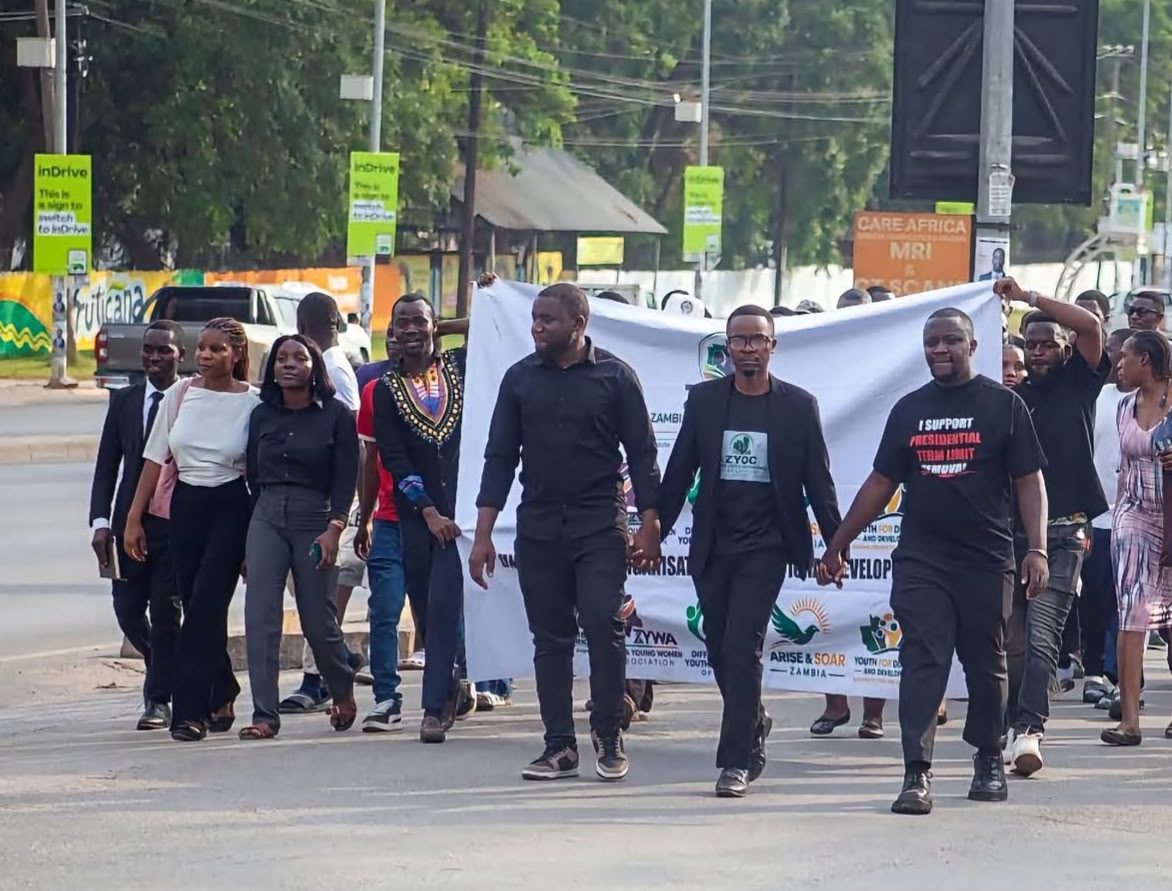
Zambia Police: Block Two Term Limit Protests Citing Public Security
Summary
- Zambian police have declined to authorize two planned protests for November 25, both concerning presidential term limits.
- One protest, organized by CSOs, opposed the removal of term limits.
- The other protest, by youths, advocated for the abolition of term limits.
- Police cited "security concerns" as the reason for prohibiting both demonstrations.
- The CSOs have formally requested that the police reconsider their decision.
What Happened
When protests address critical national issues like presidential term limits, the threshold for justifying a ban typically needs to be very high, supported by concrete and verifiable threats, rather than general apprehension.
Zambian police authorities have declined to authorize two distinct public demonstrations planned for November 25, both of which center on the contentious issue of presidential term limits. The planned gatherings, organized by separate groups with opposing viewpoints, were effectively blocked by law enforcement officials who cited concerns over public security as the primary justification for their decision.
One of the prohibited protests was initiated by a coalition of civil society organizations (CSOs), whose objective was to voice opposition to any potential move to remove existing presidential term limits within the country's constitution. Simultaneously, a separate group of young activists had planned their own demonstration for the same date, advocating for the complete abolition of these very term limits. Both events were consequently halted.
Following the police's directive, the civil society organizations involved in the anti-term limit protest formally requested that the authorities reconsider their decision. This appeal highlights the immediate challenge faced by advocacy groups seeking to exercise their right to public assembly on matters of significant national debate.
The Constitutional Debate
The issue of Zambia presidential term limits has long been a focal point of political discourse and constitutional debate within the nation. Such limits are typically enshrined in democratic constitutions to prevent the concentration of power, promote leadership renewal, and safeguard against potential authoritarian tendencies. The CSOs' planned protest underscored their commitment to preserving these constitutional safeguards, viewing their removal as a threat to democratic governance and stability.
Conversely, the youth group's advocacy for the abolition of term limits suggests a different perspective, potentially rooted in a desire for continuity of leadership or a belief that the electorate should have unfettered choice in selecting their head of state, irrespective of previous tenures. This divergence of opinion illustrates the deeply divided public sentiment surrounding the future of presidential tenure in Zambia, making any public expression on the matter particularly sensitive.
The police intervention, therefore, not only prevented public expression but also underscored the high stakes involved in discussions surrounding fundamental constitutional provisions. The ability of citizens to publicly debate and demonstrate on such critical issues is often seen as a cornerstone of a healthy democracy, and restrictions on such activities can raise questions about the state of freedom of expression and assembly.
Legal Framework and Police Powers
The actions taken by the Zambian police fall under the broader scope of police powers Zambia, particularly concerning the regulation of public gatherings. Authorities frequently invoke provisions of the Public Order Act Zambia to manage or prohibit demonstrations, often citing potential disruptions or, as in this instance, "security concerns." While the state has a legitimate interest in maintaining public order and safety, the application of such powers, especially in relation to constitutional matters, is often scrutinized for its impact on fundamental rights.
The reliance on "security concerns" as a blanket justification for a CSO protest ban Zambia raises important questions about the balance between state authority and the constitutional right to freedom of assembly Zambia. Legal experts often highlight that any restriction on this right must be necessary, proportionate, and non-discriminatory in a democratic society. When protests address critical national issues like presidential term limits, the threshold for justifying a ban typically needs to be very high, supported by concrete and verifiable threats, rather than general apprehension.
This scenario presents a significant challenge for civil society organizations and legal practitioners advising them. Lawyers must navigate a landscape where police powers are increasingly used to curtail public demonstrations, particularly those touching on sensitive constitutional reforms. This necessitates a strategic approach, potentially involving legal challenges to uphold assembly rights or guiding clients toward alternative, lawful avenues for expressing dissent or support.
Implications for Public Discourse
The decision by the police to block both demonstrations, regardless of their opposing viewpoints on Zambia presidential term limits, has broader implications for public discourse and the ability of citizens to engage in political processes. When avenues for peaceful assembly are curtailed, it can stifle public debate and limit the space for diverse opinions to be heard, particularly on issues as fundamental as the nation's governance structure.
The CSOs' immediate request for reconsideration underscores their commitment to exercising their rights and challenging what they perceive as an undue restriction. This response highlights the ongoing tension between state control over public spaces and the constitutional guarantees of freedom of expression and assembly. The outcome of their appeal, and similar future incidents, will be closely watched as an indicator of the state of civic freedoms in Zambia.
Practical Implications
Lawyers advising civil society organizations in Zambia should be aware of the police's increasing use of security concerns to block public demonstrations, particularly those related to constitutional matters like term limits. This development may necessitate legal challenges to uphold freedom of assembly rights or advise clients on alternative lawful avenues for expression.
Source
How does this affect you?
Get an AI analysis of this article grounded in your jurisdictions, practice areas, and any policy documents you've uploaded to Wansom.
Finish Reading the Full Story and the Expert Analysis.
Get the latest legal & regulatory intelligence in Zambia
Wansom is AI and can make mistakes.