
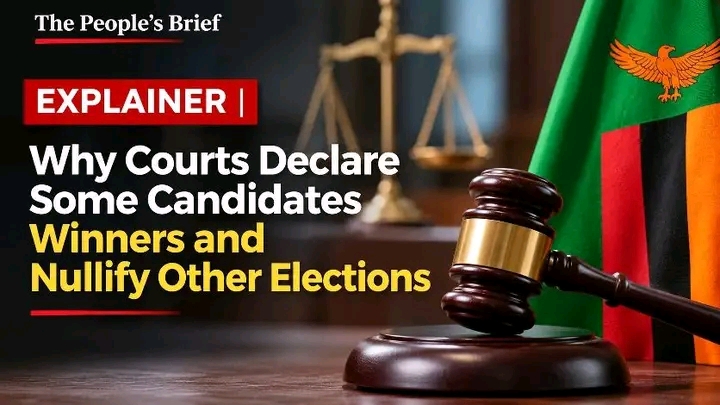
Zambian Courts: Explaining Election Petition Rulings and Nullifications
Following the August 2026 general election in Zambia, High Court judgments have led to public debate regarding why some parliamentary candidates are declared winners while elections in other constituencies are nullified, as reported by the Zambian Observer.
This issue is of profound legal significance as it directly impacts the integrity of the electoral process, public confidence in the judiciary, and the stability of the legislative branch. The judiciary's role in resolving electoral disputes is a cornerstone of democratic governance, and the perceived inconsistency in judgments can lead to questions about the application of electoral law. For practitioners, understanding the nuances of these rulings is crucial for advising political parties and candidates on electoral conduct and dispute resolution.
The legal context for these judgments is primarily the Electoral Process Act, the Constitution of Zambia, and established case law on electoral petitions. The High Court has original jurisdiction over parliamentary election petitions, with appeals typically heard by the Constitutional Court. The distinction between nullifying an election and declaring a runner-up as the winner often hinges on the specific nature of the electoral malpractice or non-compliance found. Nullification usually occurs when the irregularities are so pervasive that they affect the overall outcome or fairness of the election, while declaring a runner-up as winner might happen if the winning candidate was personally disqualified or committed specific, severe electoral offenses that render their victory invalid without necessarily tainting the entire election process.
The key parties involved in these matters are the High Court of Zambia, the Electoral Commission of Zambia (ECZ) as the body responsible for conducting elections, the various parliamentary candidates, and ultimately, the electorate whose votes are being adjudicated. The specific outcomes of these judgments, including which candidates were declared winners or which elections were nullified, are not detailed in the excerpt.
Attorneys specializing in electoral law must possess a comprehensive understanding of the Electoral Process Act, relevant constitutional provisions, and the evolving jurisprudence on election petitions. They need to advise political parties and candidates on the stringent requirements for conducting campaigns, the grounds for challenging election results, and the specific circumstances under which a court may nullify an election or declare an alternative winner. Monitoring these High Court judgments and subsequent appeals is essential for staying abreast of the judiciary's interpretation of electoral offenses, procedural irregularities, and the thresholds for different judicial remedies in electoral disputes.
How does this affect you?
Get an AI analysis of this article grounded in your jurisdictions, practice areas, and any policy documents you've uploaded to Wansom.
Finish Reading the Full Story and the Expert Analysis.
Get the latest legal & regulatory intelligence in Zambia
Wansom is AI and can make mistakes.