
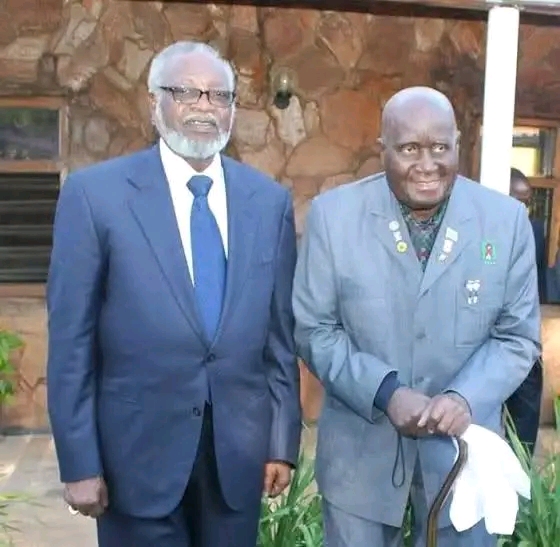
Zambia Court: Kenneth Kaunda Declared Stateless in 1999
Summary
- In March 1999, Zambia's founding President, Dr. Kenneth Kaunda, was declared stateless by a court.
- The court's decision was based on his parents' Malawian origin, challenging his Zambian citizenship.
- Kaunda's daughter, Catherine Kaunda, documented that he was denied assistance by the Zambian Embassy in Berlin while stranded in Austria.
- This case highlights how citizenship challenges based on ancestry can be politically motivated.
- The incident serves as a significant legal precedent regarding statelessness in Zambia.
The Declaration of Statelessness
This historical Kaunda citizenship challenge serves as a critical precedent within Zambian citizenship law history, illustrating how legal mechanisms can be employed in what many perceived as politically motivated contexts.
In a significant and controversial ruling in March 1999, Zambia's inaugural President, Dr. Kenneth Kaunda, was officially declared stateless. This extraordinary legal pronouncement stemmed from a court's challenge to his Zambian citizenship, which was predicated on the fact that both of his parents were of Malawian origin. The decision effectively stripped the nation's founding father of his nationality, creating a profound legal and personal crisis.
This judicial determination, which rendered Kenneth Kaunda stateless in Zambia in 1999, marked a pivotal moment in the country's post-independence history. Dr. Kaunda, who had led Zambia to independence and served as its first head of state for decades, suddenly found his fundamental right to nationality questioned and revoked based on his ancestral heritage. The court's focus on his parents' place of birth, rather than his extensive contributions and long-standing residency in Zambia, underscored the contentious nature of the ruling.
International Implications and Personal Impact
The immediate repercussions of this declaration were stark and far-reaching. According to published accounts by his daughter, Catherine Kaunda, the former president faced significant personal hardship. While stranded in Austria, the Zambian Embassy in Berlin, Germany, which held jurisdiction over Austrian affairs, reportedly denied him assistance, further exacerbating his predicament as a stateless individual. This denial highlighted the practical and often humiliating consequences of lacking official nationality.
The situation of Dr. Kenneth Kaunda's nationality being challenged and his subsequent statelessness created an international incident, drawing attention to the vulnerabilities even prominent figures can face when their citizenship is disputed. The denial of support by his own country's diplomatic mission underscored the severity of the court's ruling and its immediate impact on his ability to travel and function as a citizen.
Legal and Political Context
This historical Kaunda citizenship challenge serves as a critical precedent within Zambian citizenship law history, illustrating how legal mechanisms can be employed in what many perceived as politically motivated contexts. The case brought into sharp focus the interpretation of citizenship statutes, particularly concerning individuals with foreign parentage, even if they were born and lived their entire lives in Zambia. The declaration of statelessness for a figure of Dr. Kaunda's stature sent a powerful message about the potential for such challenges to be leveraged against prominent individuals, raising questions about the stability and security of citizenship for many Zambians.
The incident involving Dr. Kenneth Kaunda's Malawian origin citizenship in Zambia remains a significant case study for legal professionals. It underscores the importance of understanding the nuances of nationality laws and the potential for ancestral ties to become a basis for legal disputes, even decades after an individual has established deep roots and contributed significantly to a nation. This episode highlights how a legal declaration of statelessness can be used to target individuals, creating a complex and challenging legal landscape that demands careful consideration of both legal text and political realities. The "statelessness legal precedent Zambia" set by this case continues to resonate, reminding practitioners of the fragility of citizenship when subjected to judicial scrutiny based on lineage.
Practical Implications
This historical case highlights the potential for politically motivated challenges to citizenship based on ancestry in Zambia. Lawyers should be aware of this precedent when advising clients on citizenship matters, particularly those with foreign parentage, as it demonstrates how legal declarations of statelessness can be used to target prominent individuals.
Source
How does this affect you?
Get an AI analysis of this article grounded in your jurisdictions, practice areas, and any policy documents you've uploaded to Wansom.
Finish Reading the Full Story and the Expert Analysis.
Get the latest legal & regulatory intelligence in Zambia
Wansom is AI and can make mistakes.