
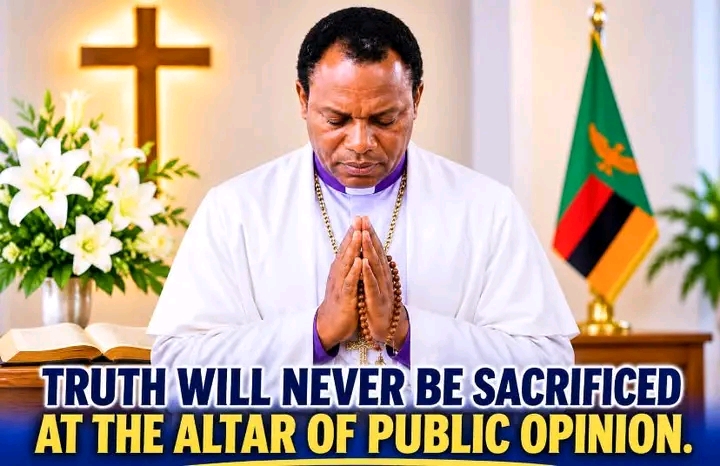
Zambia: Pastoral Reflection Questions Fr. Titus Malama Sande Arrest
Summary
- The Zambian Observer published a "Pastoral Reflection on the Arrest of Fr. Titus Malama Sande."
- The author stated they repeatedly reviewed reports and prayed over the legal proceedings involving Fr. Titus Malama Sande.
- The author conveyed that their "spirit refuses to settle" regarding the matter.
- The reflection explicitly states the author is "NOT convinced" and believes "Zambia should NOT be convinced either" about the legal proceedings.
- The author emphasized the need for clarity to prevent their words from being twisted.
The Published Reflection
A central tenet of the reflection is the author's unequivocal declaration of being "NOT convinced" regarding the circumstances or implications of the legal proceedings involving Fr. Titus Malama Sande.
The Zambian Observer recently featured a significant opinion piece titled "I AM NOT CONVINCED, AND ZAMBIA SHOULD NOT BE CONVINCED EITHER: A Pastoral Reflection on the Arrest of Fr. Titus Malama Sande." This article directly addresses the arrest of Fr. Titus Malama Sande in Zambia, presenting a deeply personal and spiritual perspective rather than a legal analysis of the events. The author explicitly states that their intention is to offer a pastoral reflection on the matter, signaling a focus on moral and spiritual implications.
The author details a thorough personal engagement with the subject, indicating that they have repeatedly reviewed the reports pertaining to the arrest of Fr. Titus Malama Sande. This diligent review process was complemented by a period of prayer, suggesting a profound spiritual consideration of the circumstances surrounding the case. The author conveys a strong sense of unease, noting that their "spirit refuses to settle" despite this extensive personal and spiritual deliberation.
The Author's Unwavering Stance
A central tenet of the reflection is the author's unequivocal declaration of being "NOT convinced" regarding the circumstances or implications of the arrest of Fr. Titus Malama Sande. This firm stance is not merely a personal doubt but is extended to a broader societal call, with the author asserting that "Zambia should NOT be convinced either." This suggests a belief that the public, like the author, should harbor significant reservations about the matter.
The author also emphasizes the importance of clarity in their communication, explicitly stating a desire to be "very clear" to prevent any misinterpretation or twisting of their words. This highlights the sensitivity of the subject and the author's intent to ensure their critical perspective on the arrest of Fr. Titus Malama Sande is understood precisely as intended, without distortion.
Nature of a Pastoral Reflection
This particular piece, framed as a "Pastoral Reflection," offers a distinct lens through which to view the legal proceedings involving Fr. Titus Malama Sande. Unlike a journalistic report or a legal brief, a pastoral reflection typically delves into the ethical, moral, and spiritual dimensions of an event, often from a faith-based perspective. It aims to guide thought and feeling within a community, rather than to present new factual evidence or legal arguments concerning Fr. Titus Malama Sande legal aspects.
The absence of new legal facts or actionable advice for legal professionals is a defining characteristic of this reflection. Its primary purpose is to articulate an opinion and a sentiment of unease, inviting readers to consider the broader human and spiritual implications of the Malama Sande case in Zambia. This approach underscores the article's role as a commentary on public perception and moral conviction, rather than a contribution to the legal discourse surrounding the Zambia priest arrest reflection.
Broader Implications of the Stance
The public expression of such strong reservations by a spiritual voice, particularly one published in The Zambian Observer, carries significant weight within the community. The author's refusal to be convinced about the legal proceedings involving Fr. Titus Malama Sande, coupled with the assertion that the nation should share this skepticism, can influence public discourse and perception. It signals a potential disconnect between official narratives and the moral convictions held by some segments of society.
This reflection, by foregrounding a deep-seated spiritual disquiet, implicitly calls for a deeper examination of the circumstances surrounding the Malama Sande case in Zambia. While not offering legal counsel, the piece serves as a moral compass, urging reflection on justice, truth, and the integrity of processes that lead to such arrests. The author's persistent questioning, even after extensive personal review and prayer, underscores the profound impact of this event on their spiritual and moral sensibilities.
Practical Implications
This article is a pastoral reflection on an arrest and does not contain new legal facts, precedents, or actionable advice for lawyers or compliance officers. It primarily expresses an opinion on the matter.
Source
How does this affect you?
Get an AI analysis of this article grounded in your jurisdictions, practice areas, and any policy documents you've uploaded to Wansom.
Finish Reading the Full Story and the Expert Analysis.
Get the latest legal & regulatory intelligence in Zambia
Wansom is AI and can make mistakes.