
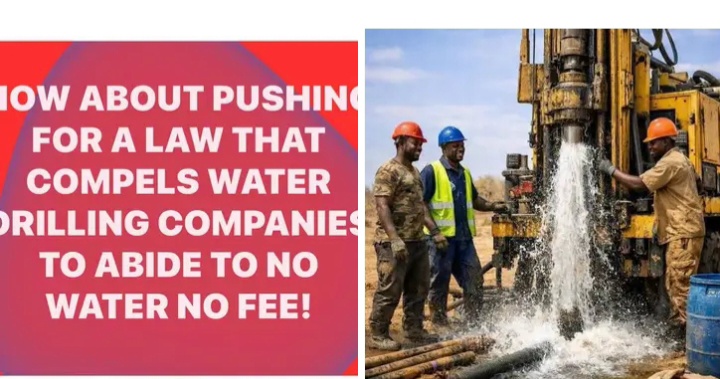
Dr. Larry Mweetwa: Advocates Zambia 'No Water, No Fee' Borehole Law
Summary
- Dr. Larry Mweetwa advocates for a "No Water, No Fee" borehole drilling law in Zambia.
- The proposed law aims to protect homeowners from paying for unsuccessful groundwater drilling.
- This initiative addresses the "dry hole injustice" experienced by residents in Lusaka, including Chelstone.
- It would shift the financial risk of dry boreholes from consumers to drilling contractors.
- The legislation seeks to enhance consumer protection in water drilling services across Zambia.
A Call for Consumer Protection in Water Drilling
Should a 'No Water, No Fee' borehole law be enacted in Zambia, it would fundamentally alter the operational landscape for drilling contractors.
Dr. Larry Mweetwa has publicly advocated for the implementation of a "No Water, No Fee" borehole drilling law within Zambia, a legislative proposal designed to fundamentally reshape the relationship between homeowners and drilling service providers. The core tenet of this proposed regulation is straightforward: drilling contractors would only be entitled to payment if their efforts successfully yield a viable and accessible groundwater source. This initiative aims to establish a robust framework for consumer protection water drilling Zambia, mitigating the financial risks currently borne by individuals seeking to establish independent water supplies.
This significant policy suggestion, championed by Dr. Larry Mweetwa, seeks to introduce a new standard for Zambian borehole drilling regulations. By shifting the financial burden of unsuccessful drilling from the consumer to the service provider, the law would compel companies to enhance their due diligence and operational efficiency. Such a change represents a pivotal development in groundwater access laws Zambia, directly addressing the contractual terms and service delivery expectations within the sector. It underscores a move towards greater accountability and outcome-based service provision for essential utilities.
Addressing the "Dry Hole Injustice" for Homeowners
The primary motivation behind this proposed legislation stems from persistent and widespread challenges encountered by ordinary homeowners across various communities in Lusaka. Residents in areas such as Chelstone, among others, frequently embark on groundwater drilling projects as a means to secure a reliable water source, only to face considerable financial outlays without the desired outcome. This common predicament, where significant investments are made into drilling operations that ultimately fail to locate water, has been characterized as a "dry hole injustice."
Under the current regulatory environment, homeowners often bear the entirety of the financial risk associated with unsuccessful drilling ventures. They are typically required to pay for the drilling services rendered, irrespective of whether a functional water supply is established. This leaves many individuals with substantial bills and, crucially, no access to water, highlighting a critical gap in existing consumer protection. The proposed "No Water, No Fee" law aims to rectify this imbalance, ensuring that the financial obligation of the consumer is directly tied to the successful provision of a water source, thereby safeguarding their interests against unproductive expenditures.
Legal and Operational Implications for the Industry
The potential enactment of a Zambia 'No Water, No Fee' borehole law would introduce profound changes to the operational landscape for drilling contractors throughout the country. Companies would be compelled to undertake a comprehensive re-evaluation of their business models, potentially necessitating increased investment in advanced hydrogeological surveys, geological assessments, and more sophisticated drilling technologies to minimize the risk of encountering dry boreholes. This legislative shift would introduce new liabilities, effectively requiring contractors to guarantee successful water provision rather than merely the drilling process itself, fundamentally altering their risk assessment and pricing strategies.
For legal professionals and compliance officers operating within Zambia, closely monitoring these legislative developments is paramount. The introduction of such a law would necessitate an immediate and thorough review of all existing service agreements, contracts, and operational protocols within the borehole drilling sector. Ensuring compliance with the new consumer protection standards would involve revising contractual terms to reflect the outcome-based payment structure and addressing potential disputes arising from unsuccessful drilling. This evolution in Zambian borehole drilling regulations is poised to foster a more transparent and accountable industry, ultimately benefiting consumers seeking reliable groundwater access.
Practical Implications
Lawyers and compliance officers should monitor legislative developments regarding 'No Water, No Fee' borehole drilling laws in Zambia, as their enactment would introduce new consumer protection liabilities for drilling contractors and necessitate a review of existing service agreements and contractual terms to ensure compliance.
Source
How does this affect you?
Get an AI analysis of this article grounded in your jurisdictions, practice areas, and any policy documents you've uploaded to Wansom.
Finish Reading the Full Story and the Expert Analysis.
Get the latest legal & regulatory intelligence in Zambia
Wansom is AI and can make mistakes.