
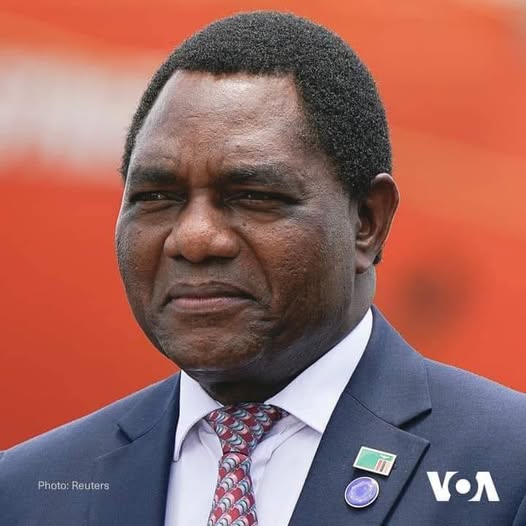
Zambia: HH Third Term Debate Sparks Democracy Inquiry
Summary
- An academic discussion is exploring the hypothetical scenario of Zambian President Hakainde Hichilema seeking a third term.
- This debate questions whether Zambia would remain a democracy if President Hichilema were to pursue an additional term.
- The inquiry delves into Zambia's definition of democracy and its historical attainability under past leaders like Kenneth Kaunda, Frederick Chiluba, and Levy Mwanawasa.
- The discussion is purely theoretical and does not suggest President Hichilema intends to seek a third term.
Exploring a Hypothetical Third Term
The central question posed by this academic exploration is whether Zambia would cease to function as a democracy if such a scenario were to unfold.
The prospect of Zambian President Hakainde Hichilema, currently serving his second term, seeking a third term in office has become a subject of academic inquiry, prompting a broader discussion on the nation's democratic principles. This discourse is purely speculative, framed as an intellectual exercise to appreciate the complexities of Zambia presidential term limits and HH presidential eligibility Zambia, rather than an assertion about President Hichilema's actual intentions. The central question posed by this academic exploration is whether Zambia would cease to function as a democracy if such a scenario were to unfold.
This hypothetical Zambia HH third term debate serves as a lens through which to examine the robustness of the country's constitutional framework and its commitment to democratic governance. It encourages a deep dive into the foundational understanding of democracy within the Zambian context, probing whether its ideals are fully attainable or if they remain an aspirational goal. The academic nature of this discussion underscores its role in theoretical analysis rather than immediate political forecasting.
Historical Precedents and Democratic Evolution
To fully grasp the implications of a potential third term for President Hichilema, the academic discussion often draws parallels with Zambia's past presidential tenures. The nation's democratic journey has seen various leaders at the helm, each contributing to or challenging the evolving understanding of Zambian constitutional democracy. Questions are frequently raised about whether a complete democratic state was achieved under previous presidents, including Kenneth Kaunda (KK), Frederick Chiluba (FTJ), and Levy Mwanawasa.
These historical references provide a critical backdrop for the contemporary Zambia HH third term debate, highlighting that the nation's democratic identity has been a continuous process of definition and redefinition. The experiences under these former leaders offer valuable context for evaluating how presidential power and term limits have been perceived and managed throughout Zambia's post-independence history, informing the current theoretical examination of Hakainde Hichilema third term eligibility.
Defining Democracy in Zambia
At the heart of the academic inquiry into a hypothetical third term for President Hichilema lies a fundamental question: what constitutes democracy within the specific context of Zambia? This query is not merely rhetorical but seeks to understand the inherent characteristics and expectations that define the country's democratic system. The discussion probes whether the ideals of democracy are fully achievable in Zambia, or if practical realities often lead to compromises that test the boundaries of its democratic framework.
The exploration of Zambian constitutional democracy in relation to Zambia presidential term limits compels a re-evaluation of the nation's core political values. It asks whether the continuation of a leader beyond established norms would fundamentally alter the democratic character of the state, or if democracy is defined by a broader set of principles that might accommodate such a development under certain conditions. This intellectual exercise is crucial for understanding the resilience and adaptability of Zambia's political system.
The Broader Academic Significance
The ongoing academic discussion surrounding a potential Hakainde Hichilema third term is significant not because it predicts future political actions, but because it stimulates critical thinking about Zambia presidential term limits and the future of Zambian constitutional democracy. It serves as a vital exercise in political theory, encouraging scholars and citizens alike to consider the long-term implications of leadership tenure on national governance and democratic health. The debate explicitly avoids asserting President Hichilema's desire for an extended term, maintaining its focus purely on theoretical exploration.
This intellectual engagement underscores the importance of continuous scrutiny of democratic institutions and norms. By posing challenging questions about HH presidential eligibility Zambia in a hypothetical scenario, the academic community contributes to a deeper understanding of the constitutional safeguards and societal expectations that underpin Zambia's political system. The value lies in the rigorous examination of principles, rather than in forecasting political outcomes.
Practical Implications
This article is a speculative, academic discussion about hypothetical presidential term limits in Zambia and does not present any immediate practical legal implications or actionable advice for lawyers or compliance officers.
Source
How does this affect you?
Get an AI analysis of this article grounded in your jurisdictions, practice areas, and any policy documents you've uploaded to Wansom.
Finish Reading the Full Story and the Expert Analysis.
Get the latest legal & regulatory intelligence in Zambia
Wansom is AI and can make mistakes.