
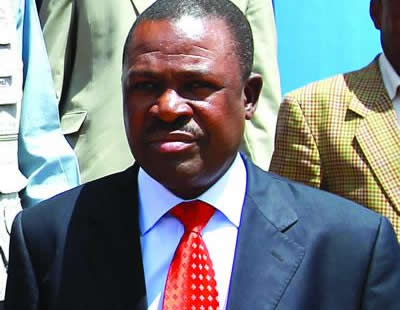
Zambia Government: Mundubile Treason Case Won't Affect Tenure
Summary
- Chief Government Spokesperson Elvis Nkandu stated the UPND government's power is tied to national issue delivery, not court cases.
- Nkandu's remarks were a direct response to comments made by former Justice Minister Wynter Kabimba.
- The discussion centered around the political implications of the high-profile Mundubile treason case.
- The government aims to show its focus remains on governance and addressing national challenges, rather than being defined by legal proceedings.
Government's Stance on Political Longevity
Instead, he emphasized that the administration's longevity and public mandate are intrinsically linked to its effectiveness in addressing the critical challenges confronting the nation.
Chief Government Spokesperson Elvis Nkandu recently articulated the UPND government's position on its continued tenure, asserting that its stay in power is not contingent upon the outcomes of various court cases. Instead, he emphasized that the administration's longevity and public mandate are intrinsically linked to its effectiveness in addressing the critical challenges confronting the nation. This declaration underscores a strategic focus on governance and public service as the primary determinants of the government's stability.
Mr. Nkandu's statement was a direct response to earlier remarks made by former Justice Minister Wynter Kabimba. While the specifics of Mr. Kabimba's comments were not detailed, the government's prompt public counter-statement indicates the sensitivity surrounding political discourse that touches upon judicial proceedings, particularly in the context of high-profile cases like the Mundubile treason case. The exchange highlights an ongoing political dialogue in Zambia regarding the interplay between legal processes and governmental legitimacy.
Political Commentary and Judicial Independence
The remarks from Chief Government Spokesperson Elvis Nkandu serve as a significant political statement, aiming to delineate the boundaries between judicial processes and the government's political standing. By asserting that the administration's fate rests on its performance rather than court judgments, the government seeks to manage public perception and insulate itself from suggestions that its stability could be undermined by ongoing legal battles. This approach is crucial in maintaining public confidence and demonstrating a clear focus on its mandate.
Wynter Kabimba, a prominent figure and former Justice Minister, had offered observations that prompted this official government response. The context of these remarks, specifically concerning the Mundubile treason case, illustrates how legal proceedings involving political figures can become subjects of intense public scrutiny and partisan interpretation. The government's communication strategy, as demonstrated by Nkandu, aims to project an image of resilience and unwavering dedication to national development, irrespective of the political noise generated by court cases.
Why This Matters
The government's explicit stance, articulated by Elvis Nkandu, carries considerable weight for several reasons. It reinforces the administration's commitment to governance and public service, attempting to manage public expectations and perceptions by ensuring the government is seen as focused on its core responsibilities rather than being distracted or defined by legal challenges. This framing is essential for maintaining a narrative of stability and progress amidst a dynamic political landscape.
Furthermore, the response to Wynter Kabimba's remarks regarding the Mundubile treason case highlights the broader political climate in Zambia, where high-profile legal proceedings often intersect with political commentary. The government's emphasis on delivering on pressing national issues, rather than being swayed by the outcomes of court cases, underscores its strategy to anchor its legitimacy in tangible achievements for the populace. This approach is vital for any UPND government court cases Zambia might face, as it seeks to demonstrate its unwavering commitment to its mandate.
Practical Implications
This article reports on political commentary regarding a high-profile treason case, rather than a legal development in the case itself. While lawyers should be aware of the political climate surrounding significant legal proceedings, this specific report offers no direct actionable legal implication, new precedent, or compliance exposure.
Source
How does this affect you?
Get an AI analysis of this article grounded in your jurisdictions, practice areas, and any policy documents you've uploaded to Wansom.
Finish Reading the Full Story and the Expert Analysis.
Get the latest legal & regulatory intelligence in Zambia
Wansom is AI and can make mistakes.