
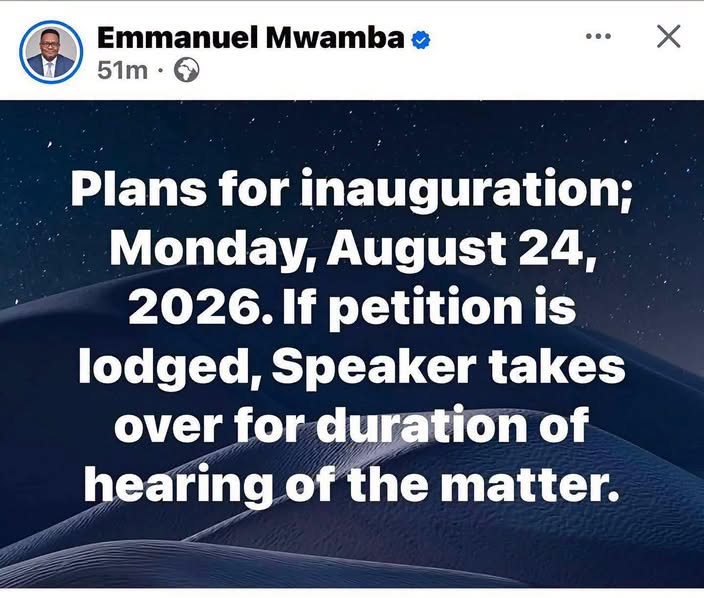
Shamoba: Zambia Election Petition Does Not Cancel, Clarifies Law
Summary
- Shamoba clarified that a presidential election petition in Zambia does not automatically cancel an election.
- There is a recognized need to educate the public on the Constitution of Zambia's provisions regarding election petitions.
- The current situation involves unnecessary confusion and misleading citizens about the effect of such petitions.
- A presidential election petition is a constitutional mechanism designed for challenging results, not for immediate nullification.
Clarifying the Legal Position on Election Petitions
A recent clarification from Shamoba underscores a critical point regarding the Zambian electoral process: the filing of a presidential election petition does not automatically lead to the cancellation of an election.
A recent clarification from Shamoba underscores a critical point regarding the Zambian electoral process: the filing of a presidential election petition does not automatically lead to the cancellation of an election. This insight aims to dispel widespread misunderstandings and provide a precise understanding of the legal framework governing such challenges within Zambia's constitutional democracy. The statement directly addresses a perceived need for greater public education on the actual provisions of the Constitution of Zambia concerning presidential election petitions.
Shamoba's intervention highlights that the mere act of challenging election results through a petition does not, by itself, halt or nullify the electoral outcome. This distinction is crucial for maintaining stability and clarity in the post-election period. The emphasis is on educating citizens correctly, countering any narratives that might suggest an immediate voiding of results upon the submission of a petition. This clear stance on the Zambia election petition does not cancel principle is vital for all stakeholders, including political parties, legal practitioners, and the general public.
The clarification serves as a direct response to what has been identified as unnecessary confusion and the potential for misleading citizens regarding the immediate effect of a presidential election petition. By asserting that a petition does not cancel an election, Shamoba aims to ground public discourse in the actual legal provisions, ensuring that expectations align with constitutional realities. This focus on accurate information is paramount for the integrity and understanding of Zambia's democratic processes.
The Constitutional Mechanism for Electoral Disputes
At its core, a presidential election petition in Zambia is established as a constitutional mechanism. This means it is a legally sanctioned process, enshrined within the nation's supreme law, designed to allow for the formal challenge of presidential election results. However, its designation as a mechanism implies a structured process for review and adjudication, rather than an automatic trigger for election nullification Zambia law. The purpose of this constitutional provision is to provide a legal avenue for redress and to ensure the legitimacy of the electoral outcome through judicial scrutiny, not to create an immediate state of electoral limbo.
The existence of such a mechanism is a cornerstone of democratic accountability, offering a pathway for grievances to be heard and evidence to be presented before a competent court. This structured approach ensures that any challenge to the Zambian presidential election petition effect is handled with due process and according to established legal principles. It reinforces the idea that while the right to petition is fundamental, its exercise operates within defined legal boundaries that do not include the automatic cancellation of an election.
Understanding this constitutional mechanism election Zambia is essential for comprehending the true impact and limitations of electoral challenges. It clarifies that the process is about seeking a judicial determination on the validity of an election, not about unilaterally overturning results. This distinction is particularly important for lawyers advising political clients, as it dictates the scope and potential outcomes of any electoral dispute.
Addressing Misinformation and Public Understanding
The impetus behind Shamoba's Zambia election petition clarification stems from a recognized need to combat misinformation that can create unnecessary confusion among the populace. The public's understanding of electoral law is critical for maintaining confidence in democratic institutions and processes. When citizens are misled about the immediate consequences of a presidential election petition, it can lead to unwarranted speculation, anxiety, and even unrest.
Providing accurate information about the legal effect of a petition is therefore not merely an academic exercise but a practical necessity for civic education. It ensures that public discourse around election results and subsequent legal challenges is informed by facts rather than conjecture. The clarification that a petition does not cancel an election directly addresses the potential for misinterpretation of constitutional provisions, reinforcing the stability of the electoral framework.
This emphasis on correct education is vital for fostering a mature democratic environment where legal processes are respected and understood. By clarifying that election nullification Zambia law is not an automatic consequence of a petition, Shamoba contributes to a more informed citizenry, capable of distinguishing between a legal challenge and an immediate invalidation of election results. This clarity is indispensable for the peaceful and orderly progression of post-election affairs.
Practical Implications
This clarification is crucial for lawyers advising political clients or involved in electoral disputes in Zambia, ensuring they provide accurate counsel on the immediate legal implications and limitations of filing a presidential election petition, particularly regarding the continuation of the electoral process.
Source
How does this affect you?
Get an AI analysis of this article grounded in your jurisdictions, practice areas, and any policy documents you've uploaded to Wansom.
Wansom is AI and can make mistakes.