
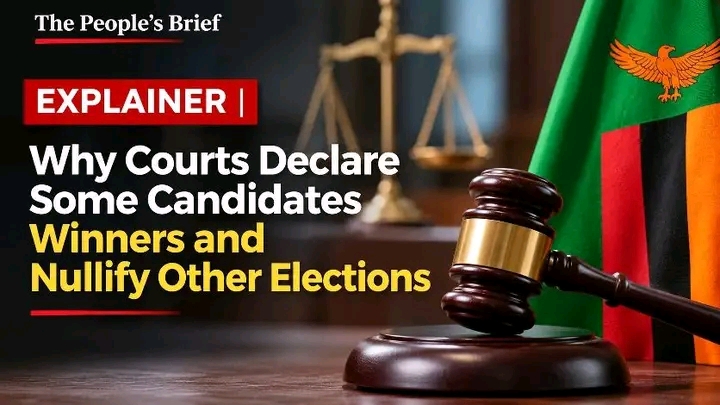
Zambian High Court: Election Petition Decisions Declare Winners, Nullify Polls
Summary
- Following Zambia's August 2026 general election, the High Court has issued multiple judgments on parliamentary petitions.
- These rulings have resulted in two distinct outcomes: declaring some candidates as winners and nullifying elections in other constituencies.
- The varied nature of these Zambian High Court election judgments has sparked considerable public debate.
- Questions have arisen regarding why judges sometimes declare winners instead of ordering new elections, impacting electoral dispute resolution Zambia.
Judicial Review Following the August 2026 Polls
The dichotomy in these judicial pronouncements—between declaring a winner and nullifying an election—has become a central point of public discourse and scrutiny regarding the country's electoral dispute resolution mechanisms.
The Zambian High Court has been actively engaged in adjudicating numerous electoral petitions stemming from the general election held in August 2026. These post-election legal challenges have resulted in a series of judgments that have drawn significant public attention and discussion. A notable pattern emerging from these rulings is the High Court's varied approach to resolving disputes concerning parliamentary constituencies. In some instances, the court has proceeded to declare specific candidates as the rightful winners of their respective parliamentary seats. This direct declaration effectively bypasses the need for further electoral processes in those particular areas.
Conversely, in other parliamentary constituencies, the High Court has opted for a different resolution, issuing judgments that nullify the entire election outcome. Such nullifications necessitate a complete rerun of the electoral process in the affected constituencies, requiring voters to return to the polls to elect their representatives anew. The dichotomy in these judicial pronouncements—between declaring a winner and nullifying an election—has become a central point of public discourse and scrutiny regarding the country's electoral dispute resolution mechanisms.
The High Court's Role in Electoral Dispute Resolution
The High Court of Zambia plays a critical role in upholding the integrity of the electoral process by serving as the primary arbiter of disputes arising from general elections. Following the August 2026 polls, its judgments have underscored the judiciary's power to intervene decisively in contested parliamentary results. These decisions, which have included both the affirmation of certain candidates as winners and the invalidation of entire electoral exercises, reflect the court's responsibility to interpret electoral law and ensure compliance with established procedures. The ongoing stream of judgments highlights the robust nature of Zambia's post-election legal challenges framework.
The specific criteria that guide the High Court in determining whether to declare a candidate a winner or to nullify an election entirely have become a subject of considerable public interest and debate. While the court's mandate is clear in resolving electoral disputes, the application of these principles in practice has led to questions among the populace. The public discourse often centers on understanding the precise legal thresholds and evidentiary standards that lead to such divergent outcomes, particularly when considering the implications for electoral stability and voter confidence.
Public Scrutiny and Electoral Integrity
The series of judgments delivered by the Zambian High Court in the wake of the August 2026 general election has ignited a significant public debate, with many citizens and observers questioning the rationale behind the differing judicial outcomes. A key point of contention revolves around why judges, in certain cases, choose to declare a candidate as the duly elected representative, while in other, seemingly similar situations, they opt to nullify the election altogether, thereby mandating a fresh poll. This questioning underscores a broader desire for transparency and predictability in the application of electoral law.
The public's engagement with these decisions reflects a keen interest in the principles governing electoral nullification criteria and the process by which election winners are declared in Zambia. The perceived inconsistency, or at least the lack of clear public understanding regarding the distinctions, has fueled discussions about the robustness and fairness of the electoral dispute resolution system. For the integrity of future electoral processes and to maintain public trust, a comprehensive understanding of the legal basis for these varied High Court judgments is paramount, addressing the concerns raised by the ongoing public discourse.
Practical Implications
Lawyers advising political clients or involved in electoral disputes in Zambia must understand the High Court's criteria for nullifying elections versus declaring candidates as winners, as these decisions significantly impact electoral outcomes and legal strategy.
Source
How does this affect you?
Get an AI analysis of this article grounded in your jurisdictions, practice areas, and any policy documents you've uploaded to Wansom.
Finish Reading the Full Story and the Expert Analysis.
Get the latest legal & regulatory intelligence in Zambia
Wansom is AI and can make mistakes.