
Zambian Constitutional Court: Confirms K501 Presidential Petition Fee
Summary
- The Zambian Constitutional Court Rules mandate that all required documents will not be accepted by the Registry unless the prescribed fee is paid.
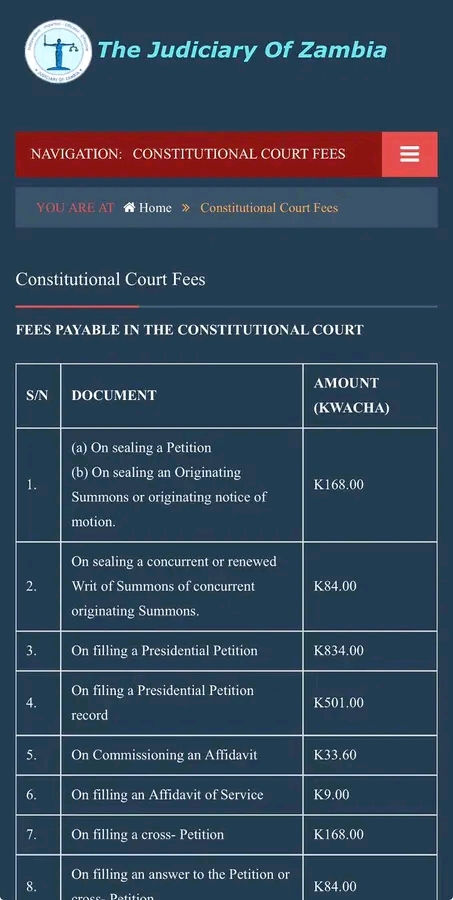
- An ordinary petition in Zambia costs K168.00 to file.
- A Presidential Petition in Zambia carries a filing cost of K501.00.
- Strict adherence to these filing fees is crucial, as non-payment leads to document rejection by the Registry.
- The K501.00 Zambian Presidential Petition fee is a non-negotiable prerequisite for formal acceptance of electoral challenges.
Clarifying Petition Filing Fees in Zambia
Under these rules, any document that is statutorily required to be filed will not be processed or accepted by the Registry unless the corresponding prescribed fee has been fully paid.
Recent clarifications from legal observers underscore the precise financial requirements for filing petitions within Zambia's judicial system, particularly concerning high-stakes electoral challenges. The established fee structure differentiates significantly between standard legal petitions and those contesting presidential election outcomes, emphasizing the need for meticulous adherence to procedural mandates. This distinction is critical for legal practitioners and political entities navigating the country's constitutional framework.
For an ordinary petition submitted to the courts, the prescribed filing fee stands at K168.00. However, the financial obligation escalates considerably for a Zambian Presidential Petition, which carries a filing cost of K501.00. These figures are not merely administrative guidelines but represent non-negotiable prerequisites for the official acceptance of any submitted document by the Registry.
Strict Adherence to Constitutional Court Rules
The Zambian Constitutional Court Rules explicitly govern the submission of all legal documents, establishing a clear and stringent condition for their acceptance. Under these rules, any document that is statutorily required to be filed will not be processed or accepted by the Registry unless the corresponding prescribed fee has been fully paid. This provision acts as a fundamental gatekeeper, ensuring that all procedural requirements are met before a case can formally proceed.
This regulatory framework highlights the critical importance of administrative precision in the legal process. The Registry's role is not merely clerical; it is bound by these rules to verify compliance with all prerequisites, including the correct payment of the Zambian petition filing fees. Failure to satisfy this basic financial obligation means a document, regardless of its substantive merit, will be rejected, preventing its entry into the official court record.
Implications for High-Stakes Electoral Challenges
The specific fee of K501.00 for a Presidential Petition in Zambia carries significant weight, particularly in the context of post-election disputes. Given the high stakes involved in challenging presidential results, the strict enforcement of this filing cost means that any oversight in payment could have profound consequences, potentially jeopardizing an entire legal challenge before it even begins. Lawyers and petitioners must therefore exercise extreme diligence to ensure the correct Zambian Presidential Petition fee is remitted.
This procedural requirement serves as a crucial reminder for all parties involved in electoral litigation that the integrity of the judicial process hinges on strict adherence to established protocols. The K501.00 Presidential Petition Zambia fee, while seemingly a minor administrative detail, is a non-negotiable element that underpins the formal acceptance of such a critical legal instrument. Any misstep in this regard could lead to the immediate rejection of the petition, effectively ending a challenge prematurely and without substantive review.
Practical Implications
This article serves as a crucial reminder for lawyers filing petitions in Zambia, particularly high-stakes Presidential Petitions, that strict adherence to procedural rules, including the payment of prescribed fees, is non-negotiable. Failure to pay the correct fee will result in the document not being accepted by the Registry, potentially jeopardizing a client's case.
Source
How does this affect you?
Get an AI analysis of this article grounded in your jurisdictions, practice areas, and any policy documents you've uploaded to Wansom.
Wansom is AI and can make mistakes.