
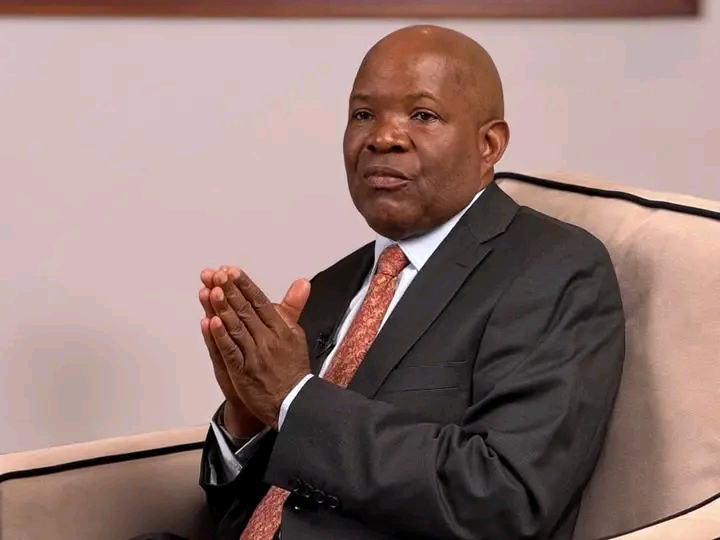
Zambia Army: Constitutional Mandate Defense Affirmed Against M'membe
Summary
- An article titled "IN DEFENSE OF UNIFORM: THE ARMY DID WHAT THE CONSTITUTION DEMANDS" defends the Zambia Army's actions on August 13, 2026.
- This defense directly refutes M'membe's article, "AN INJUSTICE UNDER UNIFORM," which claimed the army abandoned its constitutional mandate.
- The defending article agrees on constitutional supremacy but argues M'membe misunderstands the Zambia Army's constitutional role.
- It suggests M'membe needs to be educated on the military's adherence to its mandate.
- The debate highlights differing interpretations of the Zambia military's constitutional responsibilities.
Defense of Military Actions Sparks Debate
Lawyers advising on constitutional law or civil-military relations in Zambia should particularly note this article's defense of the Zambia Army's actions.
A recent article, titled "IN DEFENSE OF UNIFORM: THE ARMY DID WHAT THE CONSTITUTION DEMANDS," has emerged to counter claims made by M'membe in a piece titled "AN INJUSTICE UNDER UNIFORM." The core of the disagreement centers on the actions of the Zambia Army on August 13, 2026, with the defending article asserting that the military's conduct on that date was entirely consistent with its constitutional obligations. This publication directly challenges M'membe's perspective, which suggested that the Zambia Army had deviated from its constitutional mandate.
The defending article acknowledges a fundamental point of agreement with M'membe: the supremacy of the Constitution. However, it sharply diverges on the interpretation of the Zambia Army's constitutional role and its execution on the specified date. The author of "IN DEFENSE OF UNIFORM" contends that M'membe's premise, that the army abandoned its mandate, is flawed and indicates a misunderstanding of the military's constitutional framework. This robust Zambia Army constitutional mandate defense frames the military's actions as a direct fulfillment of its duties, rather than an overreach or abandonment, setting the stage for a significant discussion on the Zambia military constitutional role.
Interpreting the Constitutional Mandate
The central argument put forth by "IN DEFENSE OF UNIFORM" is that the Zambia Army's actions on August 13, 2026, were not an abandonment but rather an adherence to its constitutional responsibilities. While the specific details of the military's actions on that day are not elaborated in the source, the article's title and content strongly imply that the military's conduct was a direct consequence of its defined role within the nation's legal framework. This perspective suggests a particular interpretation of the Zambia military constitutional role, one that views the army's involvement as a necessary and lawful exercise of its powers.
The article's firm stance indicates a belief that the constitutional provisions governing the military are clear and that the army acted within those established parameters. It implicitly argues against any notion that the August 13, 2026 Zambia Army actions represented an "injustice under uniform," as M'membe's article suggested. Instead, it positions the military as an institution operating strictly within the confines of the supreme law, thereby offering a direct Zambia Army constitutional mandate defense against criticisms of its operational conduct.
Implications for Zambian Constitutional Law
This public exchange regarding the Zambia Army's actions and its constitutional mandate carries significant implications for Zambian constitutional law and the broader civil-military relations within the country. The assertion that M'membe requires a "lecture" on the matter underscores the perceived clarity and correctness of the defending article's interpretation of the military's role. Such a strong rebuttal highlights a potential divergence in understanding the boundaries and responsibilities of the armed forces in a democratic state.
Lawyers advising on constitutional law or civil-military relations in Zambia should particularly note this article's defense of the Zambia Army's actions. It articulates a specific interpretation of their constitutional mandate that may be relevant in future legal challenges or policy discussions concerning military involvement in civilian affairs. The debate surrounding "AN INJUSTICE UNDER UNIFORM" and the subsequent "IN DEFENSE OF UNIFORM" contributes to the ongoing discourse on the proper functioning of the Zambian constitutional law army, emphasizing the critical importance of a shared understanding of the military's constitutional role and its operational parameters.
Practical Implications
Lawyers advising on constitutional law or civil-military relations in Zambia should note this article's defense of the Zambia Army's actions, as it articulates a specific interpretation of their constitutional mandate that may be relevant in future legal challenges or policy discussions concerning military involvement in civilian affairs.
Source
How does this affect you?
Get an AI analysis of this article grounded in your jurisdictions, practice areas, and any policy documents you've uploaded to Wansom.
Finish Reading the Full Story and the Expert Analysis.
Wansom is AI and can make mistakes.