
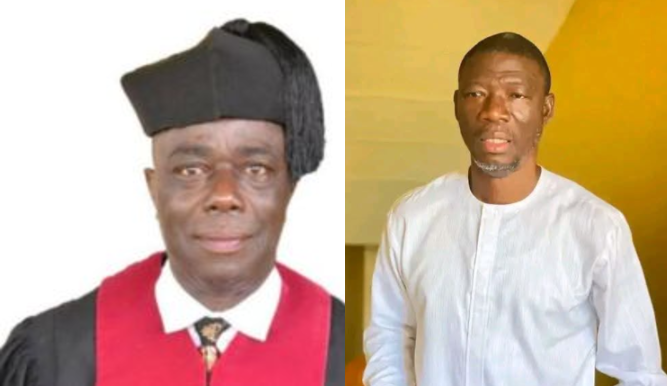
Liberia Supreme Court Hears Yekeh Kolubah Expulsion Appeal, Reserves Ruling
Summary
- Former Representative Yekeh Kolubah's appeal against his expulsion from the House of Representatives was heard by the Supreme Court on Thursday, October 22, 2026, with the Court reserving its ruling.
- Kolubah was expelled on April 9, 2026, for alleged gross misconduct and undermining national interests, particularly regarding the Liberia-Guinea border dispute.
- Justice Kaba initially granted Kolubah a writ of prohibition and a stay order, but the House proceeded with the expulsion, claiming no proper communication was received.
- Justice Kaba later ruled against Kolubah, stating the House was not properly served because documents were not delivered to the Sergeant-at-Arms, who is the only authorized recipient.
- This case, Kolubah vs House of Representatives Liberia, is now before the full bench of the Supreme Court, with its outcome expected to clarify judicial oversight of legislative expulsions and service of process.
The Expulsion Controversy
The Supreme Court's final decision in this matter will offer critical insight into its interpretation of legislative immunity and the procedural requirements for challenging parliamentary actions, particularly concerning the proper service of process on the House of Representatives.
The Supreme Court of Liberia heard arguments on Thursday, October 22, 2026, in a significant appeal brought by former Montserrado County District #10 Representative Yekeh Y. Kolubah, and has reserved its ruling. This case, listed as an appeal stemming from a ruling on a Bill of Information, challenges his expulsion from the House of Representatives. The full bench, comprising Chief Justice Yamie Quiqui Gbeisay, Sr. and Associate Justices Jamesetta H. Wolokolie, Yussif D. Kaba, Ceaineh D. Clinton Johnson, and Boakai N. Kanneh, was scheduled to preside over the 11:00 a.m. session, as indicated by the assignment signed by Supreme Court Clerk, Cllr. Sam Mamulu. Kolubah's legal action, known as Kolubah vs House of Representatives Liberia, names the legislative body, along with Speaker Richard Nagbe Koon, Deputy Speaker Thomas Fallah, the Chief Clerk, and the Sergeant-at-Arms, as appellees.
The dispute that led to this high-stakes appeal originated in April 2026, when the process for Representative Kolubah's expulsion was initiated on April 9. He faced accusations of gross misconduct, violating his oath of office, and repeatedly breaching the established rules of the House. Furthermore, the House alleged that his actions and comments, particularly concerning the Liberia-Guinea border dispute, damaged the Legislature's reputation and undermined Liberia's national interest. These charges formed the basis for the parliamentary expulsion.
In response to the impending expulsion, Representative Kolubah sought judicial intervention, filing a petition for a Liberia writ of prohibition House of Representatives. On April 16, 2026, Justice Kaba, then presiding in Chambers, granted this petition, issuing an order that summoned the House leadership to a conference scheduled for April 20 and mandated a stay of all further proceedings related to the expulsion. Despite this explicit judicial directive, the House of Representatives proceeded with its plans. The expulsion was ultimately supported by 49 lawmakers who endorsed a resolution from the Committee on Rules, Order and Administration, with the House Clerk's Office claiming it had not received any Supreme Court communication to halt the process.
Procedural Requirements and Judicial Scrutiny
The subsequent ruling by Justice Kaba on May 20, 2026, became a pivotal point in the Yekeh Kolubah Supreme Court expulsion appeal Liberia. In his decision, Justice Kaba sided against Kolubah, determining that the House of Representatives had not been properly served with the writ of prohibition and the accompanying stay order. This procedural misstep was central to the ruling, as court records revealed that the Supreme Court's Marshal had delivered the legal documents to a receptionist and a computer operator within the offices of the Speaker and the Chief Clerk, rather than the designated official.
Justice Kaba's ruling emphasized that, according to established House procedure, only the Sergeant-at-Arms is authorized to accept court documents on behalf of the legislative body. Because the House was not lawfully served in the prescribed manner, it could not be held in contempt for disregarding the stay order. This interpretation of procedural requirements highlights the strict adherence to internal legislative protocols that the judiciary expects, even when addressing serious allegations of legislative overreach. The outcome of this Liberia Supreme Court Bill of Information appeal will set an important precedent regarding the proper channels for serving legal notices to the legislative branch.
Precedent and the Future of Legislative Oversight
The current appeal to the full bench, spearheaded by Kolubah's lawyer, Cllr. Jonathan Massaquoi, underscores the ongoing tension between legislative autonomy and judicial oversight in Liberia. The Supreme Court's final decision in this matter will offer critical insight into its interpretation of legislative immunity and the procedural requirements for challenging parliamentary actions, particularly concerning the proper service of process on the House of Representatives. The rulings by Chief Justice Yamie Quiqui Gbeisay and the associate justices will shape the framework for future constitutional challenges to parliamentary decisions and expulsions.
This is not Representative Kolubah's first encounter with the Supreme Court regarding his legislative conduct. In 2021, he twice challenged suspensions imposed by the House, with then-Justice Joseph Nagbe reversing one of those suspensions. These previous instances demonstrate a pattern of judicial intervention in legislative affairs and highlight the importance of the Supreme Court as an arbiter in disputes involving the legislative branch. The outcome of the Yekeh Kolubah parliamentary expulsion case is therefore highly anticipated, as it will clarify the boundaries of legislative power and the judiciary's role in upholding due process within the Liberian political landscape.
The Supreme Court's docket for the October Term's 5th Day Session is not limited to the Kolubah appeal. Other significant cases include a Bill of Information filed by Srimex Oil and Gas Company against Civil Law Court Judge Nelson B. Chineh, Eco Fuel Trading, and Srimex Eco Fuel FZE, Inc., involving a long-standing commercial dispute. Additionally, the Intestate Estate of Daniel Webster Urey has filed a Bill of Information against the Intestate Estate of Karboyah of Tartee Town, a land dispute where the Supreme Court previously upheld a trial court ruling based on deed precedence. These cases collectively illustrate the diverse and complex legal issues regularly brought before Liberia's highest court.
Practical Implications
This case offers critical insight into the Liberian Supreme Court's interpretation of legislative immunity and the procedural requirements for challenging parliamentary actions, specifically regarding proper service of process on the House of Representatives. Lawyers should monitor the court's final ruling for precedent on judicial oversight of legislative expulsions and its implications for constitutional challenges to parliamentary decisions.
Source
How does this affect you?
Get an AI analysis of this article grounded in your jurisdictions, practice areas, and any policy documents you've uploaded to Wansom.
Finish Reading the Full Story and the Expert Analysis.
Get the latest legal & regulatory intelligence in Liberia
Wansom is AI and can make mistakes.