
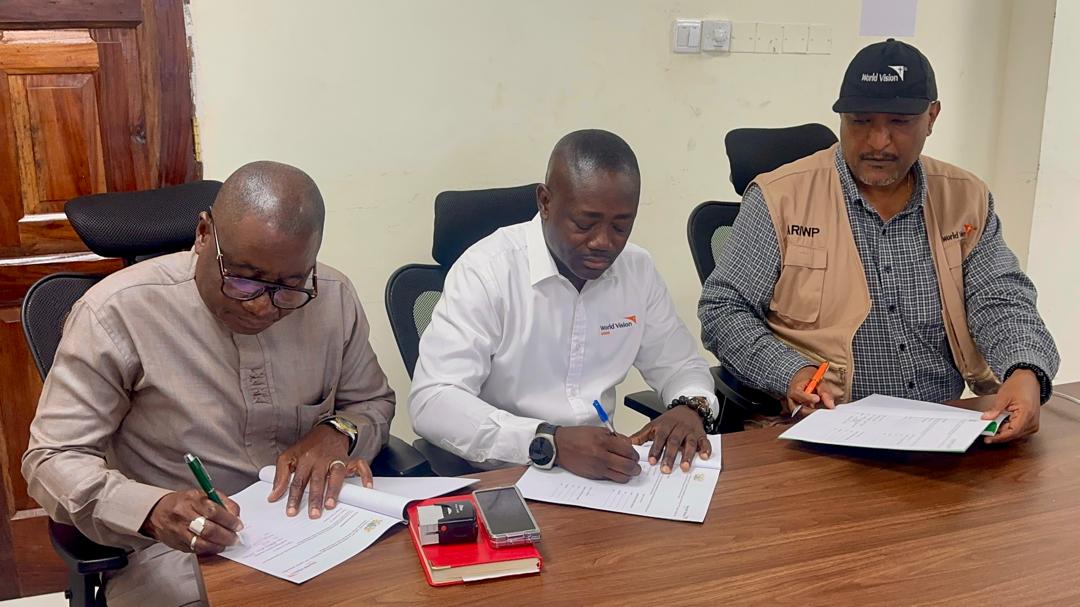
World Vision Ghana: Ahafo WASH MoU Signed With 2 District Assemblies
Summary
- World Vision Ghana signed an MoU with Asunafo North Municipal and Asutifi North District Assemblies to provide universal WASH services in rural Ahafo communities.
- The agreement, formalized on September 24, 2026, aims to extend safely managed water and sanitation, promote hygiene through CLTS, and build local capacity.
- Responsibilities are divided, with district assemblies facilitating community entry and enforcing local by-laws, while World Vision Ghana provides technical, financial, and material resources.
- Key sustainability mechanisms include a Professional Management Model, Water Facility Insurance, and a Repayable Financing Fund to ensure long-term service delivery.
- The partnership targets achieving at least 90 percent access to WASH services by the project's end, integrating safeguarding, gender equity, and social accountability.
New Partnership for Universal WASH Coverage in Ahafo
The formalisation of this partnership, coupled with the pooling of diverse resources, is considered the most effective strategy to achieve at least 90 percent access to WASH services by the conclusion of the project's lifecycle.
World Vision Ghana has formally entered into a Memorandum of Understanding (MoU) with two key administrative bodies in the Ahafo region: the Asunafo North Municipal and Asutifi North District Assemblies. This significant agreement, signed in Goaso on Thursday, September 24, 2026, establishes a collaborative framework designed to deliver comprehensive water, sanitation, and hygiene (WASH) infrastructure and services to specific rural communities within these districts.
The partnership is built on the principle of shared resources, encompassing technical expertise, labor contributions, and infrastructure support from all parties. Its primary goal is to ensure that targeted rural populations gain access to safely managed water and sanitation facilities. Beyond infrastructure, the initiative also seeks to foster sustainable behavioral changes and enhance hygiene practices through the implementation of Community-Led Total Sanitation (CLTS) strategies.
Crucially, the MoU extends its focus to capacity building, aiming to strengthen both district institutions and community structures. This foundational work is intended to guarantee the long-term operational sustainability of the WASH interventions. Furthermore, the agreement explicitly mandates the mainstreaming of critical social considerations, including child and adult inclusion, gender equity, robust safeguarding measures, and social accountability mechanisms across every aspect of the project's execution.
Roles and Responsibilities Under the Agreement
Under the terms of the World Vision Ghana Ahafo WASH MoU, distinct responsibilities have been allocated to each signatory. The Asunafo North Municipal and Asutifi North District Assemblies are tasked with facilitating community engagement, including entry, mobilization, and leadership involvement. Their contributions also extend to providing locally available resources, actively supporting the ongoing maintenance and sustainability of the new WASH infrastructure, and participating in various capacity-building sessions. A particularly noteworthy aspect of their role involves the enforcement of local by-laws that are designed to promote improved sanitation and hygiene standards within their jurisdictions.
World Vision Ghana, for its part, is committed to providing essential technical expertise, comprehensive training programs, and both financial and material resources necessary for the project's implementation. The organization is also responsible for ensuring that all activities adhere to strict safeguarding protocols, gender inclusion principles, and social accountability frameworks. Additionally, World Vision Ghana will lead the overall monitoring, reporting, and evaluation processes to track the project's progress and impact.
Strategies for Long-Term Sustainability
Ensuring the enduring impact of the WASH interventions is a central tenet of the agreement, with several key sustainability mechanisms integrated into its design. Cephas Wedam, World Vision Ghana's Manager for Universal Service Coverage (USC) for WASH, highlighted these provisions, which include a Professional Management Model aimed at standardizing the oversight of facilities. A Water Facility Insurance mechanism is also in place, alongside a Repayable Financing Fund specifically structured to scale up future investments in WASH infrastructure, thereby securing long-term service delivery.
Beyond these financial and management frameworks, the initiative will also incorporate community-focused programs to reinforce hygiene and care practices. These include the Nurturing Care Group (NCG) framework and the Sesame WASH Up hygiene program, both designed to engage communities directly and foster lasting positive changes in health and hygiene behaviors.
Leadership Vision and Commitment
Speaking at the signing event, Joshua Baidoo, the Acting National Director of World Vision Ghana, articulated the overarching ambition of the initiative: to guarantee access to safely managed water for every community across the two participating districts. He underscored that the formalisation of this partnership, coupled with the pooling of diverse resources, is considered the most effective strategy to achieve at least 90 percent access to WASH services by the conclusion of the project's lifecycle.
Robel Wamisho, World Vision's Associate Director for WASH, echoed these sentiments, urging all stakeholders to actively leverage the MoU as a platform to strengthen their collaborative efforts. He emphasized that continued cooperation remains vital for enhancing WASH services and ensuring lasting sustainability for residents in the various communities. Representing the district assemblies, Coordinating Directors Benjamin Owusu Afriyie of Asunafo North Municipal and Abdul-Aziz Gafaru of Asutifi North District both pledged their full commitment to the intervention, affirming their dedication to achieving universal WASH coverage.
Practical Implications
Lawyers advising NGOs or local government on development projects in Ghana should note this MoU as a model for public-private partnerships in WASH, particularly regarding the enforcement of local by-laws and integration of safeguarding and social accountability mechanisms. It highlights the evolving legal and compliance landscape for such collaborative initiatives.
Source
How does this affect you?
Get an AI analysis of this article grounded in your jurisdictions, practice areas, and any policy documents you've uploaded to Wansom.
Finish Reading the Full Story and the Expert Analysis.
Get the latest legal & regulatory intelligence in Ghana
Wansom is AI and can make mistakes.