
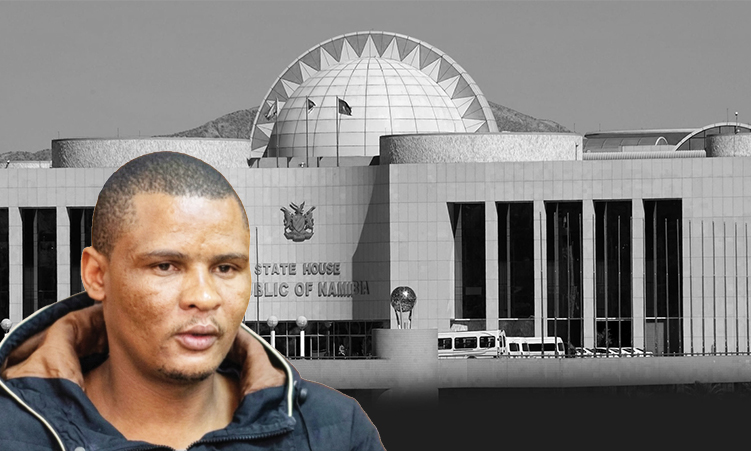
Windhoek Magistrate's Court: Windhoek State House Intruder Detention Order
Summary
- An individual was ordered detained after breaching security at Namibia's State House in Windhoek.
- The intruder was found naked on the premises near the end of April this year.
- Magistrate Olga Muharukua of the Windhoek Magistrate's Court issued the detention order.
- The man is to be held in a mental hospital or prison until his release is officially authorized.
What Happened
Magistrate Olga Muharukua, presiding over the case, mandated that the man be held in either a mental health facility or a correctional institution.
An individual is facing ongoing detention following an incident that saw him breach the security perimeter of Namibia's State House in Windhoek. The unauthorized entry occurred near the end of April this year, leading to a significant security concern at the presidential residence. Upon discovery within the premises, the man was found to be unclothed, adding an unusual dimension to the security lapse.
The incident prompted immediate legal action, culminating in a specific judicial directive regarding the individual's custody. This event underscores the critical importance of maintaining stringent security protocols around national leadership facilities, even as the legal system addresses the circumstances of the intrusion.
Judicial Mandate and Legal Context
The Windhoek Magistrate's Court has issued a definitive ruling concerning the individual involved in the State House security breach. Magistrate Olga Muharukua, presiding over the case, mandated that the man be held in either a mental health facility or a correctional institution. This Windhoek State House intruder detention order is not indefinite; rather, it stipulates that his release is contingent upon official authorization. Such a directive highlights the intersection of criminal procedure and mental health considerations within the Namibian legal framework.
This specific Magistrate Olga Muharukua ruling reflects a judicial approach that prioritizes both public safety and the potential need for assessment or treatment. The dual nature of the detention location—a mental hospital or prison—suggests that the court is allowing for flexibility in determining the most appropriate environment for the individual, likely pending further evaluation or a determination of his mental state. This form of Namibia mental health detention ensures that individuals who may pose a risk, or who may be vulnerable, are not simply released without due process and professional assessment.
Broader Implications for State Security
The unauthorized entry into the State House premises represents a serious State House security breach Namibia. As the official residence and workplace of the head of state, the State House is a highly sensitive and protected national asset. Any penetration of its security cordon, regardless of the intruder's intent or condition, necessitates a robust response from law enforcement and the judiciary.
Such incidents invariably trigger reviews of existing security measures and protocols. The fact that an individual was able to gain entry, and was found in such an unusual state, raises questions about the layers of protection in place. The legal proceedings, including the Windhoek Magistrate's Court order for detention, are a critical component of addressing not only the immediate incident but also its broader implications for national security.
The Detention Order's Significance
The Windhoek State House intruder detention order, as issued by Magistrate Muharukua, serves as a crucial example of how the Namibian legal system manages cases involving security breaches where an individual's mental state may be a factor. This order ensures that the individual remains in a controlled environment until a formal decision on his release is made, preventing premature discharge that could pose risks to the public or the individual himself.
For legal practitioners, particularly those engaged in criminal procedure mental health cases or high-profile security matters, this ruling illustrates the judicial emphasis on authorized release. It underscores the importance of understanding the mechanisms for detention and the conditions under which release can be sanctioned, providing a precedent for how similar situations might be handled in the future. The directive ensures a structured approach to managing individuals whose actions raise concerns about both security and well-being.
Practical Implications
Lawyers handling criminal cases involving mental health or high-profile security breaches should note this court order, as it illustrates the judicial approach to detention and release authorization for individuals deemed a risk, potentially influencing advice on similar matters.
Source
How does this affect you?
Get an AI analysis of this article grounded in your jurisdictions, practice areas, and any policy documents you've uploaded to Wansom.
Finish Reading the Full Story and the Expert Analysis.
Get the latest legal & regulatory intelligence in Namibia
Wansom is AI and can make mistakes.