
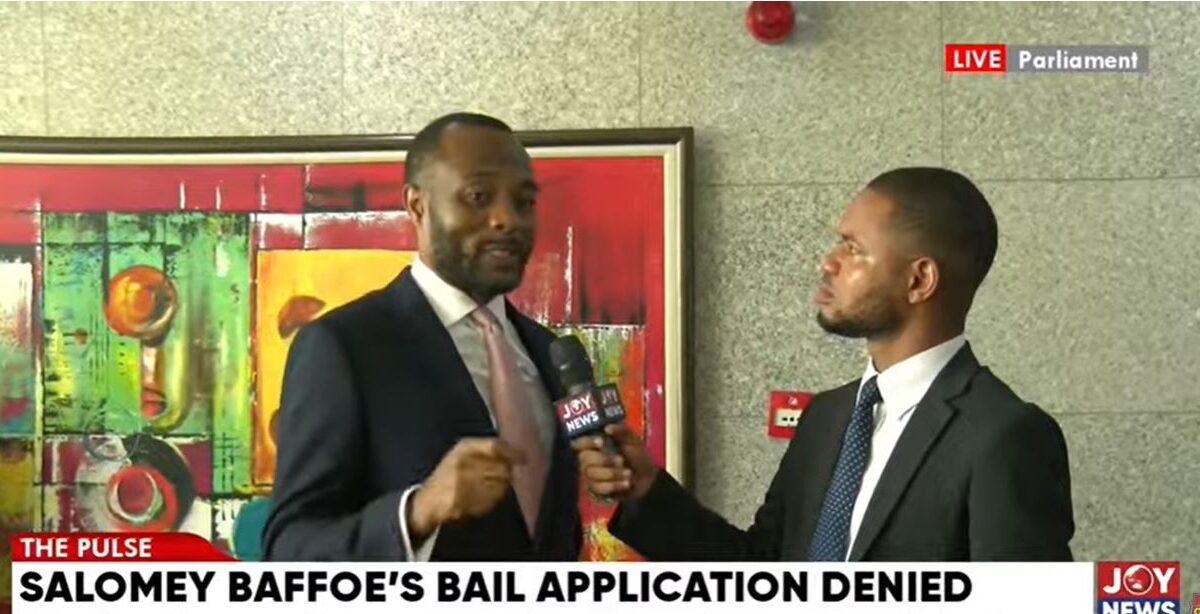
Ghana High Court: Weija-Gbawe MP Salomey Baffoe Bail Denied, Cocaine Scandal Link
Summary
- Ghana's High Court denied bail for Salomey Awiti Baffoe on September 24, citing a risk of interference with a cyber-related investigation.
- Weija-Gbawe MP Jerry Ahmed Shaib described the detention as a "facade" to divert attention from a larger "cocaine scandal."
- Shaib questioned the continued detention for a misdemeanor charge, noting Ms. Baffoe has three young children.
- The MP challenged the court's reasoning on cyber interference, arguing investigators already possess her electronic devices.
- Shaib highlighted major cocaine seizures, including a 3.9-tonne consignment in France, suggesting Ms. Baffoe is a scapegoat.
High Court Denies Bail Amidst Cyber Investigation
Weija-Gbawe MP Jerry Ahmed Shaib characterized the ongoing detention of Salomey Awiti Baffoe as a 'facade' designed to redirect public focus from a pervasive 'cocaine economy' and related scandals.
The Ghana High Court recently denied a bail application for Salomey Awiti Baffoe, a decision that has drawn significant public and political attention. On Thursday, September 24, the court upheld the prosecution's argument that Ms. Baffoe's continued detention was necessary to facilitate ongoing investigations. The case, which involves a cyber-related inquiry, prompted the court to express concerns that releasing the accused at this juncture could pose a genuine risk of interference with witnesses. Consequently, the High Court issued a directive for the Republic to accelerate its investigative processes.
This ruling immediately sparked a strong reaction from Jerry Ahmed Shaib, the Member of Parliament for Weija-Gbawe and a practicing lawyer. Speaking to JoyNews, Mr. Shaib openly questioned the judicial decision, particularly given the nature of the charges Ms. Baffoe faces. His comments highlighted the growing scrutiny surrounding bail applications in Ghana, especially when complex investigative claims are presented by the prosecution.
MP Alleges "Facade" to Divert Attention
Weija-Gbawe MP Jerry Ahmed Shaib characterized the ongoing detention of Salomey Awiti Baffoe as a 'facade' designed to redirect public focus from a pervasive 'cocaine economy' and related scandals. He expressed deep dissatisfaction with the judge's decision, emphasizing that Ms. Baffoe is facing a misdemeanor charge, not a severe felony. Shaib further pointed out that Ms. Baffoe is a mother of three young children, suggesting there was no credible reason to believe she would interfere with investigations if granted bail, thereby challenging the rationale for her misdemeanor detention in Ghana.
The MP specifically challenged the court's reasoning regarding potential interference with the cyber-related investigation. He argued that investigators already possess Ms. Baffoe’s electronic devices, rendering the claim of her deleting evidence post-release illogical. Shaib questioned the practicalities of such interference, asking how she could 'suo motu' delete evidence when authorities already control her gadgets. This critique underscores a key legal point about the evidentiary basis for interference claims in cyber-related cases, particularly in the context of Ghana High Court bail denial scenarios.
Broader Concerns Over Ghana's Cocaine Economy
Shaib expanded his critique beyond the specifics of Salomey Awiti Baffoe's case, asserting that she is being used as a 'scapegoat' to obscure more significant issues related to Ghana's cocaine economy allegations. He drew attention to major cocaine seizures, including a substantial 3.9-tonne consignment reportedly intercepted in France. The MP questioned why public focus was being directed towards Ms. Baffoe when such large-scale drug trafficking incidents were occurring, suggesting a deliberate diversion from the Weija-Gbawe MP Salomey Baffoe cocaine scandal.
He urged authorities to concentrate on the origins and movement of these massive consignments, specifically asking how the 3.9-tonne shipment could have transited from the Tema port. Shaib's remarks suggest a belief that the current legal proceedings against Ms. Baffoe are a distraction from addressing systemic problems within the country's drug trade. His intervention highlights the political dimensions that can influence judicial outcomes and public perception in high-profile cases, especially those touching upon sensitive national issues like drug trafficking.
Practical Implications
This case highlights the scrutiny and potential political dimensions surrounding bail applications in Ghana, particularly when 'cyber-related investigations' are invoked. Lawyers should be prepared to challenge the evidentiary basis for interference claims and consider the broader public and political context influencing judicial decisions in high-profile cases, even for misdemeanor charges.
Source
How does this affect you?
Get an AI analysis of this article grounded in your jurisdictions, practice areas, and any policy documents you've uploaded to Wansom.
Finish Reading the Full Story and the Expert Analysis.
Get the latest legal & regulatory intelligence in Ghana
Wansom is AI and can make mistakes.