
Liberia Weah: Boakai Government Faces Persecution Claims
Summary
- Former President George Manneh Weah accused the Boakai government of political persecution and weaponizing the justice system.
- Weah demanded the release of former Vice President Jewel Howard-Taylor and CDC youths detained in the Capitol arson case.
- He also defended officials convicted in the Saudi-donated rice scandal and called for accountability regarding the 2024 Kinjor killings.
- The former president warned that an electoral mandate does not grant unlimited authority or place an administration above constitutional limits.
Former President Weah Alleges Political Persecution
A tyrant with a certificate of return is still a tyrant.
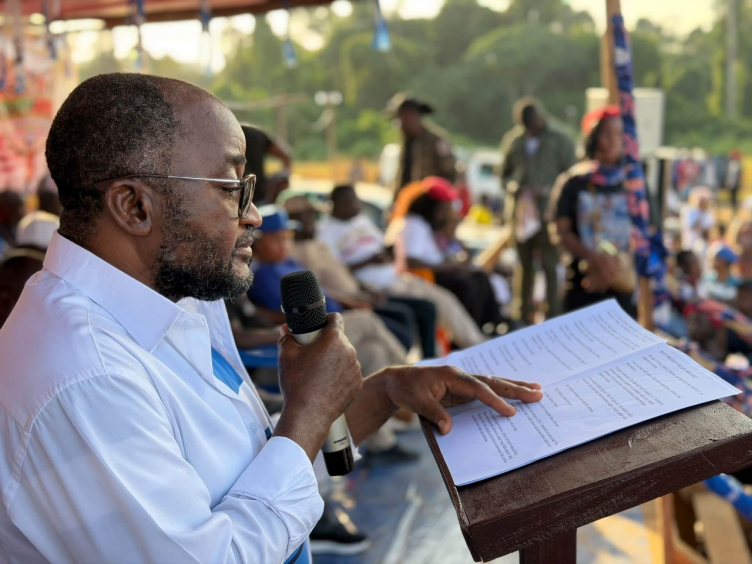
Former Liberian President George Manneh Weah has publicly accused the administration of President Joseph Nyuma Boakai of engaging in political persecution and weaponizing the nation's justice system against its opponents. Speaking at the Coalition for Democratic Change’s (CDC) National Martyrs’ Day commemoration in Kinjor, Grand Cape Mount County, Weah's strong message was delivered by Dee-Maxwell Saah Kemayah Sr., the Political Leader of the Movement for Economic Empowerment (MOVEE) and former Foreign Minister, who was recently convicted in the Saudi-donated rice case.
Weah's address, delivered on a recent Saturday, November 7, framed the Boakai government's actions as an abuse of state power and a practice of selective justice. The former president's remarks were a direct challenge to the ruling Unity Party, suggesting that their electoral mandate did not grant them unlimited authority over the country's legal frameworks or its citizens. The event itself, themed “They Carried the Struggle, We Carry Their Legacy,” served as a platform for a broad critique of the current government's approach to justice, human rights, and the political opposition.
Demands for Release and Accountability
During his address, former President Weah issued several specific demands and defenses, directly challenging the Boakai government's handling of various high-profile cases. He called for the immediate release of former Vice President Jewel Howard-Taylor and also demanded freedom for CDC youths currently detained in connection with the Capitol Building arson case. Furthermore, Weah voiced a defense of former officials from his own administration who were convicted in the Saudi-donated rice scandal, implying their prosecutions were politically motivated.
A significant portion of Weah's message focused on the February 29, 2024, Kinjor killings, where clashes between protesters and security personnel occurred during demonstrations in the Bea Mountain mining area. He explicitly challenged the government to provide accountability for these deaths, accusing the Liberia National Police of using live ammunition against the demonstrators and characterizing the incident as an act of “unprovoked brutality.” Weah emphasized that the victims were citizens whose lives deserved protection and whose grievances warranted attention, irrespective of their community's economic standing or political influence. In a poignant gesture, he requested a separate moment of silence for the Kinjor victims, placing their memory alongside other fallen CDC supporters.
Constitutional Limits and Governance
The former president underscored the principle that an electoral victory does not elevate any administration above the constitutional limits of its power. He reminded the governing party that their mandate does not confer unlimited authority, drawing a parallel to a past statement he made before the Nigerian Bar Association in Port Harcourt: “A tyrant with a certificate of return is still a tyrant.” This assertion served as a stark warning against potential overreach by the current administration.
The commemoration brought together a wide array of political figures and supporters, including CDC National Chairman Atty. Janga Augustus Kowo, members of the party’s National Executive Committee, the CDC Legislative Caucus, and various opposition leaders. The presence of bereaved families and supporters from across Liberia highlighted the event's dual purpose: honoring fallen party members and serving as a powerful platform for the opposition to voice its concerns regarding governance, human rights, and the integrity of the justice system under the Boakai administration.
Practical Implications
This report signals potential political interference in Liberia's justice system. Lawyers should advise clients on heightened risks of politically motivated charges and monitor ongoing cases, such as the Capitol arson and Saudi rice scandal, for due process concerns and potential legal challenges based on selective prosecution.
Source
How does this affect you?
Get an AI analysis of this article grounded in your jurisdictions, practice areas, and any policy documents you've uploaded to Wansom.
Finish Reading the Full Story and the Expert Analysis.
Get the latest legal & regulatory intelligence in Liberia
Wansom is AI and can make mistakes.