
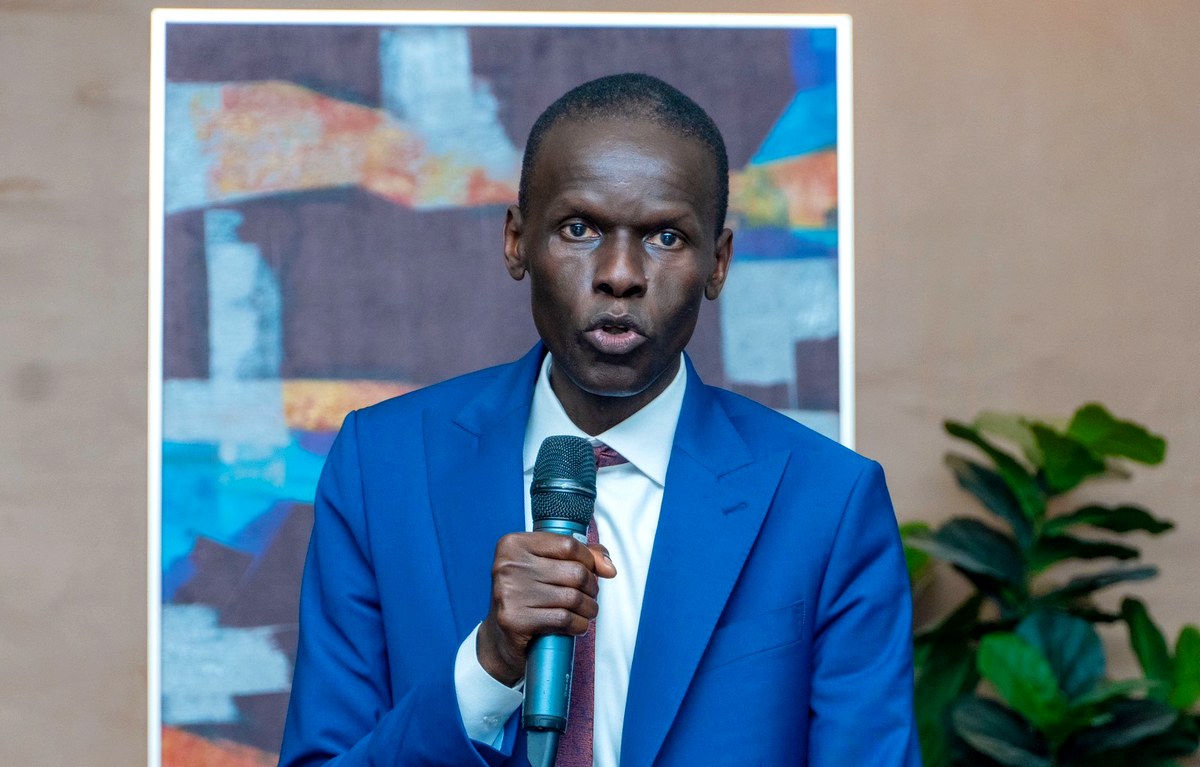
Waly Diouf Bodiang: Challenges Décret LFR 2026 After Parliament Rejection
Summary
- Waly Diouf Bodiang publicly questioned the executive's use of a decree to implement legislation previously rejected by parliament.
- He specifically referenced the LFR 2026 as the subject of this executive action.
- Bodiang asserted that a decree cannot legitimately override a parliamentary rejection of a legislative text.
- He issued a public challenge to anyone who would argue that a decree could bypass parliamentary dissent.
- This situation raises concerns about the concentration of powers and the constitutionality of decree laws in Senegal.
Executive Action Sparks Legislative Debate
If the executive branch can effectively implement legislation via decree after it has been explicitly rejected by parliament, it raises serious questions about the balance of power and the integrity of the legislative process.
Waly Diouf Bodiang, former Director General of the Autonomous Port of Dakar, has publicly challenged the executive's recent reliance on a decree to enact legislation, specifically referencing the LFR 2026, which had previously faced rejection by parliamentary members. Through a post shared on his Facebook page, Bodiang articulated a fundamental objection to this procedural approach, asserting that a governmental decree cannot legitimately override a legislative body's decision. This intervention brings to the forefront a critical discussion concerning the appropriate limits of executive authority in the face of parliamentary dissent.
His statement directly questions the validity of using executive orders to bypass the legislative process, particularly when a proposed text has already been reviewed and dismissed by elected representatives. Bodiang's position underscores a broader concern about the integrity of the legislative framework in Senegal, suggesting that such actions could undermine the established roles of different branches of government. The specific context of the Waly Diouf Bodiang décret LFR 2026 amplifies these concerns, making it a focal point for the ongoing debate.
Legal Scrutiny of Executive Decrees
At the heart of Waly Diouf Bodiang's critique is the légalité décret when applied to measures that have failed to secure parliamentary approval. He firmly stated that an executive decree lacks the power to compensate for or nullify the rejection of a legislative proposal by the National Assembly. This argument highlights a potential constitutional tension, where the executive's prerogative to issue decrees might clash with the legislature's power to approve or reject laws.
Bodiang further intensified the debate by issuing a public challenge, inviting anyone who believes otherwise to demonstrate how a decree could legitimately circumvent a parliamentary rejection. This bold move emphasizes his deep concern over what he perceives as an unwarranted concentration pouvoirs within the executive branch. The challenge implicitly calls for a rigorous examination of the legal basis for such executive actions, particularly their alignment with the principles of democratic governance and the separation of powers in Senegal.
Constitutional Implications and Separation of Powers
The controversy surrounding the décret rejet parlementaire Sénégal initiated by Waly Diouf Bodiang carries significant implications for the constitutionnalité décret loi Sénégal. If the executive branch can effectively implement legislation via decree after it has been explicitly rejected by parliament, it raises serious questions about the balance of power and the integrity of the legislative process. Such a practice could be interpreted as an erosion of the National Assembly's constitutional role and a move towards an unchecked executive.
This scenario necessitates a thorough legal review of the constitutional provisions governing legislative enactment and the use of executive decrees. The potential for a concentration pouvoirs in the executive, as highlighted by Bodiang, could set a dangerous precedent for future governance, impacting regulatory stability and legal certainty. The ongoing discussion will undoubtedly shape the understanding of checks and balances within Senegal's political system, influencing how legislative instruments are perceived and challenged in the future.
Practical Implications
This development highlights a potential constitutional challenge regarding the executive's use of decrees to enact legislation previously rejected by parliament. Lawyers should monitor the legal basis and implications of such executive actions, as they could set precedents for the separation of powers and the validity of legislative instruments in Senegal, potentially impacting future regulatory compliance and legal challenges.
Source
How does this affect you?
Get an AI analysis of this article grounded in your jurisdictions, practice areas, and any policy documents you've uploaded to Wansom.
Finish Reading the Full Story and the Expert Analysis.
Get the latest legal & regulatory intelligence in Senegal
Wansom is AI and can make mistakes.