
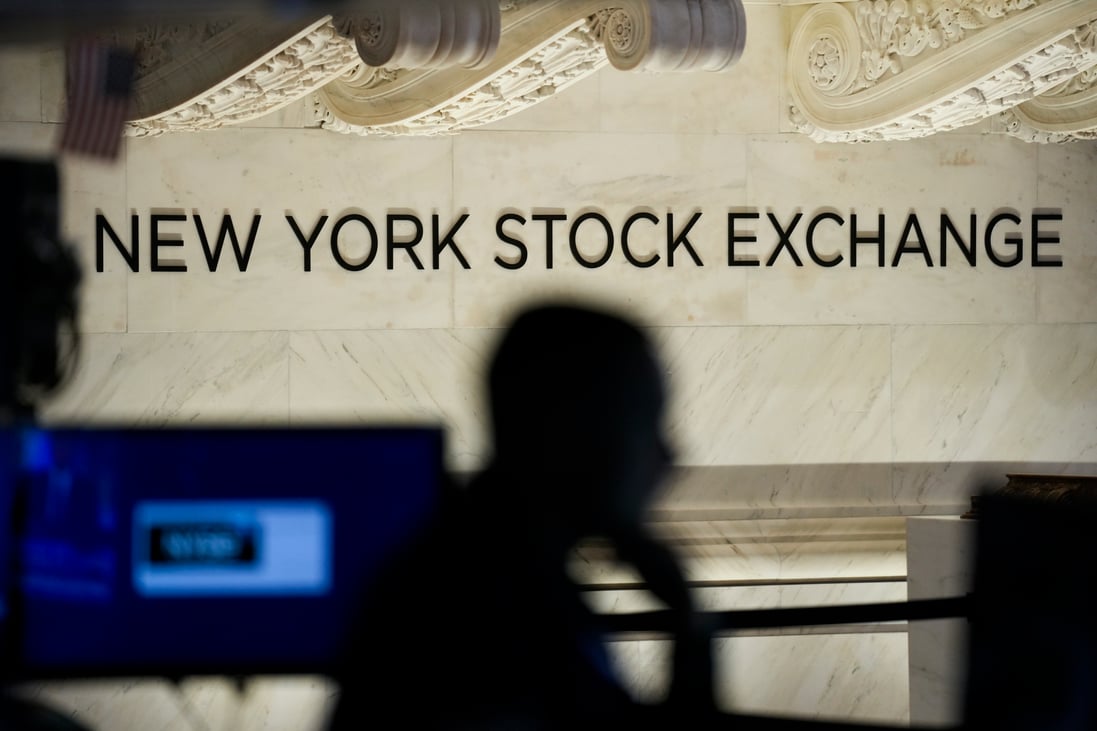
Wall Street: Tech Stocks Decline Amid Rising AI Bubble Concerns
Summary
- Wall Street experienced a decline this week, with tech stocks leading the downturn due to concerns over an AI bubble and less-than-stellar earnings.
- The Nasdaq Composite Index dropped 2.8% on Friday and 518 points for the week, while the Dow and S&P 500 also closed lower.
- Analysts are concerned about elevated AI infrastructure spending and rising financing costs impacting the path to profitability for tech companies.
- The Federal Reserve held interest rates steady, but signs point to a hawkish stance with potential future rate hikes, partly fueled by AI-driven inflation.
- Consumer confidence saw a temporary rise due to easing gasoline prices, but the long-term trend remains downward, with consumers planning to spend less.
Market Downturn Amid AI Concerns
Mega-cap stocks have faced increased selling pressure over the past two weeks, as elevated AI-related spending and rising financing costs raise concerns over the path to profitability.
Wall Street experienced a notable decline this week, primarily driven by a significant tech stock market decline and mounting concerns over a potential artificial intelligence (AI) bubble. Despite the Federal Reserve maintaining stable interest rates and a surprisingly robust gross domestic product report, major indexes ended lower, with the tech-heavy Nasdaq suffering one of its most substantial trading days in months on Friday. This downturn was largely attributed to weaker-than-expected earnings reports from key technology companies, including Amazon, late in the week.
The Nasdaq Composite Index saw a 2.8% drop on Friday alone, culminating in a loss of 518 points for the entire week. The broader market also felt the impact, as the Dow Jones Industrial Average fell by 445 points and the S&P 500 decreased by 43 points by Friday's close. Analysts are increasingly vocal about the elevated AI infrastructure spending, questioning its sustainability and the ultimate path to profitability for many firms, a sentiment that contributed to increased selling pressure on mega-cap stocks over the past two weeks.
The AI Investment Landscape
The extensive buildout of artificial intelligence infrastructure has kept investors on edge, with some market strategists expressing concern that AI-related spending may have become excessive. Adam Turnquist, Chief Technical Strategist at LPL Financial, highlighted that rising financing costs, coupled with substantial AI investments, are fueling doubts about companies' ability to achieve profitability. This environment has led to a reevaluation of the Nasdaq AI investment impact on corporate balance sheets.
Economists are also weighing in on the broader economic implications of the AI boom. Adam Slater, Lead Economist at Oxford Economics, noted that without the current AI surge, global economic growth would likely be sluggish. He further pointed out that the AI buildout is contributing to higher electricity prices and could lead to increased borrowing costs. Slater emphasized that the U.S. economy's reliance on this technological boom for growth surpasses its dependence during the dot-com era, underscoring the potential Wall Street AI bubble concerns.
Economic Data and Federal Reserve Stance
The week's economic data presented a mixed picture, including a surprising 3.4% increase in gross domestic product and a 0.5% rise in the personal consumption expenditures (PCE) inflation report, a key metric for the Federal Reserve. Analysts largely attributed both the economic expansion and the uptick in inflation to the rapid growth in artificial intelligence technology and infrastructure. These figures provide a backdrop for the Federal Reserve's decision to hold interest rates steady, a move that nonetheless failed to ignite a Wall Street rally.
Despite the Fed's decision, indications suggest an increasingly hawkish stance from the central bank. Two out of the twelve members of the Federal Open Market Committee (FOMC) advocated for an immediate rate hike, and the language in the latest policy statement hinted at potential rate increases in December and possibly March. Thomas Ryan, a senior North America economist at Capital Economics, predicted that
Consumer Confidence and Future Spending
Amidst the market volatility, consumer confidence showed a positive, albeit nuanced, development. The Conference Board's monthly consumer confidence index increased by 7.5 points, a rebound after a steady decline since June. This improvement was largely linked to a slight easing of gasoline prices between September and October, as noted by Fergus McCormick, Senior Economist, Global Indicators, at The Conference Board.
However, McCormick also cautioned that despite this short-term jump, the index remains within a long-term downward trend observed over the past year. Furthermore, consumers indicated intentions to reduce their spending over the next six months, suggesting that underlying economic anxieties persist despite the temporary boost in confidence. This cautious consumer outlook adds another layer of complexity to the overall economic landscape.
Practical Implications
While not a direct legal development, the market's concerns over AI profitability and rising financing costs could lead to increased scrutiny on financial disclosures and investor communications for tech companies. Corporate lawyers and compliance officers should advise clients on managing investor expectations and ensuring transparent reporting regarding AI-related expenditures and revenue projections, especially in a volatile market.
Source
How does this affect you?
Get an AI analysis of this article grounded in your jurisdictions, practice areas, and any policy documents you've uploaded to Wansom.
Finish Reading the Full Story and the Expert Analysis.
Wansom is AI and can make mistakes.