
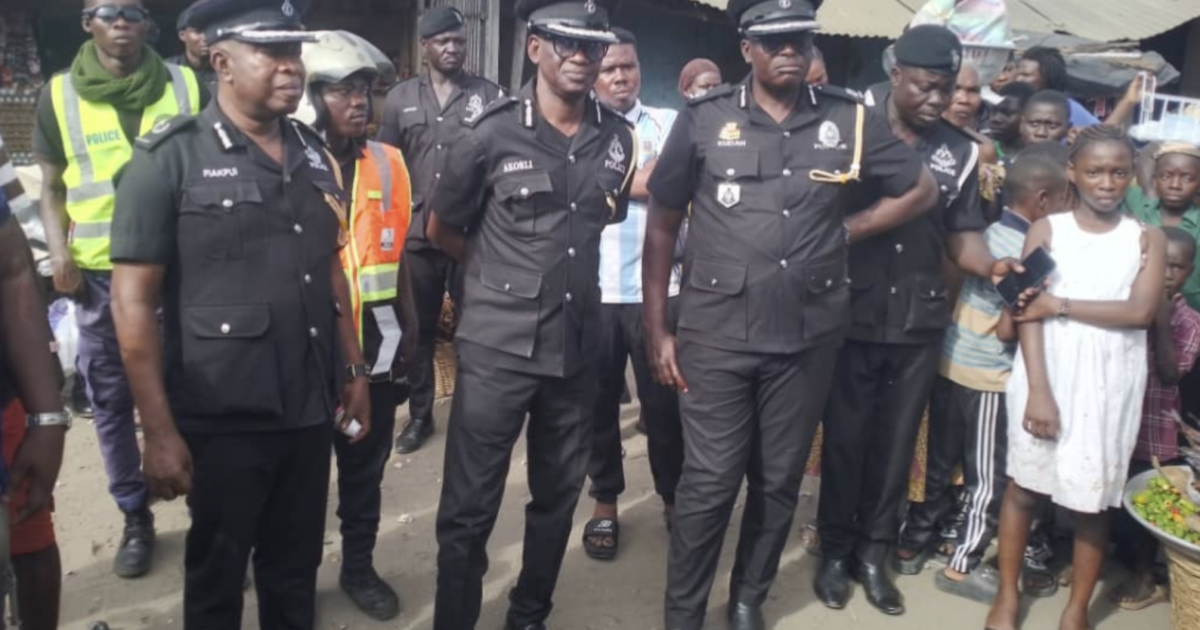
Volta Regional Police: Addresses Aflao-Accra Extortion Allegations
Summary
- The Volta Regional Police Command engaged traders and market women to address alleged harassment and extortion by officers on the Aflao-Accra highway.
- This engagement was prompted by a petition from activist Daniel Jerry Sorokpo to IGP Christian Tetteh Yohunu, detailing police misconduct against traders.
- Allegations include officers demanding money, sometimes GH¢50, from traders transporting goods like rice and sugar, particularly when receipts are not produced.
- Police officials explicitly stated that officers lack the authority to demand money from individuals simply for transporting goods, condemning reports of arbitrary detentions as unacceptable.
- The public has been urged to report instances of misconduct directly to regional police leadership, including officers who fail to display their names on uniforms.
Police Address Extortion Allegations on Aflao-Accra Highway
Police officials explicitly stated that officers lack the authority to demand money from individuals simply for transporting goods, condemning reports of arbitrary detentions as unacceptable.
The Volta Regional Police Command recently initiated a direct engagement with traders and market women across the Southern Volta Region to address persistent allegations of harassment and extortion by police officers stationed along the critical Aflao-Accra highway. This proactive outreach, led by Deputy Commissioner of Police (DCOP) Wisdom Akorli, who serves as the Volta Regional Police Commander, aimed to gather firsthand accounts from road users regarding their interactions with law enforcement personnel.
This significant engagement was prompted by a formal petition submitted to Inspector-General of Police (IGP) Christian Tetteh Yohunu. The petition, filed by Mr. Daniel Jerry Sorokpo, a prominent youth activist and aspiring National Democratic Congress (NDC) Vice Chairman for the Ketu South Constituency, detailed widespread claims of police misconduct, including harassment and extortion targeting traders transporting goods along this vital corridor. Following the submission, the IGP extended an invitation to the Volta Regional Police Commander to Accra for discussions on the concerns raised.
Subsequently, DCOP Akorli and his team embarked on an extensive outreach program, commencing their interactions with traders in Sogakope. The team then proceeded through Akatsi and Agbozume before concluding their engagement in Aflao, providing numerous opportunities for traders to voice their experiences and concerns directly to the police leadership. This initiative underscores a commitment to understanding and rectifying issues of police misconduct Ghana Aflao.
Chief Inspector Francis Kwaku Gomado, the Volta Regional Police Public Relations Officer, articulated that the primary objective of this exercise was to enable the Command to gain a comprehensive understanding of the challenges faced on the ground. He emphasized that this direct feedback mechanism is crucial for identifying and addressing any instances of police harassment Aflao highway or other forms of misconduct by officers.
Specific Claims of Misconduct and Demands
Reports received by the Command, as highlighted by Chief Inspector Gomado, indicate that certain police officers along the Aflao-Accra highway have been accused of harassing traders and demanding money from them while they transport their goods. The petition from Mr. Sorokpo specifically detailed instances where traders, particularly those transporting commodities such as rice, sugar, cooking oil, beans, and vegetables, were stopped by officers and asked to produce receipts for their merchandise.
Further allegations within the petition claimed that traders who were unable to furnish the requested receipts were sometimes coerced into paying money to the officers. These claims were corroborated by market women who participated in the engagement sessions, asserting that some officers demanded sums of not less than GH¢50. These demands, they reported, were occasionally made even when they were simply transporting goods from their homes to nearby local markets, highlighting a pattern of trader extortion Southern Volta.
Beyond financial demands, Chief Inspector Gomado also expressed serious concern over reports detailing the arbitrary detention of traders and other travelers for several hours along the highway. He unequivocally condemned such conduct, describing it as unacceptable and contrary to established police protocols. These incidents contribute to the broader Volta Regional Police Aflao-Accra extortion allegations.
Official Stance and Public Directives
In response to the widespread allegations, Chief Inspector Gomado firmly reiterated that police officers possess no legal authority to demand money from traders or any other road users solely on the basis of them transporting goods. This clarification serves as a critical directive for both law enforcement personnel and the public, underscoring the illegality of such demands. The DCOP Wisdom Akorli traders engagement provided a platform for these official pronouncements.
The Regional Police PRO urged members of the public who encounter harassment, extortion, or any other form of misconduct by police personnel to report these incidents directly to the Regional Police Commander or his deputies for thorough investigation. He also provided practical advice, encouraging individuals to note officers who fail to properly display their names on their uniforms and to report such cases to the appropriate authorities. This guidance aims to empower citizens and ensure accountability for police misconduct Ghana Aflao.
Traders who participated in the outreach expressed their appreciation to the Regional Police Command for the direct engagement and for listening to their concerns. They acknowledged the importance of the exercise in helping the police understand the challenges faced by traders, expressing hope that it could contribute to restoring confidence between the two groups. Mr. Sorokpo's initial Daniel Jerry Sorokpo IGP petition had called for a comprehensive investigation into the allegations and for appropriate action to be taken against any culpable officers.
Implications for Police Accountability
This direct engagement by the Volta Regional Police Command signals a heightened commitment to addressing allegations of misconduct and restoring public trust along a critical transport artery. The proactive approach, initiated following a formal petition and subsequent high-level discussions, sets a precedent for how such serious claims of police harassment Aflao highway can be addressed. It underscores the importance of official channels for reporting and the police command's stated commitment to addressing grievances.
The explicit condemnation of unauthorized demands for money and arbitrary detentions by police officials reinforces the legal boundaries of police conduct. This development signals increased scrutiny on police operations along major transport routes in Ghana, potentially impacting future cases involving alleged police misconduct, extortion, or arbitrary detention of individuals transporting goods. The emphasis on reporting officers who do not display their names also highlights a push for greater transparency and individual accountability within the force, addressing the Volta Regional Police Aflao-Accra extortion allegations head-on.
Practical Implications
This development signals increased scrutiny on police conduct along major transport routes in Ghana, potentially impacting cases involving alleged police misconduct, extortion, or arbitrary detention of individuals transporting goods. Lawyers should be aware of the official channels for reporting such incidents and the police command's stated commitment to addressing them, which could be relevant for advising clients facing similar issues.
Source
How does this affect you?
Get an AI analysis of this article grounded in your jurisdictions, practice areas, and any policy documents you've uploaded to Wansom.
Finish Reading the Full Story and the Expert Analysis.
Wansom is AI and can make mistakes.