
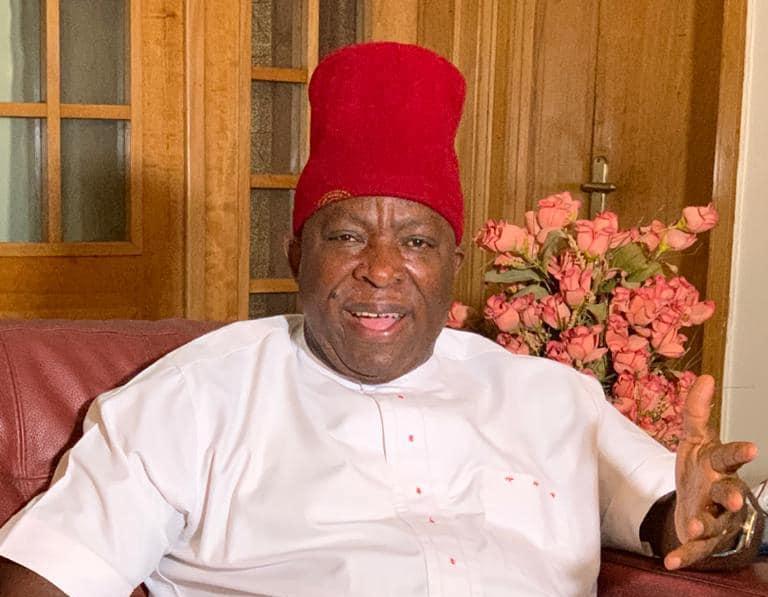
Victor Umeh: Courts Should Not Determine Election Outcome Nigeria
Summary
- Anambra Central Senator Victor Umeh recently stated that courts should not determine election outcomes in Nigeria.
- He emphasized the critical importance of ensuring that all votes cast are accurately counted.
- Umeh's comments were made in response to a call by Peter Obi, the Nigeria Democratic Congress (NDC) presidential candidate.
- Obi had urged the Independent National Electoral Commission (INEC) to guarantee vote integrity for the 2027 elections.
- This discussion highlights the ongoing debate about judicial intervention in Nigerian electoral results.
Senator Umeh's Stance on Electoral Justice
His assertion that courts should not determine election outcomes directly challenges the current framework where election petitions frequently lead to judicial reversals or affirmations of declared results.
Anambra Central Senator Victor Umeh recently voiced a strong opinion regarding the role of the judiciary in Nigeria's electoral process. On Monday, reports emerged of Umeh's assertion that judicial bodies ought not to be the ultimate arbiters of electoral outcomes in the nation. His comments underscored a fundamental belief that the integrity of the ballot box, ensuring every vote is duly recognized, remains paramount.
The senator's remarks highlight a recurring tension within Nigerian political discourse concerning the finality of election results. He articulated a clear position that the determination of who wins an election should primarily rest with the electorate through their ballots, rather than through judicial pronouncements. This perspective resonates with ongoing public debates about the sanctity of the electoral process and the extent of judicial intervention.
Catalyst for the Commentary
Senator Umeh's intervention was prompted by a recent appeal from Peter Obi, the presidential candidate for the Nigeria Democratic Congress (NDC). Obi had specifically called upon the Independent National Electoral Commission (INEC) to guarantee that all votes cast in the upcoming 2027 general elections are accurately counted and reflected in the final results. This plea from the NDC candidate served as the immediate backdrop for Senator Umeh's subsequent public statement.
The call by Peter Obi to INEC emphasizes a widespread desire for greater transparency and reliability in Nigeria's future electoral cycles. It reflects a sentiment among political stakeholders and the public alike that the electoral body must uphold its mandate to conduct free and fair elections, where the will of the people, as expressed through their votes, is unequivocally respected. Senator Umeh's comments, delivered over the weekend and reported on Monday, thus entered a pre-existing conversation about electoral integrity and institutional accountability.
The Broader Debate on Judicial Intervention
The stance taken by Anambra Central Senator Victor Umeh reignites a significant debate within Nigerian electoral jurisprudence concerning the appropriate boundaries of judicial intervention in election results. His assertion that courts should not determine election outcomes directly challenges the current framework where election petitions frequently lead to judicial reversals or affirmations of declared results. This ongoing discussion is critical for shaping public perception of the judiciary's role and the legitimacy of elected officials.
Historically, Nigerian courts have played a decisive role in resolving electoral disputes, often overturning results declared by INEC. This practice has led to a complex legal landscape where the finality of an election is often perceived to reside with the judiciary rather than the ballot box. Senator Umeh's remarks, therefore, contribute to a broader call for a re-evaluation of this dynamic, advocating for a system where the primary determinant of victory is the popular vote, thereby reducing the perceived influence of judicial pronouncements on who ultimately governs.
Implications for Future Elections and Reforms
The comments from Senator Victor Umeh carry considerable weight, particularly as Nigeria looks towards the 2027 general elections and the persistent calls for electoral reform. His emphasis on the primacy of votes counting, rather than judicial decisions, could influence how future election petitions are framed and adjudicated. It also signals a potential push for legislative efforts aimed at strengthening the electoral process itself, thereby minimizing the grounds for judicial challenges.
This perspective, shared by prominent figures like Peter Obi regarding INEC's responsibility for vote integrity, underscores a collective desire to enhance democratic processes. The debate surrounding judicial intervention in election results in Nigeria is not merely academic; it has profound implications for political stability, public trust in institutions, and the future trajectory of democratic governance. Senator Umeh's voice adds to a growing chorus advocating for a system where the electoral mandate is unequivocally derived from the electorate's choice, rather than the pronouncements of the courts.
Practical Implications
This commentary by a prominent senator highlights the ongoing political pressure and debate surrounding judicial intervention in Nigerian election outcomes, which could influence how election petitions are framed and adjudicated, and potentially signal future legislative efforts to reform electoral dispute resolution processes.
Source
How does this affect you?
Get an AI analysis of this article grounded in your jurisdictions, practice areas, and any policy documents you've uploaded to Wansom.
Finish Reading the Full Story and the Expert Analysis.
Wansom is AI and can make mistakes.