
Vaccine Trust on Rise as Measles Returns to US
What Happened
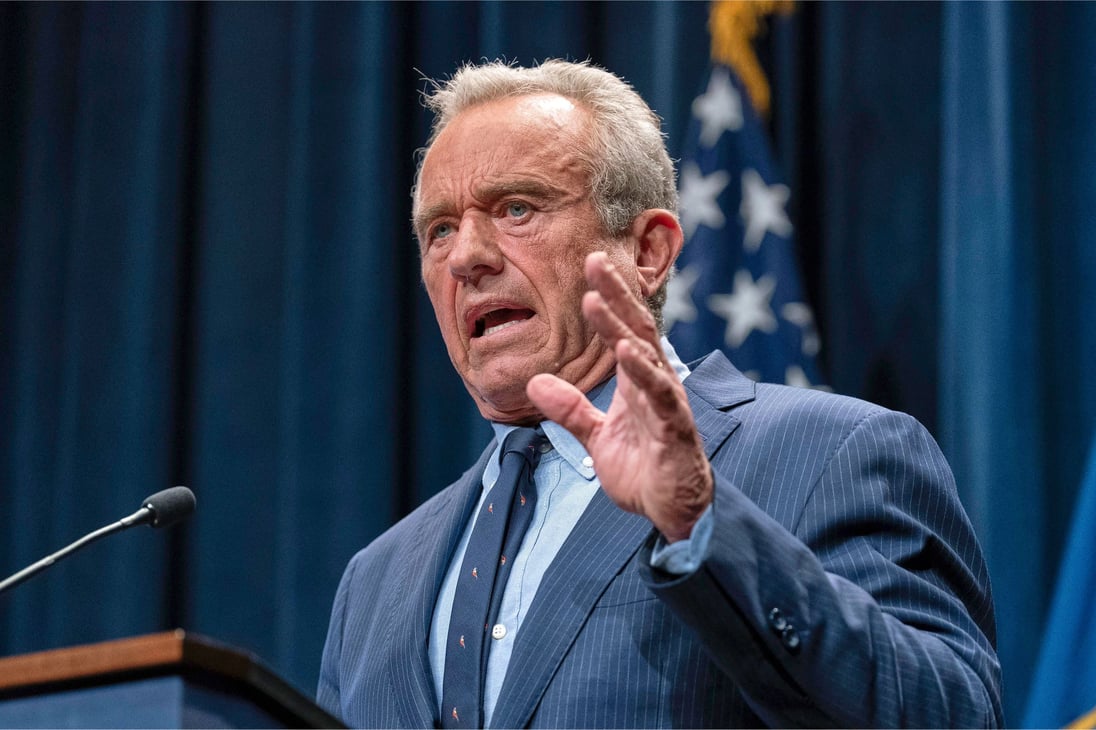
Experts warn public urgency will fade quickly if health care officials don't practice more consistent, year round engagement with patients and the broader public. Health and Human Services Secretary Robert F. Kennedy Jr. speaks during a news conference on the Autism report by the CDC at the Hubert Humphrey Building Auditorium in Washington, April 16, 2025. (AP Photo/Jose Luis Magana) (CN) — Public opinion is swinging back in favor of childhood vaccines as measles, once eradicated from the U.S., makes a comeback across the continent. Truncating a downward slope since 2001, 72% of respondents to a Gallup poll released Tuesday called childhood vaccinations “very important” or “extremely important,” compared to 69% in 2024. The share of those who answered “extremely important” rose by seven percentage points. Gallup released the data, collected in early October, just one week after world health officials announced that the U.S. has lost its measles-free status . The highly contagious virus once relegated to medical textbooks has spread — largely among the unvaccinated — at the highest rate in more than 30 years . There have been 43 new outbreaks and at least 5,838 confirmed cases of measles across the country in 2026, according to the Centers for Disease Control and Prevention. As the virus ravages communities , only 17% of respondents said they believed vaccines to be more dangerous than the diseases they prevent — statistically similar to 2024’s results but a far cry from the mere 6% who believed so in 2001. The reversal comes after more than a year of outbreaks and efforts by the Trump administration to revoke federal childhood vaccine recommendations , which resulted in multiple lawsuits still working through the courts. Dr. Jyoti Pathak, Dean of Arizona State University’s School of Technology for Public Health, said public trust naturally ebbs and flows with the current level of exposure. “Vaccines are often victims of their own success,” Pathak said in an interview. “When measles stayed largely out of sight for decades, many parents naturally focused on potential side effects rather than an illness they rarely encountered. As U.S. measles cases reach a 35-year high and local exposure notices hit communities across the country, the real-world risks of hospitalization and severe complications become tangible again.” Pathak warned that while recent outbreaks may wake people up, public urgency fades just as quickly as it enters the headlines, like it did during the smaller spike in 2019. Sustaining confidence after the immediate threat subsides requires moving away from reactive, crisis-only warnings toward consistent, year-round engagement led by trusted “local messengers like pediatricians, school nurses and community health workers,” Pathak said Still, attitudes about childhood vaccinations remain less favorable than in earlier decades. In 2001, 94% of people said vaccinations were very or extremely important. And a large gap still remains between Republicans and Democrats. Just 50% of Republicans believe that vaccines are very important, compared to 91% of Democrats. The data also shows that Republicans are more likely to say they’ve heard only about the negative effects of vaccines and have not heard about the benefits. Pathak declined to look at the issue through a purely partisan lens, instead blaming a broader shift against institutional trust fueled in part by fragmented information ecosystems. “Over the past decade — and accelerating sharply during the Covid-19 pandemic — public health guidance became entangled in wider debates over mandates, while algorithmic social media feeds sorted Americans into very different information environments,” Pathak said. To close the gap in vaccine confidence, Pathak says public health experts must “listen to families’ specific questions without judgment, communicate openly about both protective benefits and rare side effects, and use modern data/technology tools to spot emerging confu
Source
How does this affect you?
Get an AI analysis of this article grounded in your jurisdictions, practice areas, and any policy documents you've uploaded to Wansom.
Finish Reading the Full Story and the Expert Analysis.
Get the latest legal & regulatory intelligence in United States
Wansom is AI and can make mistakes.