
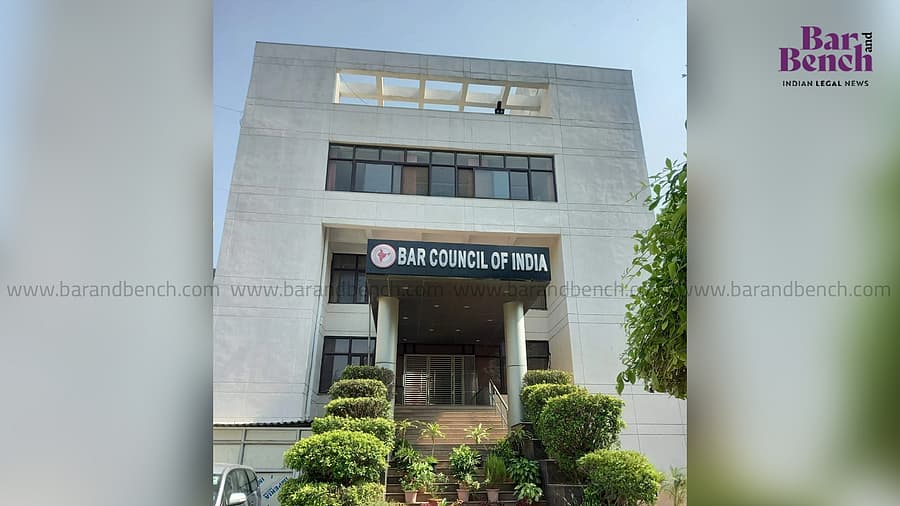
Uttarakhand Bar Council Members Challenge BCI's Women's Quota Implementation
Summary
- Ten elected members of the Uttarakhand Bar Council have challenged the BCI's implementation of women's quota in State Bar Councils.
- The petitioners argue that the BCI has unilaterally altered the composition of State Bar Councils without legal authority.
- The case is now before the Supreme Court, which has sought a response from the BCI and the Union Ministry of Law and Justice.
- If the petitioners are successful, it could have significant consequences for future election processes and council compositions.
BCI's Women's Quota Implementation Under Scrutiny
The petitioners argue that the BCI's actions are a clear example of executive overreach, and that they have unilaterally altered the composition of State Bar Councils without any legal authority to do so.
A recent development in the Indian legal landscape has seen ten elected members of the Uttarakhand Bar Council challenging the implementation of a July 2026 resolution and circular issued by the Bar Council of India (BCI). The petitioners, led by Kuldeep Kumar, argue that the BCI's approach to ensuring women's representation in State Bar Councils is unconstitutional. According to them, the BCI has overstepped its authority by unilaterally increasing the strength of State Bar Councils without a legal amendment or specific direction from the Supreme Court.
The BCI's circular proposed adding additional seats to State Bar Councils where an insufficient number of women were elected, in order to comply with the Supreme Court-mandated 30 per cent representation for women. However, the petitioners contend that this amounts to unlawfully expanding the Council to secure women's representation.
The elections to member positions of the Bar Council of Uttarakhand took place in February this year, and the BCI's actions have raised questions about the legitimacy of the current composition of State Bar Councils.
Relevant Legal Context
In 2022, the Supreme Court passed an order in Yogamaya MG v. Union of India & Ors, directing that 30 percent of positions in State Bar Councils must be occupied by women. This directive was aimed at promoting gender diversity in Indian Bar Councils. However, the BCI's implementation of this directive has been challenged by the Uttarakhand Bar Council members.
The petitioners argue that the BCI's actions are a clear example of executive overreach, and that they have unilaterally altered the composition of State Bar Councils without any legal authority to do so. This raises important questions about the limits of the BCI's powers and its relationship with the Supreme Court.
The case is now before the Supreme Court, which has sought a response from the BCI and the Union Ministry of Law and Justice.
Why It Matters
The implications of this case extend far beyond the specific issue at hand. If the petitioners are successful in their challenge, it could have significant consequences for future election processes and council compositions. Lawyers should be paying close attention to this development, as it has the potential to impact compliance exposure and regulatory requirements.
Moreover, the case highlights the ongoing struggle for women's representation in Indian Bar Councils. Despite efforts to promote diversity and inclusion, women continue to face significant barriers to entry and advancement in the legal profession. This case is an important opportunity for the Supreme Court to address these issues and ensure that the BCI's actions are consistent with the principles of equality and justice.
Ultimately, the outcome of this case will depend on the court's interpretation of the BCI's powers and its relationship with the Supreme Court. However, one thing is clear: the stakes are high, and the implications will be far-reaching.
Practical Implications
Lawyers should watch for potential compliance exposure as the Supreme Court weighs in on BCI's implementation of women's quota in State Bar Councils, which could impact future election processes and council compositions.
Source
Source: Original reporting via [Source]
How does this affect your business?
Get an AI analysis of this article grounded in your jurisdictions, practice areas, and any policy documents you've uploaded to Wansom.
Wansom is AI and can make mistakes.