
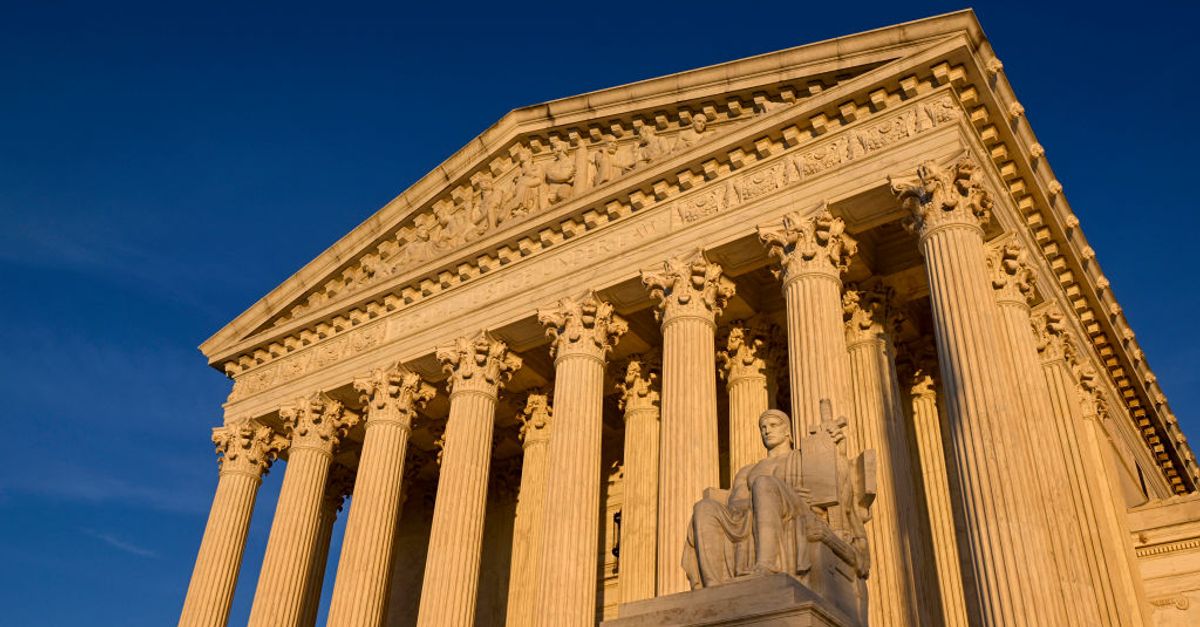
SCOTUS: To Address Suncorp Energy Boulder County Preemption Climate Change
Summary
- The Supreme Court will hear *Suncor Energy, Inc. v. County Commissioners of Boulder County* on the first day of its October 2026 Term.
- The case addresses whether state law suits against energy companies for their role in causing climate change are preempted by federal law.
- Preemption issues frequently come before the Supreme Court, but its rulings in this area often lack a clear, consistent pattern.
- Last term, the Court decided two major preemption cases, *Monsanto Co. v. Durnell* and *Watson v. Republican National Committee*, with differing outcomes.
- The *Suncor Energy* decision will significantly impact the scope of federal preemption over state-level climate change liability claims, affecting future litigation and risk assessments.
Upcoming Climate Preemption Showdown
For lawyers advising energy companies or engaged in environmental litigation, the outcome of *Suncor Energy Inc v Boulder County* will be crucial.
The U.S. Supreme Court is poised to address a pivotal question concerning the reach of federal authority over state-level climate litigation. On the inaugural day of its October 2026 Term, the high court will hear arguments in *Suncor Energy, Inc. v. County Commissioners of Boulder County*. This significant case directly confronts the issue of whether legal actions brought under state law against energy companies, alleging their responsibility for climate change, are effectively nullified or overridden by existing federal statutes.
The outcome of this specific dispute, often referred to as the Suncor Energy Boulder County preemption climate change case, holds substantial implications for the future of environmental law and corporate liability. It will determine the extent to which states can pursue their own legal remedies against industries for climate-related damages, or if such efforts are exclusively within the purview of federal regulation.
The Supreme Court's Preemption Landscape
Questions of preemption, which involve determining when federal law takes precedence over state law, are a recurring feature on the Supreme Court's docket. Despite their frequent appearance, the Court's approach to these complex jurisdictional conflicts often lacks a discernible, consistent pattern. While some preemption decisions appear to align with specific ideological viewpoints, others defy such straightforward categorization.
This inconsistent application makes predicting outcomes particularly challenging for legal practitioners and litigants. The Court's varied interpretations of congressional intent and the scope of federal regulatory power mean that each preemption case presents a unique analytical puzzle, contributing to the ongoing uncertainty in this area of law.
Recent Illustrative Preemption Rulings
The Court's recent activity underscores the diverse nature of its preemption jurisprudence. In its previous term, two prominent cases highlighted this variability. One such case, *Monsanto Co. v. Durnell*, centered on whether the Federal Insesticide, Fungicide, and Rodenticide Act (FIFRA) explicitly preempted state tort liability claims based on a failure-to-warn theory. The Court, in a 7-2 decision, concluded that the federal statute did indeed expressly preempt such state tort liability. Justice Brett Kavanaugh authored the majority opinion, while Justice Ketanji Brown Jackson penned a dissent, joined by Justice Neil Gorsuch, regarding the scope of FIFRA preemption Monsanto Durnell.
In a contrasting outcome, the Court also heard *Watson v. Republican National Committee*. This case involved a 5-4 ruling that determined federal law, which specifies the date of federal elections, does not prevent states from counting absentee ballots that arrive within five days following the election. Justice Amy Coney Barrett delivered the Court's opinion, stating: "Election Day is simply 'when the electorate must make its choice,' and 'the electorate's choice is made when voting is complete, not when ballots are received.'" These cases demonstrate the Court's often divergent paths when assessing the boundaries between federal and state authority.
Defining the Future of Climate Litigation
The impending decision in *Suncor Energy, Inc. v. County Commissioners of Boulder County* is poised to significantly shape the landscape for energy companies and environmental litigation. The Court's ruling on whether federal law preempts state climate suits will establish critical precedents for future legal challenges. This case represents a key moment for SCOTUS climate change preemption, potentially clarifying the extent to which states can hold corporations accountable for their contributions to global warming.
For lawyers advising energy companies or engaged in environmental litigation, the outcome of *Suncor Energy Inc v Boulder County* will be crucial. It will define the scope of federal preemption over state-level climate change liability claims, thereby altering litigation strategies and risk assessments for clients across the industry. The decision will have a profound impact on the viability of state tort liability energy companies may face in relation to climate change.
Practical Implications
Lawyers advising energy companies or involved in environmental litigation should closely monitor *Suncorp Energy v. Boulder County* as its outcome will define the scope of federal preemption over state-level climate change liability claims, potentially altering litigation strategies and risk assessments for clients.
Source
How does this affect you?
Get an AI analysis of this article grounded in your jurisdictions, practice areas, and any policy documents you've uploaded to Wansom.
Finish Reading the Full Story and the Expert Analysis.
Get the latest legal & regulatory intelligence in United States
Wansom is AI and can make mistakes.