
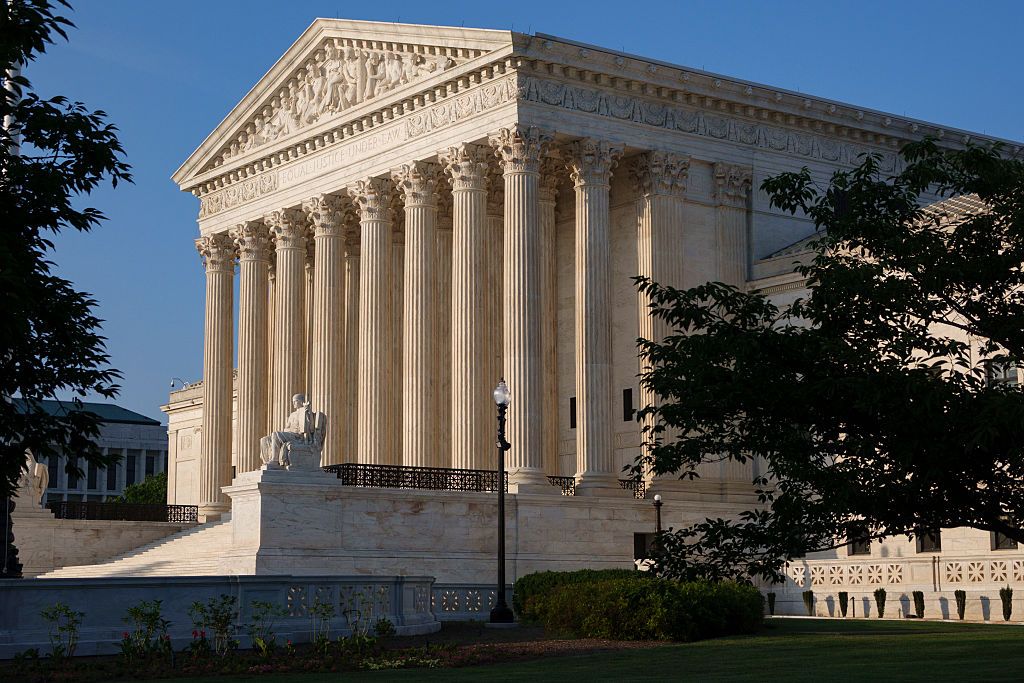
Supreme Court: Agrees To Review Trump Asylum Suspension
Summary
- The Supreme Court has agreed to review a Trump administration policy that suspended access to asylum for immigrants at the U.S.-Mexico border.
- The Court will examine a D.C. federal appeals court ruling that previously struck down the policy as government overreach.
- The case, *Mullin v. Refugee and Immigrant Center for Education and Legal Services*, stems from a January 20, 2025, proclamation by President Trump.
- The proclamation declared an "invasion" at the southern border and blocked entry and asylum claims for certain noncitizens.
- This case adds to the Supreme Court's growing immigration docket, which includes challenges to third-party removals and detention without hearings.
Supreme Court to Review Asylum Suspension
The nation's highest court has agreed to consider the legality of a Trump administration policy that sought to restrict access to asylum for individuals arriving at the U.S.-Mexico border.
The nation's highest court has agreed to consider the legality of a Trump administration policy that sought to restrict access to asylum for individuals arriving at the U.S.-Mexico border. This decision, announced on a recent Friday following a private judicial conference, means the Supreme Court will now scrutinize a prior ruling by a federal appeals court in Washington, D.C., which had invalidated the policy, characterizing it as an overreach of governmental authority.
This significant development places the case, formally known as *Mullin v. Refugee and Immigrant Center for Education and Legal Services*, squarely on the Supreme Court's docket. The justices' agreement to hear this matter underscores its importance in the ongoing legal discourse surrounding immigration and border security, particularly concerning the rights of asylum seekers at the southern border.
Origins of the Policy
The challenged policy originates from a proclamation issued by then-President Donald Trump on January 20, 2025. In this executive order, President Trump asserted that an "invasion is ongoing at the southern border" and consequently moved to suspend, or temporarily block, the entry of noncitizens deemed to be "engaged in the invasion." This declaration formed the basis for the subsequent restrictions on asylum claims.
Crucially, the proclamation also stipulated that these noncitizens would be ineligible to seek various protections, including asylum, which would otherwise permit them to remain within the United United States. Following this presidential directive, the Department of Homeland Security subsequently released guidance that specifically prohibited certain noncitizens from submitting asylum applications, directly implementing the administration's new stance on border entries and protection claims.
Broader Immigration Docket
The Supreme Court's decision to take up the Trump administration's asylum suspension case further expands its already substantial immigration docket. This particular case joins several other high-profile challenges related to immigration policies that the Court is currently slated to address, highlighting a period of intense judicial scrutiny over federal immigration practices.
Among the other cases awaiting review are challenges to the Trump administration's controversial practice of deporting immigrants to countries not explicitly named in their removal orders, a procedure often referred to as "third-party removals." Additionally, the Court is examining the policy of detaining immigrants apprehended within the United States without providing them the opportunity for a hearing, raising questions about due process and fundamental rights for asylum seeker rights US. The addition of the asylum suspension case signals the Court's continued engagement with complex and impactful immigration law issues.
Practical Implications
Lawyers practicing immigration law must closely monitor the Supreme Court's review of the Trump administration's asylum suspension, as the forthcoming decision will significantly impact the legal framework for asylum seekers at the U.S.-Mexico border and necessitate adjustments in client advice and case strategy.
Source
How does this affect you?
Get an AI analysis of this article grounded in your jurisdictions, practice areas, and any policy documents you've uploaded to Wansom.
Finish Reading the Full Story and the Expert Analysis.
Get the latest legal & regulatory intelligence in United States
Wansom is AI and can make mistakes.