
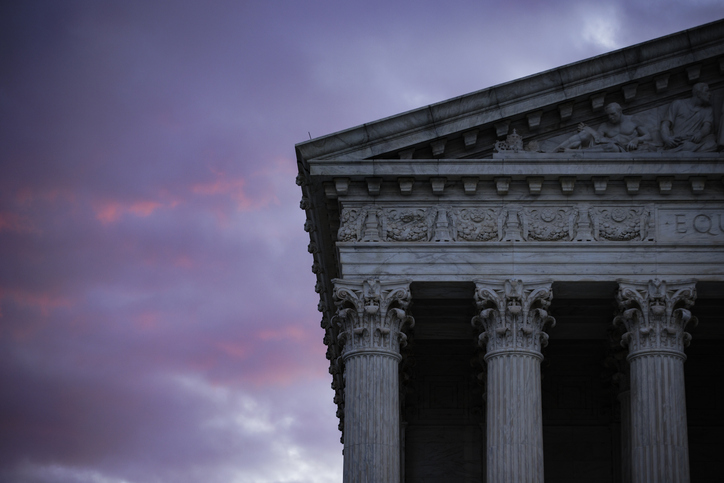
US Supreme Court: Shadow Docket Dominance Now Primary Method
Summary
- The US Supreme Court's "shadow docket" has become its primary method for issuing rulings, rather than a secondary function.
- Justice Samuel Alito criticized media use of the term "shadow docket," claiming it unfairly suggests secretive, improper decision-making.
- Justice Brett Kavanaugh proposed rebranding it as the "interim docket" to make consequential constitutional decisions without full briefing or opinion seem less controversial.
- Many significant constitutional decisions are now made via emergency applications, lacking detailed written opinions.
- This shift impacts legal predictability and transparency, making it harder for lawyers to understand and advise on the Court's reasoning.
The Rise of the Shadow Docket
The increasing reliance on the Supreme Court's shadow docket for critical constitutional matters has profound implications for legal practitioners and the public alike.
The US Supreme Court's operational landscape has undergone a significant transformation, with its so-called "shadow docket" now representing the primary method through which the Court conducts its business. This shift indicates a departure from traditional transparent judicial processes, as decisions made through this expedited channel have become the norm rather than the exception. What was once considered a secondary, less formal mechanism for urgent matters has now taken precedence, fundamentally altering how the nation's highest court issues rulings.
Historically, the concept of a "shadow" implies something less substantial or trailing behind a main entity. However, in the context of the Supreme Court, this metaphor no longer holds true. The sheer volume and impact of rulings issued via the shadow docket suggest that it has eclipsed the regular, fully briefed and argued docket, becoming the Court's preferred avenue for addressing consequential constitutional issues. This dominance means that transparency in judicial decision-making is increasingly rare, marking a new era for the Court's procedural approach.
Judicial Scrutiny and Renaming Efforts
The term "shadow docket" itself has drawn considerable criticism from within the Supreme Court. Justice Samuel Alito, for instance, publicly expressed his disapproval, contending that media use of the phrase unfairly implies the Court is rendering significant judgments in a "novel, secretive, improper way in the middle of the night, hidden from public view." Despite this objection, the very nature of these proceedings often aligns with the description Alito criticized, involving rapid decisions made with limited public insight.
In an attempt to reframe public perception, Justice Brett Kavanaugh proposed an alternative designation: the "interim docket." This suggestion aimed to present the numerous consequential constitutional decisions, which are often made without full briefing or a written opinion, in a less controversial light. The push for a new nomenclature underscores the judiciary's awareness of the public's concern regarding the non-transparent decisions emanating from this expedited process.
Impact of Non-Transparent Decisions
The increasing reliance on the Supreme Court's shadow docket for critical constitutional matters has profound implications for legal practitioners and the public alike. These decisions, frequently issued as emergency applications, bypass the comprehensive briefing, oral arguments, and detailed written opinions characteristic of the Court's regular docket. This lack of a fully articulated rationale makes it challenging for lawyers to anticipate future rulings, advise clients effectively, or understand the precise legal reasoning underpinning these significant outcomes.
When the Supreme Court issues decisions without opinion, it creates a less predictable legal environment. The absence of detailed reasoning means that the full scope and precedential value of these rulings can be ambiguous, complicating litigation strategy and legal analysis. This shift towards more opaque judicial pronouncements highlights a growing concern about the accessibility and clarity of the Court's most impactful judgments.
Why Shadow Docket Dominance Matters
The US Supreme Court shadow docket dominance signifies a fundamental change in how the Court operates and how its decisions are perceived. When the informal, expedited process becomes the primary mechanism for resolving major legal questions, it raises questions about accountability and the integrity of judicial review. The expectation of a deliberative process, culminating in reasoned opinions, is increasingly unmet.
This procedural evolution means that lawyers must be acutely aware of less transparent and less predictable legal developments. The absence of detailed reasoning in many of these Supreme Court decisions without opinion impacts litigation strategy and client advice, requiring a more cautious and interpretive approach to legal developments. The shift from a transparent, deliberative body to one that frequently issues consequential rulings with minimal explanation represents a significant challenge to the traditional understanding of judicial process.
Practical Implications
The increasing reliance on the US Supreme Court's shadow docket for consequential constitutional decisions means lawyers must be acutely aware of less transparent and less predictable legal developments, impacting litigation strategy and client advice where detailed reasoning is absent.
Source
How does this affect you?
Get an AI analysis of this article grounded in your jurisdictions, practice areas, and any policy documents you've uploaded to Wansom.
Finish Reading the Full Story and the Expert Analysis.
Get the latest legal & regulatory intelligence in United States
Wansom is AI and can make mistakes.