
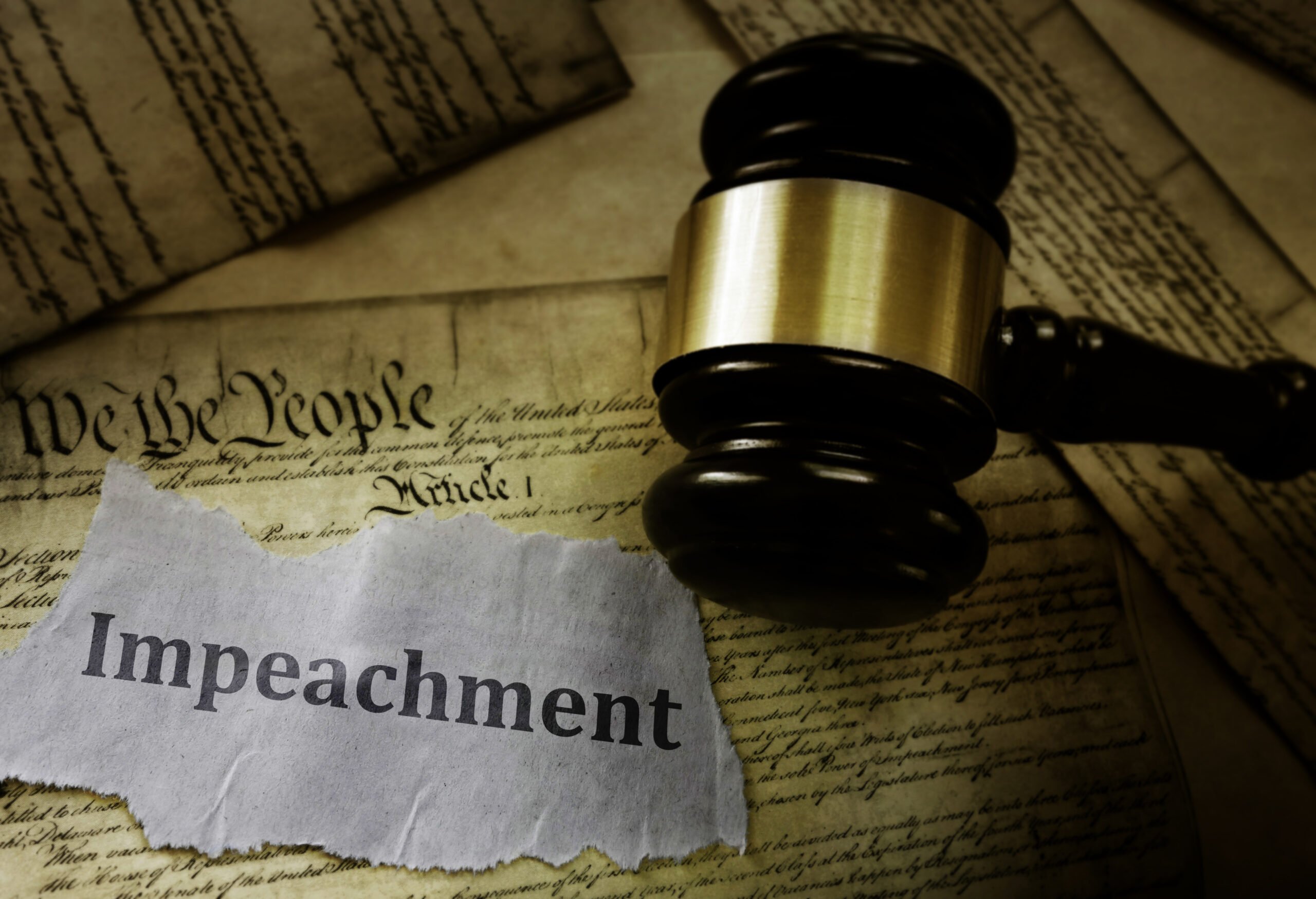
US Supreme Court Justice Impeached by House: First Trial in History
Summary
- A Supreme Court Justice was impeached by the House of Representatives for the first time in history.
- The charges against the Justice were brought forth on eight articles, accusing him of 'nakedly partisan' conduct.
- The acquittal of the Justice established that a judge cannot be removed simply for making unpopular rulings.
- This development highlights the importance of understanding the limits of executive branch influence over judicial appointments and removals.
A Landmark Trial
The acquittal of the Justice was seen as a significant moment in establishing the principle that a judge cannot be removed simply for making rulings that are unpopular with the ruling party.
In a historic trial, a Supreme Court Justice was impeached by the House of Representatives. The Justice in question was appointed by George Washington and had previously signed the Declaration of Independence. This marked the first time a Supreme Court Justice had faced impeachment proceedings.
The charges against the Justice were brought forth on eight articles, with his political enemies accusing him of conduct that was deemed 'nakedly partisan'.
Legal Context
The impeachment process is governed by Article II, Section 4 of the US Constitution, which states that judges, including Supreme Court Justices, can be removed from office for 'treason, bribery, or other high crimes and misdemeanors.' Article III, Section 1 also states that judges shall hold their offices 'during good Behaviour.' However, the trial highlighted a crucial aspect of the judicial system: the limits of executive branch influence over judicial appointments and removals. This development underscores the importance of understanding these boundaries in order to ensure the independence of the judiciary.
The acquittal of the Justice was seen as a significant moment in establishing the principle that a judge cannot be removed simply for making rulings that are unpopular with the ruling party.
Why It Matters
This landmark trial has far-reaching implications for the US judicial system. It serves as a reminder of the importance of maintaining the independence of the judiciary and the need to respect the limits of executive branch influence over judicial appointments and removals. Lawyers advising clients on high-stakes cases involving federal judges must be aware of these principles in order to navigate the complexities of the impeachment process.
The trial also highlights the significance of understanding the historical context of the US Supreme Court and its role in shaping the country's legal landscape.
Practical Implications
This development highlights the importance of understanding the limits of executive branch influence over judicial appointments and removals, which lawyers should be aware of when advising clients on high-stakes cases involving federal judges.
Source
How does this affect you?
Get an AI analysis of this article grounded in your jurisdictions, practice areas, and any policy documents you've uploaded to Wansom.
Wansom is AI and can make mistakes.