
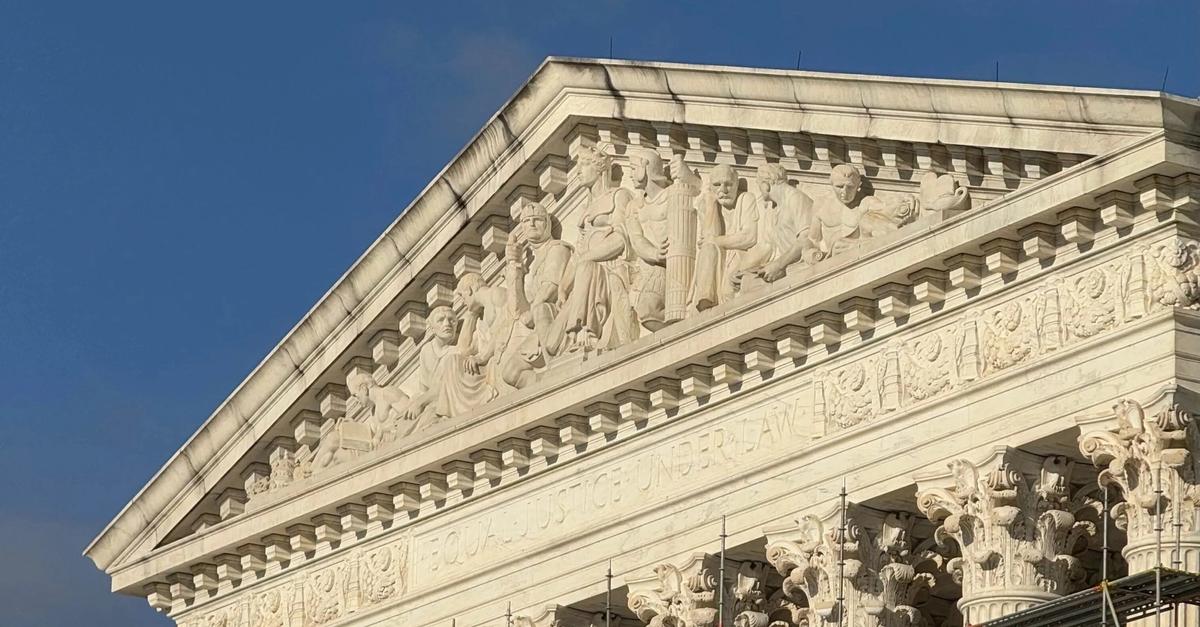
US Supreme Court: Denies Stay of Execution for William Reaves
On Tuesday, the United States Supreme Court denied a request for a stay of execution from William Reaves, who was subsequently executed in Florida for a 1986 murder. This decision underscores the Court's role in capital punishment appeals, often serving as the final arbiter in last-minute efforts to halt executions, and highlights the stringent legal standards required to secure such a stay.
This development is legally significant for practitioners in capital defense and appellate law, as it reinforces the high bar for intervention by the nation's highest court in death penalty cases. Beyond this, the excerpt also reveals the Supreme Court's active engagement with other pressing federal issues, including a pending application from three cities and an immigrant legal services group seeking to pause an agreement between Texas and the Department of Justice concerning immigration judges' ability to pause deportation proceedings. Furthermore, the Court is poised to rule on a Trump administration request to implement a new Federal Bureau of Prisons policy restricting healthcare for transgender inmates, indicating its continued influence on administrative policy and civil rights.
The legal context for these matters spans several critical areas of federal law. The denial of the stay of execution implicates the Eighth Amendment's prohibition against cruel and unusual punishment and the procedural due process rights under the Fourteenth Amendment, as well as the Court's appellate jurisdiction. The immigration matter involves federal immigration statutes and administrative law, specifically challenging a Biden-era rule and a subsequent agreement. The transgender inmate healthcare policy dispute touches upon administrative law, potentially the Eighth Amendment regarding medical care for prisoners, and equal protection principles under the Fourteenth Amendment. The key parties involved include William Reaves, the State of Florida, the Supreme Court itself, the Department of Justice, the State of Texas, various cities and immigrant legal services groups, the Trump administration, and the Federal Bureau of Prisons.
Practitioners should closely monitor the outcomes of the pending applications before the Supreme Court, particularly those concerning immigration and transgender inmate healthcare, as these decisions will have far-reaching implications for federal policy, administrative agency authority, and individual rights. Attorneys involved in capital cases must remain acutely aware of the extremely narrow avenues for Supreme Court intervention. The excerpt also subtly hints at ongoing judicial philosophy discussions within the Court through the mention of Justice Kagan's comments, which, while not detailed, suggest an awareness among the justices of the Court's ideological leanings and their potential impact on future jurisprudence.
How does this affect you?
Get an AI analysis of this article grounded in your jurisdictions, practice areas, and any policy documents you've uploaded to Wansom.
Finish Reading the Full Story and the Expert Analysis.
Get the latest legal & regulatory intelligence in United States
Wansom is AI and can make mistakes.