
US Proposes Sudan Arms Embargo Expansion to Include Drones
Summary
- On August 24, 2026, the United States proposed expanding the arms embargo in Sudan to cover the entire country.
- The proposed expansion specifically includes drones and related systems and technologies.
- The US draft resolution also seeks to increase the number of experts monitoring sanctions under Resolution 1591.
- Russia and China immediately expressed strong opposition to the American proposal.
- The initiative aims to reflect the conflict's realities and pressure all parties to end fighting, without altering battlefield dynamics.
Proposed Expansion of Sudan Arms Embargo
For compliance officers and legal counsel advising entities with operations or trade ties to Sudan, this UNSC Sudan arms embargo proposal represents a critical development.
On Monday, August 24, 2026, the United States formally proposed to the United Nations Security Council (UNSC) a significant expansion of the existing arms embargo in Sudan. The proposal seeks to extend the current restrictions, which primarily target the Darfur region, to encompass the entirety of Sudanese territory. A key element of this US proposes Sudan arms embargo expansion drones is the explicit inclusion of unmanned aerial vehicles (UAVs), commonly known as drones, along with their associated systems and technologies, within the scope of the ban.
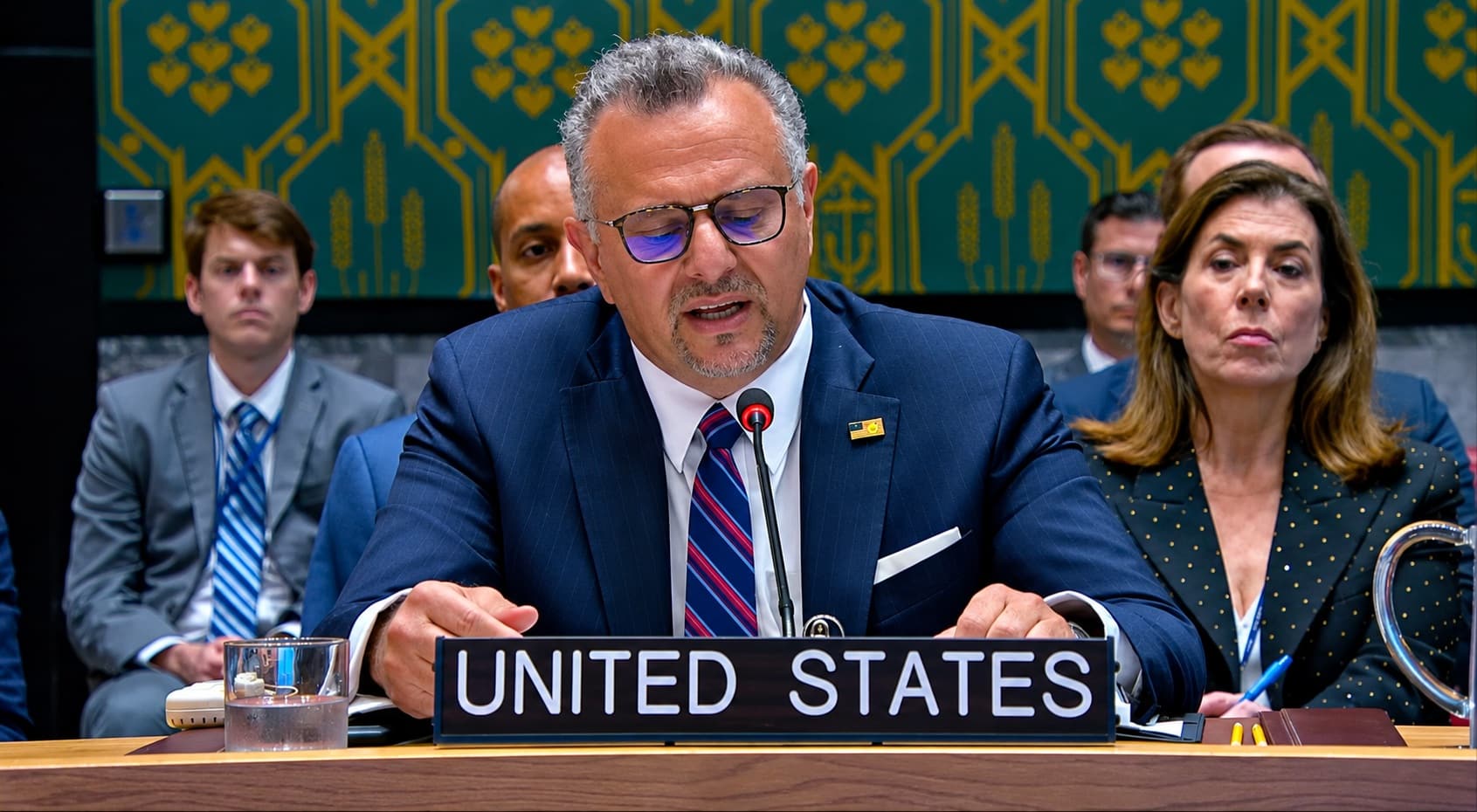
This initiative was unveiled during a UNSC briefing session dedicated to the ongoing situation in Sudan. The session featured remarks from high-ranking UN officials, alongside Massad Boulos, the U.S. President's Advisor for Arab and African Affairs, and Al-Harith Idris, Sudan's Permanent Representative to the UN. Discussions among the Council members also took place. The American proposal, however, immediately encountered strong resistance, with both Russia and China voicing their unequivocal objections to the suggested measures.
Legal and Regulatory Context
Massad Boulos articulated that the United States had put forth a robust draft resolution outlining four primary components. Foremost among these is the geographical broadening of the arms embargo to cover all of Sudan, a move that would significantly alter the landscape of International sanctions Sudan. Crucially, the draft specifies that drones, their operational systems, and related technologies would be explicitly prohibited under these expanded restrictions, directly addressing the proliferation of advanced weaponry in the conflict.
Beyond the expanded scope, the draft resolution also calls for strengthening the enforcement mechanisms of existing sanctions. It specifically demands that the UN Secretary-General augment the number of experts serving on the panel established under Resolution 1591 Sudan arms embargo. Furthermore, it advocates for enhanced collaboration between this expert panel and other regional expert teams. The overarching goal of these provisions is to furnish the Security Council with more precise and comprehensive intelligence regarding violations of asset freezes, travel bans, and the arms embargo itself, thereby improving accountability and monitoring capabilities for Drones Sudan UN sanctions.
Why It Matters
The American proposal is framed as a direct response to the severe realities of the ongoing conflict in Sudan, aiming to intensify pressure on all involved parties to cease hostilities. According to the U.S. representative, these proposed measures are not designed to confer advantages or disadvantages on any particular faction, nor are they intended to alter the dynamics of the battlefield, save for accelerating a peaceful resolution. The initiative also explicitly avoids creating or implying any false equivalence between the warring parties.
For compliance officers and legal counsel advising entities with operations or trade ties to Sudan, this UNSC Sudan arms embargo proposal represents a critical development. Should the resolution pass, the expanded geographical reach and the specific inclusion of drones and related technologies would necessitate a thorough review and potential overhaul of existing compliance frameworks. Monitoring this Sudan sanctions update UN is paramount, as it could significantly broaden compliance obligations and restrict permissible activities across the entire country, demanding heightened vigilance to avoid inadvertent breaches of international law.
Practical Implications
Compliance officers and legal counsel advising entities involved in trade or operations with Sudan should closely monitor the UN Security Council's deliberations on the proposed expansion of the arms embargo, particularly concerning drones and related technologies, as it could significantly broaden compliance obligations and restrict permissible activities across the entire country.
Source
How does this affect you?
Get an AI analysis of this article grounded in your jurisdictions, practice areas, and any policy documents you've uploaded to Wansom.
Wansom is AI and can make mistakes.