
US Proposes Sudan Arms Embargo Expansion to UN Security Council
Summary
- The US has proposed expanding the existing Darfur arms embargo to cover all of Sudan and include drones, their components, and related technologies.
- Denmark, the UK, and France support the US proposal, while China, Russia, and Sudan's UN representative oppose it.
- The initiative aims to stem the flow of weapons and drones fueling the conflict in Sudan, which began in April 2023.
- Denmark's Foreign Minister also called for the International Criminal Court's jurisdiction to be extended to cover all of Sudan.
- Russia criticized existing sanctions as hostile and detrimental to Sudan's economy, while differentiating between the warring parties' use of drones.
What Happened
The United States has recently presented a significant proposal to the UN Security Council, advocating for a substantial expansion of the existing arms embargo currently limited to Sudan's Darfur region.
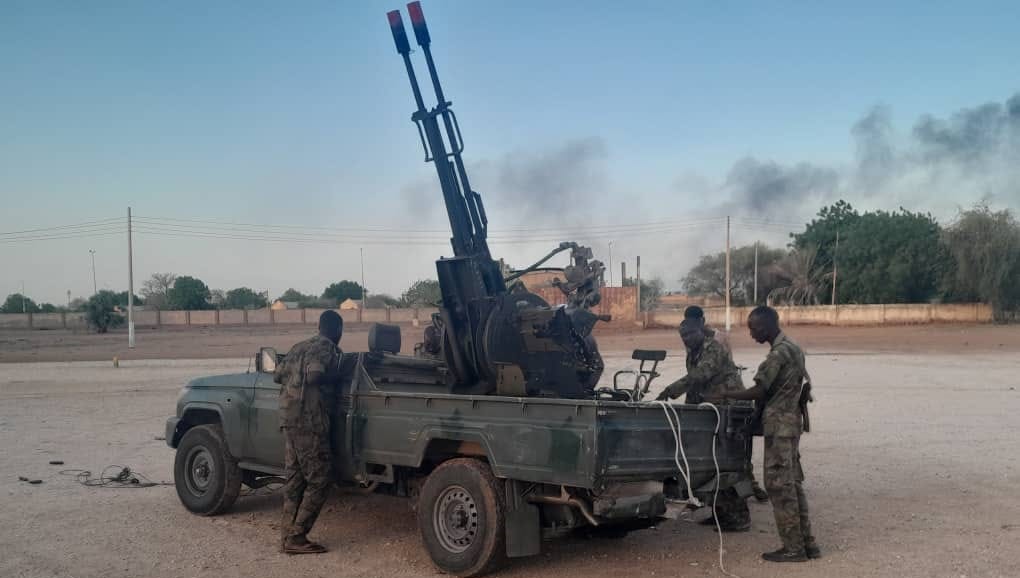
The United States has recently presented a significant proposal to the UN Security Council, advocating for a substantial expansion of the existing arms embargo currently limited to Sudan's Darfur region. This new measure seeks to extend the embargo's reach across the entirety of Sudan and specifically include drones, their components, and related technologies. The primary objective behind this initiative is to curb the flow of weapons and unmanned aerial vehicles that have been actively fueling the protracted conflict in Sudan, which commenced in April 2023.
Massad Boulos, a senior adviser to the US president for Arab and African affairs, informed the Security Council during a recent session that more than a dozen nations are reportedly providing various forms of military assistance to the two warring factions. This external support, he noted, is contributing to the prolongation of the conflict and the alarming increase in civilian casualties. Beyond the geographical and technological expansion, the US proposal also aims to bolster the capabilities of the expert panel tasked with monitoring sanctions, suggesting enhanced cooperation with other UN sanctions teams and panels to improve oversight and enforcement.
International Reactions and Divisions
The US proposal to expand the UN Security Council Sudan arms embargo has elicited varied and often opposing responses from member states during a recent Security Council session. Denmark, the United Kingdom, and France have publicly expressed their support for the measure, aligning with the US stance on restricting weapon flows.
Conversely, China, Russia, and Sudan's own representative to the UN have voiced strong opposition to the proposed expansion. Adding to this, Sudan's army chief and head of the Sovereignty Council, Abdelfattah El Burhan, publicly downplayed the potential impact of any additional sanctions or embargoes on the country during a police graduation ceremony held in Khartoum, suggesting a dismissive attitude towards such international pressures.
Legal and Humanitarian Context
Beyond the specifics of the arms embargo, Denmark's Foreign Minister, Lars Løkke Rasmussen, whose country holds the Security Council presidency for August, introduced a broader legal call. He advocated for the jurisdiction of the International Criminal Court (ICC) to be extended to cover all of Sudan, signaling a desire for greater accountability for atrocities committed during the conflict.
Rasmussen emphasized the Security Council's fundamental responsibility to halt the ongoing war, which he described as a significant destabilizing force across the entire region. He further advocated for the immediate implementation of a humanitarian truce that would ultimately pave the way for a comprehensive ceasefire, deeming this the sole effective means of ensuring genuine protection for civilians caught in the conflict.
Geopolitical Implications and Sanctions Debate
Russia's representative, Vasily A Nebenzya, articulated his country's firm opposition to expanding Security Council sanctions or the arms embargo on Sudan. While acknowledging "worrying assessments" regarding the increased use of combat drones in the Sudanese conflict and calls for a comprehensive ban on such systems, Nebenzya conceded that attack drones indeed pose a serious threat. However, he drew a distinction between the warring parties, asserting that the Rapid Support Forces (RSF) deploy drones indiscriminately to maximize damage to civilian infrastructure and populations, whereas the Sudanese Armed Forces (SAF) aim for precision in their attacks. He argued against the notion of equal responsibility for the consequences of weapons use, portraying the SAF as conducting an operation to neutralize what he termed "rebels."
Nebenzya also expressed strong dissatisfaction with existing sanctions imposed on Sudan. He specifically cited an EU ban on Sudanese gold imports from July and US restrictions, including a prohibition on international financial institutions providing credit or financial and technical assistance to Sudan. Nebenzya characterized these measures as "unacceptable and hostile" towards the Sudanese government, questioning their appropriateness given the country's severe economic struggles and urgent need for resources to rehabilitate essential sectors like health, water, agriculture, and other critical infrastructure. He underscored that the burden of such economic strangulation ultimately falls disproportionately upon ordinary Sudanese citizens.
Practical Implications
Compliance officers and legal counsel advising clients with operations or supply chains involving Sudan should closely monitor the UN Security Council's deliberations on expanding the arms embargo to cover the entire country and include drones, as approval would introduce new, broader restrictions on trade, technology transfer, and financial transactions, increasing compliance risks.
Source
How does this affect you?
Get an AI analysis of this article grounded in your jurisdictions, practice areas, and any policy documents you've uploaded to Wansom.
Wansom is AI and can make mistakes.