
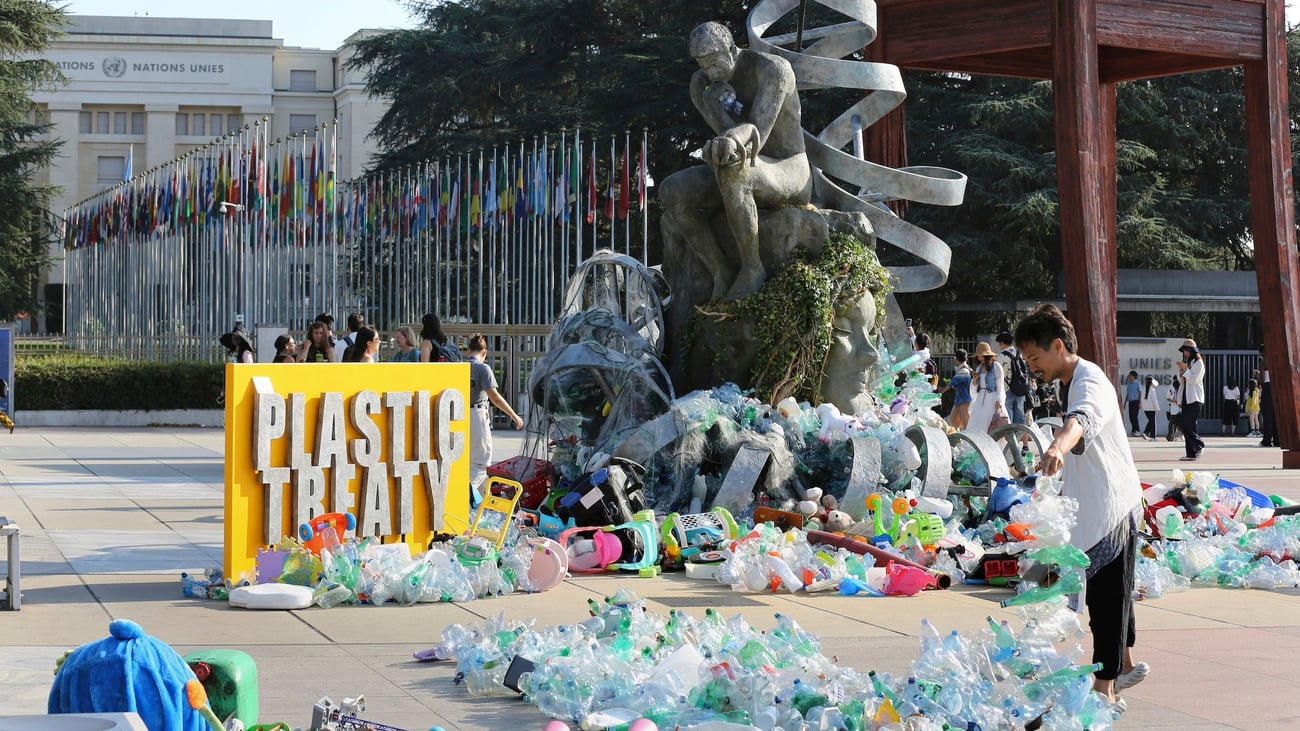
US Plastics Treaty Negotiators Criticized for Weaker Ambition
Summary
- A new document attempting to revive a stalled global plastics treaty has been criticized for its lack of ambition.
- The document bears striking similarities to the draft text that was rejected by negotiators in August 2025.
- Environmental groups have condemned the document for failing to address the scale of plastic pollution.
- The treaty negotiations involve 185 countries and have been hindered by disagreements between two main blocs.
- Research has shown that plastic pollution costs the world $1.5 trillion annually in health problems.
What Happened
The treaty aims to curb humanity's production of plastic, which is expected to triple by 2060.
A new document attempting to revive a stalled global plastics treaty has been met with criticism for its lack of ambition. The document, released quietly over the weekend, is an informal reference text that does not constitute a negotiated or agreed-upon version. Despite this, it bears striking similarities to the draft text that was rejected by negotiators in August 2025. According to Richard Thompson, a British marine biologist and independent scientific observer, the new document is 'even slightly weaker' than its predecessor. This assessment has been echoed by environmental groups, who have condemned the document for failing to address the scale of plastic pollution. The treaty negotiations, which involve 185 countries, have been stalled due to disagreements between two main blocs: a majority of nations calling for ambitious, legally binding measures to curb plastic production, and a smaller group of oil-producing states pushing for a narrower focus on waste management.
Legal Context
The global plastics treaty is a once-in-a-generation opportunity to address the growing problem of plastic pollution. However, the negotiations have been hindered by the differing views of two main blocs: those pushing for ambitious measures and those seeking a more limited approach. The treaty aims to curb humanity's production of plastic, which is expected to triple by 2060. Research has shown that plastic pollution costs the world $1.5 trillion annually in health problems. Despite this, some oil-producing states have pushed back against restrictions on plastic production, seeking instead to focus on waste management. This approach has been criticized for being too weak to deliver meaningful change.
Why It Matters
The implications of a weakened global plastics treaty are far-reaching and significant. For industries reliant on plastic production or waste management, the potential impact on operations is substantial. Lawyers and compliance officers should be aware of the developments in these negotiations and consider how they may affect their clients' businesses. The treaty has been hailed as a 'once-in-a-planet opportunity' to address plastic pollution, but its failure could have devastating consequences for future generations. As one expert noted, 'there's no point agreeing on something that is too weak to deliver.'
Practical Implications
Lawyers and compliance officers should watch for the potential impact of a weakened global plastics treaty on their clients' operations, particularly those in industries reliant on plastic production or waste management.
Source
Source: Original reporting via AFP
How does this affect you?
Get an AI analysis of this article grounded in your jurisdictions, practice areas, and any policy documents you've uploaded to Wansom.
Wansom is AI and can make mistakes.