
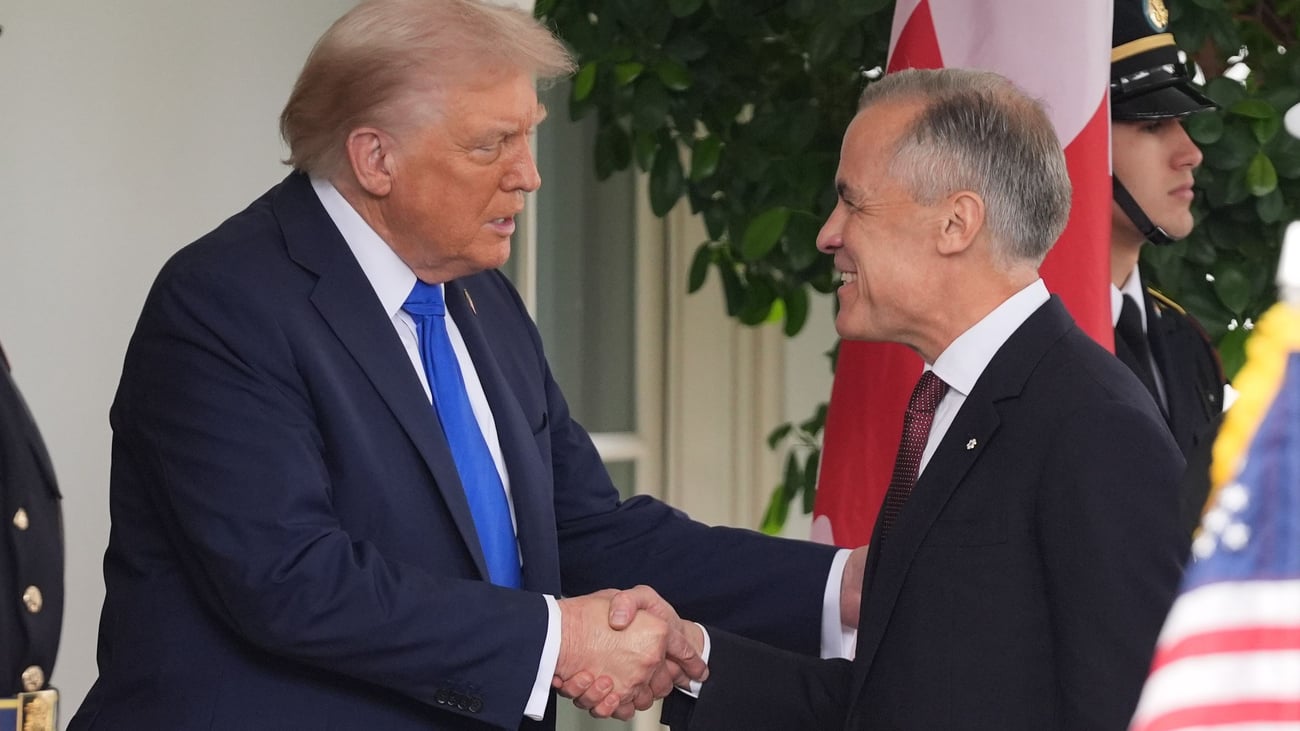
US: Three-Day Pause on Tariffs on Canadian Goods Amid Ongoing Trade Talks
Summary
- The Trump administration has paused tariffs on Canadian goods for three days, pending a deal between the US and Canada.
- The tariffs would have imposed a 50% duty on various Canadian products, including whisky, honey, cement, milk, and hockey sticks.
- The pause is seen as a temporary reprieve, with both countries still working towards a deal that would avoid further trade tensions.
- The US Chamber of Commerce has warned of the potential impact of higher tariffs on both economies, stating it could damage critical supply chains and risk 13 million American jobs dependent on trade under the U.S.-Mexico-Canada Trade Agreement.
US Tariffs on Canadian Goods Paused for Three Days
I have paused the 50% Tariffs against Canada, that were scheduled to kick in tomorrow morning for a three-day period, based on the fact that Canada and the U.S.A., subject to the finalization of documents, have a DEAL!
The Trump administration's decision to pause tariffs on Canadian goods has sparked relief among businesses and trade experts. The tariffs, which were set to take effect at midnight, would have imposed a 50% duty on various Canadian products, including whisky, honey, cement, milk, and hockey sticks, with a value of almost $30 billion Canadian dollars. This move comes after weeks of negotiations between the US and Canada, with Dominic LeBlanc, President of the King's Privy Council for Canada and Minister responsible for Canada-U.S. Trade, Intergovernmental Affairs and One Canadian Economy, and U.S. Trade Representative Jamieson Greer at the forefront of the talks.
The pause on tariffs is seen as a temporary reprieve, with both countries still working towards a deal that would avoid further trade tensions. The US Chamber of Commerce has warned of the potential impact of higher tariffs on both economies, stating that it could damage critical supply chains and risk 13 million American jobs dependent on trade under the U.S.-Mexico-Canada Trade Agreement.
The Canadian Government has yet to comment on the matter, but Prime Minister Mark Carney's willingness to negotiate and offer concessions, such as splitting toll revenue from the Gordie Howe bridge, may have contributed to the pause in tariffs. The deal is subject to finalization of documents, and both countries are racing against the clock to reach an agreement before the three-day deadline.
Relevant Legal/Regulatory Context
The Trump administration's decision to impose tariffs on Canadian goods relied on a 1930s law that allows such measures to be enforced against countries believed to be discriminating against American products. This move was met with criticism from trade experts, who argued that the president does not have emergency powers to issue unilateral international tariffs. The U.S. Supreme Court ruled on February 20, 2026, that tariffs imposed under the International Emergency Economic Powers Act (IEEPA) were unconstitutional.
The US and Canada have been negotiating for weeks regarding the tariffs, with both countries seeking to avoid further trade tensions. The negotiations are complex, involving various industries and sectors, including electronics, plastics, machinery, and industrial equipment. The U.S.-Mexico-Canada Agreement has protected many Canadian products from duty fees, but the new tariffs would affect these goods if no deal is signed in three days.
The use of tariffs as a trade tool has been a contentious issue between the US and Canada. Alongside China, Canada has been one of a few nations to fight back against the Trump administration's tariffs with its own retaliatory policies. The current situation highlights the need for clear communication and cooperation between trading partners to avoid misunderstandings and disputes.
Why It Matters
The pause on US tariffs on Canadian goods is a significant development in the ongoing trade negotiations between the two countries. Businesses and trade experts are closely watching the situation, as it may impact supply chains and trade agreements between the US and Canada. The deal has far-reaching implications for various industries, including electronics, plastics, machinery, and industrial equipment.
Lawyers and compliance officers should monitor the development of this deal, as it may affect their clients' operations and trade policies. Any changes to tariffs or trade policies can have significant implications for businesses operating in these jurisdictions. The current situation underscores the importance of staying informed about trade developments and adapting to changing market conditions.
Practical Implications
Lawyers and compliance officers should monitor the development of this deal, as it may impact supply chains and trade agreements between the US and Canada. They should also be aware that any changes to tariffs or trade policies can have significant implications for businesses operating in these jurisdictions.
Source
Source: Original reporting via AP
How does this affect you?
Get an AI analysis of this article grounded in your jurisdictions, practice areas, and any policy documents you've uploaded to Wansom.
Wansom is AI and can make mistakes.