
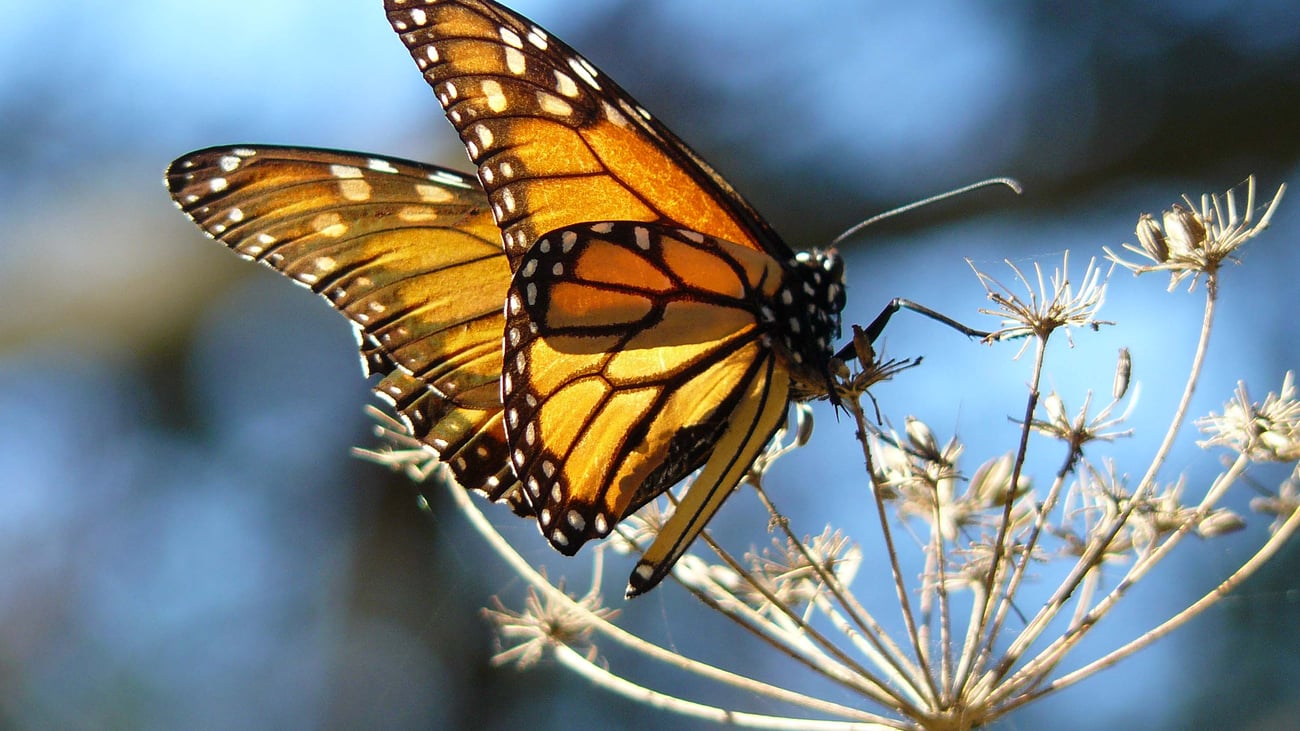
US Butterfly Ranges Shift Widespread Due to Climate Change
Summary
- A global study found that climate change is driving widespread shifts in butterfly ranges worldwide.
- The study examined 6,182 range shifts across more than 100 countries, revealing a complex picture of how butterflies are responding to environmental changes.
- Major gaps in biodiversity monitoring remain in many regions, hindering our understanding of environmental changes and practical efforts for conservation.
Why Butterfly Ranges Are Shifting
Butterflies are among the most sensitive indicators of environmental change, with their short life cycles and specific habitat needs making them vulnerable to even slight alterations in temperature and precipitation patterns. As a result, they have become an early warning system for broader ecosystem shifts, according to researchers from several institutions who conducted a global study on butterfly range shifts. The study's findings suggest that climate change is driving widespread shifts in butterfly ranges worldwide, with extreme weather events also playing a significant role. This phenomenon is not limited to any particular region, as the researchers found evidence of range shift for 1,758 butterfly species across every continent where they occur.
The Scale and Complexity of Range Shifts
The study examined 6,182 range shifts across more than 100 countries, revealing a complex picture of how butterflies are responding to environmental changes. While some species have expanded their ranges, others have experienced contractions or shifted along elevational gradients. In fact, many species exhibited multiple types of range shift, making it difficult to pinpoint a single driver of these changes. The researchers found that 80% of the species with documented range shifts had expanded their range, while 27% had experienced range contractions and 22% had shifted along elevational gradients.
Gaps in Data Collection and Implications
Despite the significant findings of this study, researchers warn that major gaps in biodiversity monitoring remain in many regions. In some countries, such as those in Europe, records exist for more than half of the butterfly species, but in most other countries, range shifts have been documented for less than 10% of butterfly species. This lack of data not only hinders our understanding of environmental changes but also has practical implications for environmental lawyers advising clients on compliance with regulations related to biodiversity monitoring and conservation.
Practical Implications
This study's findings may have practical implications for environmental lawyers advising clients on compliance with regulations related to biodiversity monitoring and conservation, particularly in regions where major gaps in data collection remain.
Source
How does this affect your business?
Get an AI analysis of this article grounded in your jurisdictions, practice areas, and any policy documents you've uploaded to Wansom.
Wansom is AI and can make mistakes.