
UN Security Council: US Proposes Expanded Sudan Arms Embargo
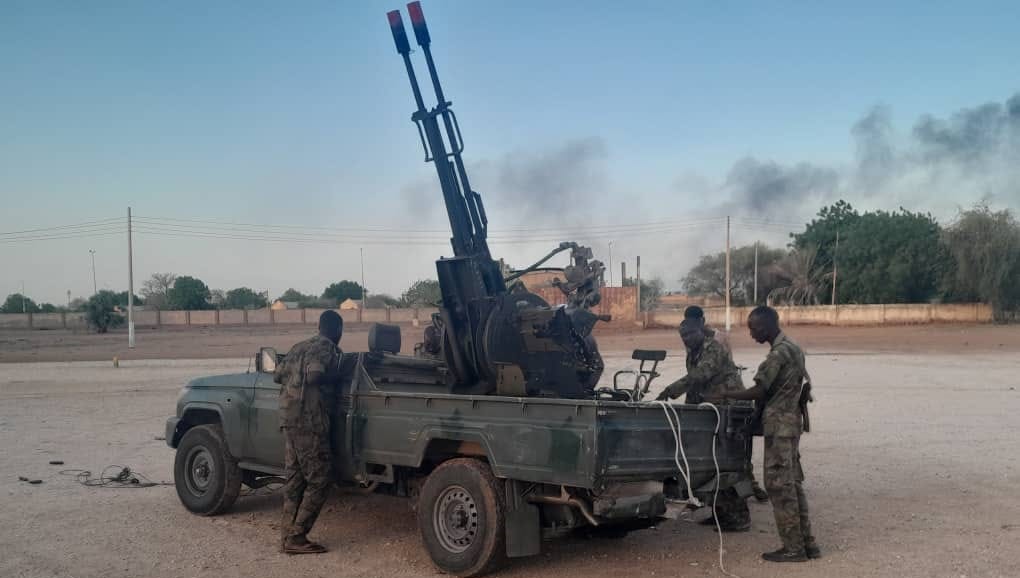
At a United Nations Security Council (UNSC) session on Sudan, Denmark, the United Kingdom, and France backed a United States proposal to expand the existing arms embargo on Darfur to cover drones and the entire country, while China, Russia, and Sudan's representative opposed it. The US initiative, presented at a Monday session, aims to curb the flow of weapons and drones fueling the war that has continued since April 2023. Massad Boulos, the US president’s senior adviser for Arab and African affairs, informed the UNSC that over 12 countries are reportedly providing various forms of military support to the two warring parties. The US proposals specifically include clarifying that the arms embargo covers drones, their components, and related technologies, as well as strengthening the capacity of the expert panel responsible for monitoring sanctions and increasing its cooperation with other UN sanctions teams. Denmark’s foreign minister, Lars Løkke Rasmussen, whose country holds the Security Council presidency for August, additionally called for the jurisdiction of the International Criminal Court (ICC) to be extended to cover the whole of Sudan. Meanwhile, Sudan's army chief and head of the Sovereignty Council, Abdelfattah El Burhan, publicly downplayed the potential impact of any additional sanctions or embargoes on the country.
This development highlights the international community's ongoing efforts to address the escalating conflict in Sudan through multilateral legal and diplomatic instruments, specifically UN Security Council resolutions. For practitioners, the potential expansion of the arms embargo signifies a tightening of international restrictions on military and dual-use goods entering Sudan, which could have far-reaching implications for trade, logistics, and any entities involved in supplying or supporting operations in the region. The call to extend ICC jurisdiction across all of Sudan is particularly significant, as it signals a push for greater accountability for war crimes, crimes against humanity, and genocide committed outside Darfur, potentially increasing legal risks for individuals and entities implicated in the conflict. The division within the UNSC (Western powers supporting, China/Russia opposing) underscores the complex geopolitical dynamics that often influence the enforcement and scope of international law.
The existing arms embargo on Darfur was imposed by the UN Security Council, operating under Chapter VII of the UN Charter, which grants it the authority to take measures to maintain or restore international peace and security. Resolution 1591 (2005) and subsequent resolutions established and refined this embargo. The US proposal seeks to amend or expand the scope of these existing resolutions, particularly by broadening the geographical application to all of Sudan and explicitly including modern warfare technologies like drones. The strengthening of the expert panel's capacity is crucial for the effective monitoring and enforcement of sanctions, as outlined in various UNSC resolutions. The call for extending the International Criminal Court's jurisdiction is rooted in the Rome Statute, which established the ICC, and previous UNSC Resolution 1593 (2005) which referred the situation in Darfur to the ICC. Extending this jurisdiction would typically require a new UNSC resolution or a referral from Sudan itself, which is unlikely under the current regime. These actions reflect the international legal framework for addressing armed conflicts, human rights violations, and accountability for international crimes.
The key international parties involved are the United States, Denmark, the United Kingdom, France (who support the expansion), and China, Russia, and Sudan's UN representative (who oppose it). The United Nations Security Council (UNSC) is the forum where these discussions are taking place. Sudan's army chief and head of the Sovereignty Council, Abdelfattah El Burhan, is a key national figure whose statements are noted. Massad Boulos, the US president’s senior adviser for Arab and African affairs, and Lars Løkke Rasmussen, Denmark’s foreign minister, are specific individuals mentioned. The International Criminal Court (ICC) is also a key institution whose jurisdiction is being discussed.
Attorneys and businesses with any connection to Sudan, particularly those involved in defense, technology, logistics, or trade, must closely monitor the ongoing discussions within the UN Security Council regarding the proposed expansion of the arms embargo. A broadened embargo, especially one explicitly covering drones and related technologies, would necessitate a thorough review of compliance protocols and supply chains to avoid potential violations of international sanctions. Furthermore, the push to extend ICC jurisdiction across all of Sudan signals an increased risk of international prosecution for individuals and entities involved in the conflict, requiring heightened due diligence and risk assessment for any operations or engagements in the country. Practitioners should advise clients to stay informed about any new UNSC resolutions or changes in international legal frameworks pertaining to Sudan, as these will directly impact their legal and operational exposure.
How does this affect you?
Get an AI analysis of this article grounded in your jurisdictions, practice areas, and any policy documents you've uploaded to Wansom.
Wansom is AI and can make mistakes.