
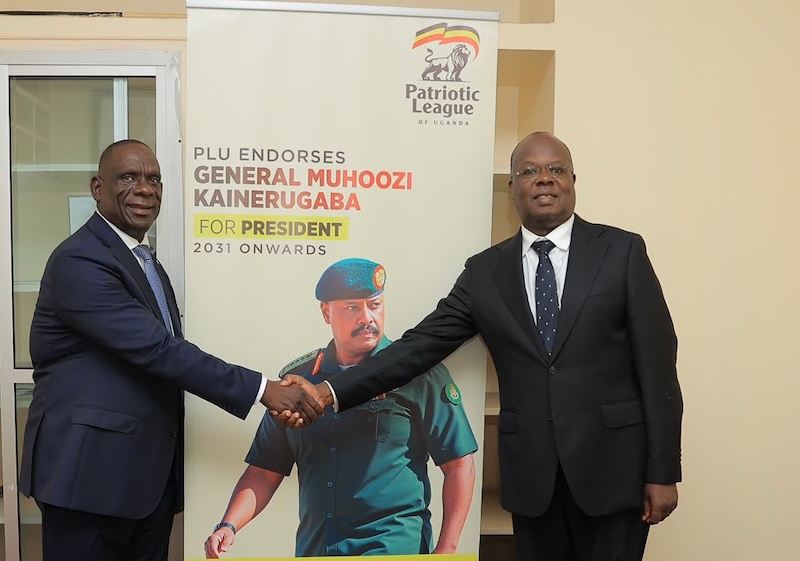
Uganda Law Society: ULS Demands Singiza Resignation Over Muhoozi Endorsement
Summary
- The Uganda Law Society has demanded the resignation of Dr Douglas Singiza, chairperson of the Judicial Service Commission.
- The demand follows Dr Singiza's alleged endorsement of Gen Muhoozi Kainerugaba's presidential ambitions.
- ULS President Isaac K. Ssemakadde cited Dr Singiza's appearance at the headquarters of the Patriotic League as the basis for the concern.
- Gen Muhoozi Kainerugaba is the Chief of Defence Forces and has declared presidential aspirations.
- The ULS argues that such actions compromise judicial independence and public trust.
ULS Demands Judicial Official's Resignation
Lawyers should note the ULS's position on judicial officers' political neutrality, as this case sets a precedent for ethical conduct expectations within the Ugandan judiciary.
The Uganda Law Society (ULS) has issued a formal demand for the resignation of Dr Douglas Singiza, who currently serves as the chairperson of the Judicial Service Commission. This significant call for accountability stems from concerns regarding Dr Singiza's alleged endorsement of General Muhoozi Kainerugaba's presidential ambitions, an action the ULS views as compromising judicial neutrality.
Isaac K. Ssemakadde, the president of the Uganda Law Society, articulated the organization's position in a public statement. The ULS's demand for Dr Singiza's departure is directly linked to his reported appearance at the headquarters of the Patriotic League, an organization associated with General Kainerugaba's political aspirations. This engagement, according to the ULS, raises serious questions about the impartiality expected of a high-ranking judicial officer.
The Alleged Endorsement and Political Context
The controversy centers on Dr Douglas Singiza's purported support for General Muhoozi Kainerugaba, who holds the position of Chief of Defence Forces and has publicly expressed his intentions to seek the presidency. The specific incident highlighted by the Uganda Law Society involves Dr Singiza's presence at the offices of the Patriotic League, an entity widely recognized for its role in advancing Gen Muhoozi Kainerugaba's political agenda.
Such an appearance by the chairperson of the Judicial Service Commission is seen by the ULS as a direct conflict with the principles of judicial independence and political neutrality. The alleged endorsement of a serving military officer with presidential ambitions by a key figure in the Ugandan judiciary has ignited a debate about the appropriate conduct for those entrusted with upholding the rule of law.
Upholding Judicial Impartiality
The Uganda Law Society's firm stance underscores the critical importance of judicial integrity in Uganda. Lawyers should note the ULS's position on judicial officers' political neutrality, as this case sets a precedent for ethical conduct expectations within the Ugandan judiciary. The core argument put forth by ULS President Isaac Ssemakadde is that any perceived alignment of a judicial official with a political candidate or movement undermines the public's confidence in the judiciary's ability to administer justice without bias.
Maintaining strict impartiality is fundamental to the functioning of an independent judiciary. Actions that suggest political favoritism or involvement, particularly from a figure as prominent as the chairperson of the Judicial Service Commission, can erode the very foundations of public trust in the legal system. The ULS's demand reflects a broader concern for safeguarding the judiciary from political influence and ensuring its perceived and actual independence.
Implications for Public Trust and Independence
This development underscores the importance of maintaining judicial independence and avoiding actions that could compromise public trust in the legal system. The ULS's call for Dr Singiza's resignation serves as a powerful reminder that judicial officers must not only be impartial but also be seen to be impartial in all their dealings, both professional and personal. Any perceived deviation from this standard can have far-reaching consequences for the legitimacy of judicial decisions and the rule of law in Uganda.
The outcome of this demand will likely influence future expectations regarding the conduct of judicial officials and their engagement with political figures or organizations. It highlights the ongoing vigilance required to protect the judiciary from political entanglement, reinforcing the principle that those who sit in judgment must remain above the political fray to ensure justice is served fairly and without prejudice.
Practical Implications
Lawyers should note the Uganda Law Society's firm stance on judicial officers' political neutrality, as this case sets a precedent for ethical conduct expectations within the Ugandan judiciary. This development underscores the importance of maintaining judicial independence and avoiding actions that could compromise public trust in the legal system.
Source
How does this affect you?
Get an AI analysis of this article grounded in your jurisdictions, practice areas, and any policy documents you've uploaded to Wansom.
Finish Reading the Full Story and the Expert Analysis.
Wansom is AI and can make mistakes.