
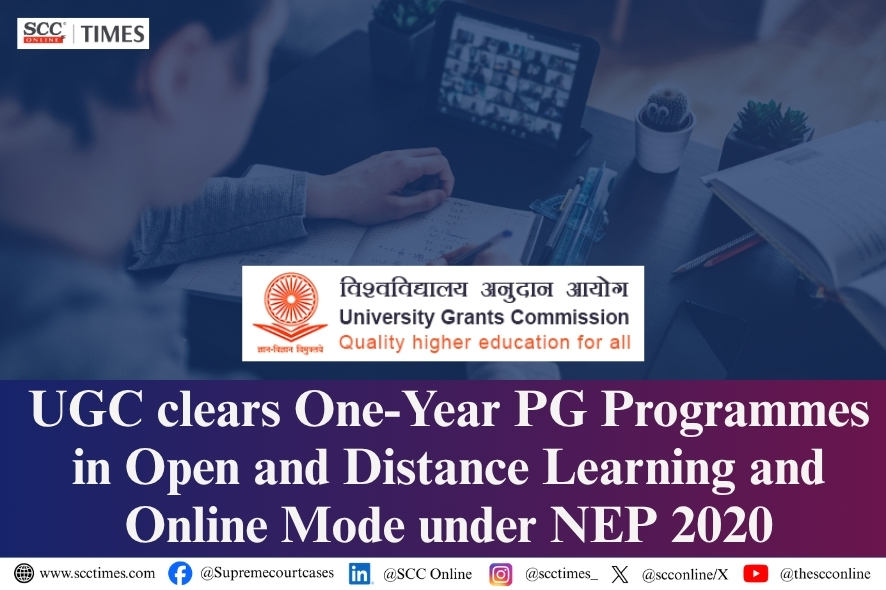
UGC Approves One-Year PG Programs Under NEP 2020
Summary
- The UGC has approved the launch of one-year postgraduate programs.
- These programs can be offered through Open and Distance Learning (ODL) and online modes.
- The initiative is a key component of the National Education Policy (NEP) 2020.
- Only UGC-recognized institutions already providing two-year PG programs in ODL or online are eligible to offer these new options.
- The one-year postgraduate courses are specifically available for eligible Honours graduates who have completed a four-year bachelor's degree.
New Pathways for Postgraduate Education
Lawyers advising educational institutions should proactively engage with their clients to interpret these new regulations and assist in developing robust compliance strategies.
The University Grants Commission (UGC) has recently given its approval for the introduction of one-year postgraduate programs, marking a significant shift in India's higher education landscape. These new offerings are designed to be delivered through both Open and Distance Learning (ODL) and online modes, expanding accessibility for a broader cohort of students across the nation. This regulatory update is a direct outcome of the National Education Policy (NEP) 2020, which aims to foster greater flexibility and innovation within academic frameworks.
Under the new guidelines, only those institutions that are recognized by the UGC and already possess the infrastructure and accreditation to offer two-year postgraduate programs in either ODL or online formats are eligible to introduce these condensed one-year options. The primary beneficiaries of these `UGC one-year PG programs NEP 2020` are eligible Honours graduates who have completed a four-year bachelor's degree, providing them with an accelerated route to advanced qualifications. This move is expected to cater to a demographic seeking quicker professional upskilling or specialized knowledge without committing to a traditional two-year master's degree.
Aligning with National Education Policy Goals
This latest directive from the UGC is deeply rooted in the foundational principles of the NEP 2020, which advocates for a more adaptable and multidisciplinary approach to higher education. The policy emphasizes creating diverse learning pathways and recognizing different forms of academic achievement, including the value of specialized, shorter-duration programs. By enabling `NEP 2020 online PG courses` and ODL options, the UGC is facilitating the policy's objective of making quality education more accessible and relevant to contemporary demands.
The expansion of `UGC distance learning postgraduate India` options through these one-year programs reflects a strategic effort to enhance the country's educational capacity and responsiveness. It also underscores the evolving nature of `India education policy one-year masters` degrees, moving towards models that can better integrate with professional development cycles. Institutions must navigate the specific `UGC open distance learning regulations` and online learning frameworks to ensure compliance, as the eligibility criteria for both the institutions and the students remain stringent, tied to existing UGC recognition and prior academic qualifications.
Implications for Educational Institutions and Legal Compliance
For educational institutions, this regulatory clearance presents both an opportunity and a challenge. While it allows for the expansion of program portfolios and the potential to attract a new segment of students, it also necessitates a thorough review of existing operational and academic frameworks. Institutions must meticulously examine the specific UGC guidelines pertaining to these one-year postgraduate programs under NEP 2020 to ensure full regulatory compliance. This includes scrutinizing curriculum design, faculty qualifications, assessment methodologies, and technological infrastructure for ODL and online delivery.
Lawyers advising educational institutions should proactively engage with their clients to interpret these new regulations and assist in developing robust compliance strategies. Ensuring that all aspects of program delivery, from admission criteria for eligible Honours graduates to degree conferment, align with the UGC's mandates is crucial for maintaining institutional accreditation and the validity of the degrees awarded. Failure to adhere to these guidelines could lead to significant reputational and legal repercussions, making diligent legal counsel indispensable during the implementation phase.
Impact on Workforce and Professional Development
The introduction of these one-year postgraduate programs holds substantial implications for the Indian workforce and the broader professional landscape. For eligible Honours graduates, these programs offer a streamlined path to acquire specialized skills and advanced qualifications, potentially accelerating their career progression or enabling transitions into new fields. This rapid upskilling mechanism is particularly relevant in a dynamic job market where continuous learning and specialized expertise are highly valued.
From an employment perspective, these new recognized qualifications will require careful consideration by employers and human resource professionals. Employment lawyers, in particular, should take note of these developments when advising clients on recruitment, credential assessment, and internal promotion policies. Understanding the equivalency and recognition of these `UGC one-year PG programs NEP 2020` will be vital for accurately evaluating candidates and ensuring fair hiring practices. The availability of these programs could also influence talent pipelines, encouraging more Honours graduates to pursue further education, thereby enriching the pool of qualified professionals in various sectors.
Practical Implications
Lawyers advising educational institutions should review the specific UGC guidelines for implementing these one-year PG programs under NEP 2020 to ensure regulatory compliance. Additionally, employment lawyers should note these new recognized qualifications for advising clients on recruitment and credential assessment.
Source
Source: Original reporting via SCC Times
How does this affect you?
Get an AI analysis of this article grounded in your jurisdictions, practice areas, and any policy documents you've uploaded to Wansom.
Wansom is AI and can make mistakes.