
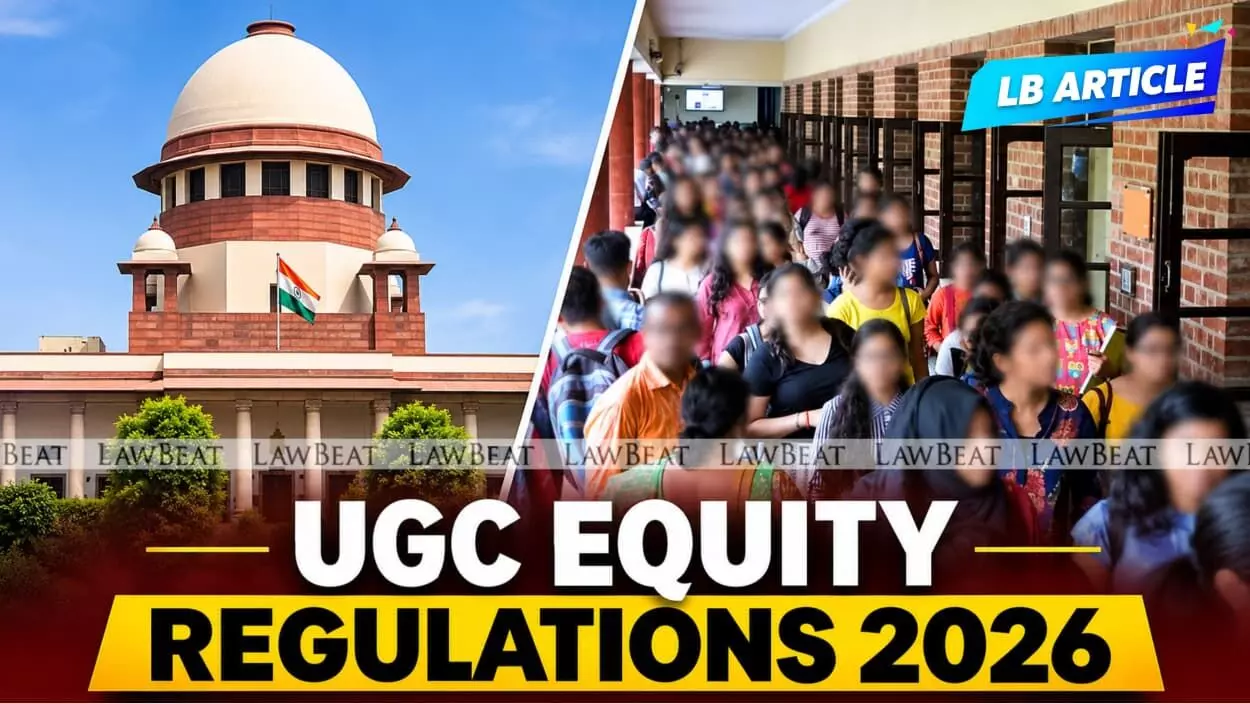
UGC Equity Regulations 2026: Supreme Court Issues Interim Stay
Summary
- The University Grants Commission (Promotion of Equity in Higher Education Institutions) Regulations, 2026, were notified on January 13, 2026, to address discrimination in HEIs, but were subsequently stayed by the Supreme Court on January 29, 2026.
- The regulations cover discrimination based on religion, race, caste, gender, place of birth, or disabilities.
- Immediately after notification, the regulations faced widespread protests, political controversy, and sharp disagreements.
- Concerns were raised about 'reverse discrimination' and the potential misuse of institutional mechanisms within the regulations.
- On January 29, 2026, the Supreme Court issued an interim stay regarding these contentious regulations, and the Central Government is now considering forming a committee to re-examine them.
New Regulations Spark National Debate
Concerns over 'reverse discrimination' and the potential for misuse of institutional mechanisms within the regulations quickly became central to the national debate.
On January 13, 2026, the University Grants Commission (Promotion of Equity in Higher Education Institutions) Regulations, 2026, were officially notified, aiming to establish a comprehensive framework for fostering equity and combating discrimination within higher educational institutions (HEIs). However, on January 29, 2026, the Supreme Court of India issued an interim stay on these regulations, directing that the older 2012 regulations would continue to operate until further orders. These `UGC Equity Regulations 2026` were designed to address various forms of discrimination, including those based on religion, race, caste, gender, place of birth, or disabilities, signaling a clear intent to promote a more inclusive environment across India's academic landscape.
However, the introduction of these `University Grants Commission Regulations India` was met with immediate and widespread public opposition. Across the nation, significant protests erupted, quickly transforming the regulations into a focal point of intense political controversy and sharp disagreements among diverse segments of society and political factions. The swift and strong public reaction highlighted the deeply sensitive nature of the issues these regulations sought to address.
Contentious Provisions and Public Outcry
A primary driver of the extensive controversy centered on concerns regarding what was perceived as 'reverse discrimination' seemingly embedded within the new rules. Critics and various groups vocalized apprehension that the regulations, despite their stated goal of `Promotion of Equity Higher Education Institutions`, could inadvertently lead to unfair treatment for certain segments of the population. Furthermore, significant worries were raised about the potential for misuse of the institutional mechanisms established by the regulations, suggesting that the implementation could be vulnerable to exploitation.
This contentious debate, particularly concerning `India caste discrimination regulations`, is currently under reconsideration by the Central Government, which is contemplating forming a special committee to re-examine them following the Supreme Court's interim stay. The ongoing nature of the controversy indicates a profound societal struggle to reconcile differing views on how best to achieve social justice and equity without creating new forms of perceived injustice.
Supreme Court Intervention and Broader Context
Amidst the escalating public outcry and political contention, the Supreme Court issued an interim stay on the regulations on January 29, 2026, finding them prima facie vague and capable of misuse. This `Supreme Court interim stay UGC regulations` underscored the gravity of the situation and the national significance of the `UGC Equity Regulations 2026 Supreme Court` involvement.
Legislating on matters of social justice in India consistently presents formidable challenges, a reality highlighted by this recent development. Caste and gender-based discrimination remain deeply entrenched within Indian society, having persisted through decades of political, economic, and social transformation. Successive economic models and political ideologies have struggled to effectively dismantle these structural inequalities, making any new regulatory framework, especially one touching upon `reverse discrimination education India`, a flashpoint for national discussion and legal scrutiny.
Practical Implications
Lawyers advising higher educational institutions or involved in social justice litigation must closely monitor the Supreme Court's proceedings and any subsequent interpretations or amendments to the UGC Equity Regulations 2026. The ongoing constitutional debate regarding equality and potential 'reverse discrimination' could significantly impact compliance frameworks for HEIs and the legal arguments in related discrimination cases.
Source
How does this affect you?
Get an AI analysis of this article grounded in your jurisdictions, practice areas, and any policy documents you've uploaded to Wansom.
Finish Reading the Full Story and the Expert Analysis.
Get the latest legal & regulatory intelligence in India
Wansom is AI and can make mistakes.