
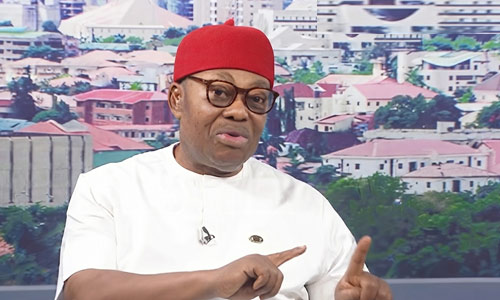
Ubani SAN: Nigeria's Judicial Electoral Power Debated
Summary
- Dr. Monday Ubani, a Senior Advocate of Nigeria, questioned the extent of judicial power in determining electoral outcomes in Nigeria.
- Ubani acknowledged that both the Constitution and the Electoral Act permit courts to intervene in electoral disputes.
- He raised concerns about the judiciary having too much power to decide who governs, stating that "the judiciary has no [...]".
- Another SAN, Sunusi Musa, observed that some governors came to power by court declaration, citing cases in Zamfara, Bayelsa, and Rivers states.
Examining Judicial Authority in Elections
When the outcome of elections, particularly for gubernatorial positions, is frequently determined by judicial declarations rather than the ballot box, it can raise questions about the legitimacy and public perception of the electoral process.
A prominent legal figure in Nigeria, Dr. Monday Ubani, a Senior Advocate of Nigeria (SAN), has initiated a significant discussion regarding the extent of judicial involvement in the nation's electoral processes. His intervention centers on a fundamental question: whether the Nigerian judiciary has been granted excessive authority in determining the ultimate outcome of elections, particularly concerning who assumes gubernatorial roles. This query underscores a growing concern within the legal community about the balance of power between the electorate and the courts.
Ubani SAN's remarks highlight a critical debate surrounding the role of Nigerian courts in electoral intervention. This perspective is reinforced by observations from another Senior Advocate of Nigeria, Sunusi Musa, who noted that in certain instances, individuals became governors not through the direct mandate of the populace but by virtue of a court's declaration. Musa specifically referenced high-profile election cases in Zamfara, Bayelsa, and Rivers states as examples where judicial pronouncements ultimately decided the leadership.
The discussion by Monday Ubani SAN on electoral disputes signals a critical juncture for legal practitioners. It prompts a re-evaluation of the judicial philosophy guiding electoral litigation and the potential for challenges to outcomes determined by court rulings. The core of the debate revolves around the appropriate limits of judicial power to decide governors, even when electoral disputes are legitimately brought before them.
Legal Foundations and Emerging Concerns
Dr. Monday Ubani, SAN, acknowledged that the legal framework governing Nigeria's electoral system explicitly grants courts the power to intervene in disputes arising from elections. Both the country's Constitution and the Electoral Act contain provisions that permit judicial oversight and resolution of such matters, establishing a clear basis for the judiciary's involvement. This legal allowance ensures that electoral grievances can be addressed through formal channels, providing a mechanism for justice and adherence to established rules.
Despite this constitutional and statutory backing for judicial intervention, Ubani's commentary suggests a deeper concern about the practical application and scope of this power. He specifically stated that "the judiciary has no [...]" – a truncated observation in the original report that nonetheless points to a perceived boundary or limitation that the judiciary should ideally respect. This implies a distinction between the courts' legitimate role in dispute resolution and a potential overreach into the fundamental democratic process of selecting leaders.
The ongoing discourse among legal experts, including Monday Ubani SAN, regarding the Electoral Act court powers in Nigeria, reflects a nuanced understanding of the law. While the courts are indispensable for upholding electoral integrity, the question remains whether their interpretations and declarations sometimes supersede the popular will, thereby altering the intended democratic outcome. This evolving judicial philosophy is a key aspect of the current legal landscape.
Implications for Democratic Governance
The central question posed by Ubani SAN — "Are We Not Giving Too Much Power To The Court To Decide Who Should Govern?" — carries significant implications for the future of democratic governance in Nigeria. When the outcome of elections, particularly for gubernatorial positions, is frequently determined by judicial declarations rather than the ballot box, it can raise questions about the legitimacy and public perception of the electoral process. The observation by Sunusi Musa, SAN, that "People Became Governors Not By The Will Of The People But By Declaration Of Court" underscores this critical tension.
This debate highlights the delicate balance required to ensure both electoral justice and the preservation of democratic principles. While the Nigerian courts electoral intervention is crucial for resolving disputes and sanctioning irregularities, the legal community is grappling with the perception that judicial decisions might, in some cases, inadvertently supplant the electorate's choice. This situation compels lawyers involved in electoral litigation to carefully consider the evolving judicial philosophy and the potential for challenges to court-declared outcomes.
The discussion initiated by Ubani SAN underscores a vital area of legal and political discourse in Nigeria. It calls for a careful examination of how judicial authority is exercised in electoral matters, ensuring that while justice is served, the fundamental principle of popular sovereignty remains paramount. The ongoing dialogue among Senior Advocates of Nigeria and other legal professionals is essential for shaping the future trajectory of electoral jurisprudence in the country.
Practical Implications
This discussion by a Senior Advocate of Nigeria signals a critical debate within the legal community regarding the scope of judicial intervention in electoral matters, prompting lawyers involved in electoral litigation to carefully consider the evolving judicial philosophy and potential challenges to court-declared outcomes.
Source
How does this affect you?
Get an AI analysis of this article grounded in your jurisdictions, practice areas, and any policy documents you've uploaded to Wansom.
Finish Reading the Full Story and the Expert Analysis.
Get the latest legal & regulatory intelligence in Nigeria
Wansom is AI and can make mistakes.