
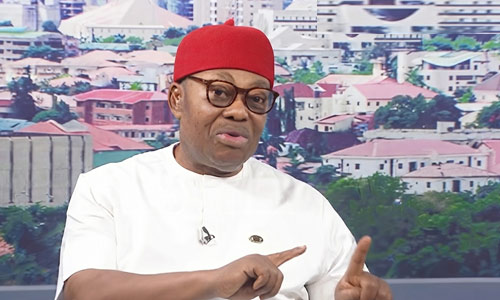
Ubani SAN: INEC ZLP Judgment Validates Law, Not Candidate Removal
Summary
- Dr. M. O. Ubani, SAN, clarified the Supreme Court's decision in `INEC v Zenith Labour Party` regarding the Electoral Act 2026.
- The Supreme Court restored the validity of disputed provisions, including Sections 77 and 84, but did not adjudicate individual candidate nominations.
- Ubani states that the validation of these sections does not automatically invalidate every nomination.
- He asserts that INEC cannot remove published candidate names based solely on this particular Supreme Court judgment.
- The ruling focused on the legal framework, not on the disqualification of specific individuals.
Ubani SAN Clarifies Supreme Court Ruling
His analysis emphasizes that while the Supreme Court's ruling in the case of `INEC v Zenith Labour Party` indeed affirmed the legality of certain contested provisions within the Electoral Act 2026, this validation does not automatically translate into the disqualification of individual candidates.
A prominent legal figure, Dr. M. O. Ubani, a Senior Advocate of Nigeria (SAN), has offered crucial insights into the implications of a recent Supreme Court decision involving the Independent National Electoral Commission (INEC) and the Zenith Labour Party (ZLP). His commentary addresses the scope and limitations of the apex court's judgment, particularly concerning its effect on candidate nominations and INEC's authority to remove names from published lists.
Dr. Ubani's analysis emphasizes that while the Supreme Court's ruling in the case of `INEC v Zenith Labour Party` indeed affirmed the legality of certain contested provisions within the Electoral Act 2026, this validation does not automatically translate into the disqualification of individual candidates. He underscored that the Supreme Court's proceedings were focused on the statutory framework itself, rather than adjudicating the specific eligibility or nomination status of any particular individual vying for office.
According to Ubani, the core message from the Supreme Court was a restoration of the legal standing of the disputed sections of the electoral law. However, this restoration of the law's validity should not be misconstrued as a blanket invalidation of all nominations that might have been made under previous interpretations or circumstances. His opinion serves as a critical clarification for political actors and the public alike, distinguishing between the affirmation of a legal principle and the specific application of that principle to individual cases.
Legal Context: Electoral Act 2026 Provisions
The Supreme Court's decision specifically addressed the validity of certain provisions within the Electoral Act 2026, notably Sections 77 and 84. These sections are central to the process of candidate nomination and the regulatory powers of INEC. Dr. Ubani highlighted that the Supreme Court's judgment in `INEC v Zenith Labour Party` effectively reinstated the full force and effect of these disputed clauses, resolving any prior ambiguities or challenges to their legality.
Crucially, the Senior Advocate pointed out that the Supreme Court's mandate in this particular case was to rule on the statutory validity of these sections, not to delve into the merits of individual candidate nominations. Therefore, while the legal framework governing nominations has been affirmed, the judgment did not undertake an assessment of whether any specific candidate's nomination process complied or failed to comply with these now-validated provisions. This distinction is vital for understanding the practical impact of the ruling.
INEC's Power to Delist Candidates
Dr. Ubani's legal opinion directly challenges any notion that INEC can unilaterally remove published candidate names based solely on the `INEC v Zenith Labour Party` judgment. He firmly stated that the Supreme Court's decision, which restored the law's validity, did not empower the electoral body to delist candidates without further specific adjudication of their individual cases. The ruling focused on the legal framework, not on the individual applications of that framework.
His assertion, "Validity Of Sections 77 And 84 Does Not Automatically Invalidate Every Nomination," serves as a direct caution against overreaching interpretations of the Supreme Court's pronouncement. It implies that for a candidate's name to be removed, there would likely need to be a separate, specific legal challenge or administrative process demonstrating non-compliance with the now-validated sections, rather than a broad application of the ZLP judgment itself.
Why This Judgment Matters
The clarification provided by Dr. M. O. Ubani, SAN, holds significant weight for the integrity and predictability of Nigeria's electoral process. It underscores the principle that judicial affirmation of a law's validity does not automatically lead to the invalidation of actions taken under that law, especially when individual rights and nominations are at stake. This distinction is critical for political parties and candidates who rely on established procedures for their participation.
This legal perspective helps to prevent potential misinterpretations of the Supreme Court's ruling, which could otherwise lead to arbitrary disqualifications or an overextension of INEC's power to delist candidates without due process. By emphasizing that the judgment did not disqualify any individual candidate, Ubani reinforces the need for specific legal grounds and processes for any candidate removal, ensuring that the restoration of the law's validity does not inadvertently undermine democratic participation.
Practical Implications
Lawyers advising political parties and candidates should understand that the Supreme Court's ruling on the Electoral Act's validity does not automatically empower INEC to remove candidate names without specific adjudication, requiring careful review of any disqualification attempts.
Source
How does this affect you?
Get an AI analysis of this article grounded in your jurisdictions, practice areas, and any policy documents you've uploaded to Wansom.
Finish Reading the Full Story and the Expert Analysis.
Get the latest legal & regulatory intelligence in Nigeria
Wansom is AI and can make mistakes.