
UASU: Kenya Parliament Receives University CBA Funding Petition
Summary
- UASU and other unions petitioned the Kenya Parliament over stalled negotiations for the 2025-2029 university CBA.
- The petition seeks parliamentary intervention to secure funding and address salary payments for approximately 30,000 public university employees.
- A key point of contention is the government's failure to provide a written commitment for funding the CBA through the National Exchequer.
- The ongoing lecturers' strike, which began on October 2, 2026, stems from unfulfilled commitments from previous return-to-work agreements.
- Significant financial disagreement exists, with the government proposing Sh9.7 billion against the unions' demand of Sh98 billion.
Parliamentary Intervention Sought Amidst University Strike
The outcome of this parliamentary intervention could set precedents for resolving future industrial disputes and managing labor relations in public institutions, particularly concerning the assurance of funding from the National Exchequer.
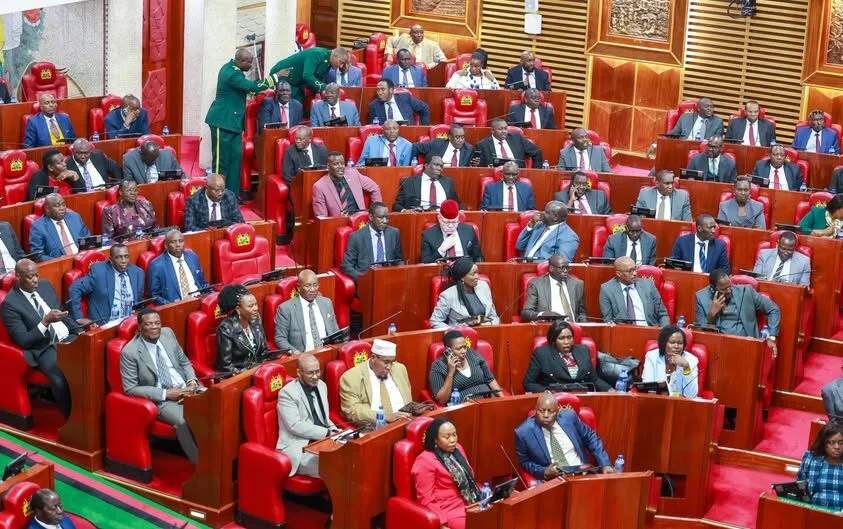
The Universities Academic Staff Union (UASU), alongside the Kenya Universities Staff Union (KUSU) and the Kenya Union of Domestic, Hotels, Educational Institutions, Hospitals and Allied Workers (KUDHEIHA), has formally submitted a petition to the Kenya Parliament. This significant move aims to compel the government to address the stalled negotiations for the 2025-2029 Collective Bargaining Agreement (CBA) for public university staff. The petition, representing approximately 30,000 university employees, was presented to the National Assembly by Speaker Moses Wetang’ula and subsequently referred to both the Departmental Committee on Education and the Departmental Committee on Labor for review.
Filed by UASU Secretary-General Dr. Constantine Wasonga Opiyo, KUSU Secretary-General Dr. Charles Mukhwaya, and KUDHEIHA National Trustee Odoyo Genga, the petition specifically requests parliamentary intervention to secure a firm funding commitment for the new agreement. It also seeks to resolve outstanding issues regarding the payment of salaries for public university employees. This action escalates pressure on the State to resolve the ongoing lecturers’ strike, which commenced on October 2, 2026, following accusations by the unions that the government and university councils had failed to honor previous commitments.
Unresolved Financial Commitments and Stalled Negotiations
At the heart of the dispute is the government's persistent failure to provide a written guarantee that the financial obligations arising from the proposed 2025-2029 CBA will be funded through the National Exchequer. The petitioners accuse the Ministry of Education and the Inter-Public Universities Councils Consultative Forum (IPUCCF) of consistently failing to uphold commitments made in prior return-to-work agreements, which were designed to avert further industrial action.
For instance, a return-to-work formula signed on November 23, 2024, stipulated that negotiations for the 2025-2029 CBA would be concluded and the agreement implemented by July 1, 2025. A subsequent agreement, dated November 5, 2025, reiterated the commitment to finalize negotiations and implement the deal within 30 days. However, both deadlines passed without the resolution of the outstanding issues. The Salaries and Remuneration Commission (SRC) further confirmed the unions' concerns on September 21, 2026, by stating that neither the Ministry of Education nor the National Treasury had provided the crucial funding assurance, leaving university employees in a state of uncertainty regarding their terms of service.
The Widening Financial Gap and Broader Demands
A significant hurdle in the ongoing negotiations is the substantial disparity in financial figures. The government's current proposal for the CBA stands at Sh9.7 billion, a stark contrast to the unions' demand of Sh98 billion. Principal Secretary for Higher Education, Beatrice Inyangala, acknowledged this gap, stating that discussions are continuing with stakeholders to reconcile these competing figures. She expressed confidence that the gap would be closed, emphasizing a shared interest in resolving the strike promptly.
However, the unions maintain that the dispute extends beyond mere salary increments. Their demands encompass the need for a binding agreement on funding, robust protection of staff welfare, and measures to ensure the long-term sustainability of public universities. This current industrial action is not isolated; it follows a 49-day strike in 2025, which concluded on November 5 of that year after a return-to-work formula was signed. That previous dispute also centered on outstanding arrears from earlier CBAs and delays in their implementation, highlighting a recurring pattern of unfulfilled government funding university staff agreement commitments.
Legal and Regulatory Implications
The UASU petition to the Kenya Parliament represents a critical development in the landscape of public sector Collective Bargaining Agreements. For legal professionals advising public universities or government bodies, this parliamentary process underscores the inherent challenges in enforcing financial commitments within such agreements, particularly when they rely on exchequer funding. The referral of the petition to the National Assembly education committee and labor committee signifies a legislative acknowledgment of the severity of the stalled public university CBA negotiations and the ongoing Kenya university lecturers strike.
The involvement of Parliament introduces a new dimension to resolving industrial disputes, potentially setting a precedent for how future funding assurances for public institutions are secured and guaranteed. The role of the Salaries and Remuneration Commission university advice is also under scrutiny, as their communication regarding the lack of funding commitment directly fueled the unions' actions. The outcome of this parliamentary intervention could set precedents for resolving future industrial disputes and managing labor relations in public institutions, particularly concerning the assurance of funding from the National Exchequer.
Practical Implications
Lawyers advising public universities or government bodies should closely monitor the parliamentary process initiated by UASU's petition, as it highlights critical issues regarding the enforceability of financial commitments in public sector Collective Bargaining Agreements and the resolution of industrial disputes through legislative intervention. This development could influence future strategies for managing labor relations and funding assurances in public institutions.
Source
How does this affect you?
Get an AI analysis of this article grounded in your jurisdictions, practice areas, and any policy documents you've uploaded to Wansom.
Finish Reading the Full Story and the Expert Analysis.
Get the latest legal & regulatory intelligence in Kenya
Wansom is AI and can make mistakes.