
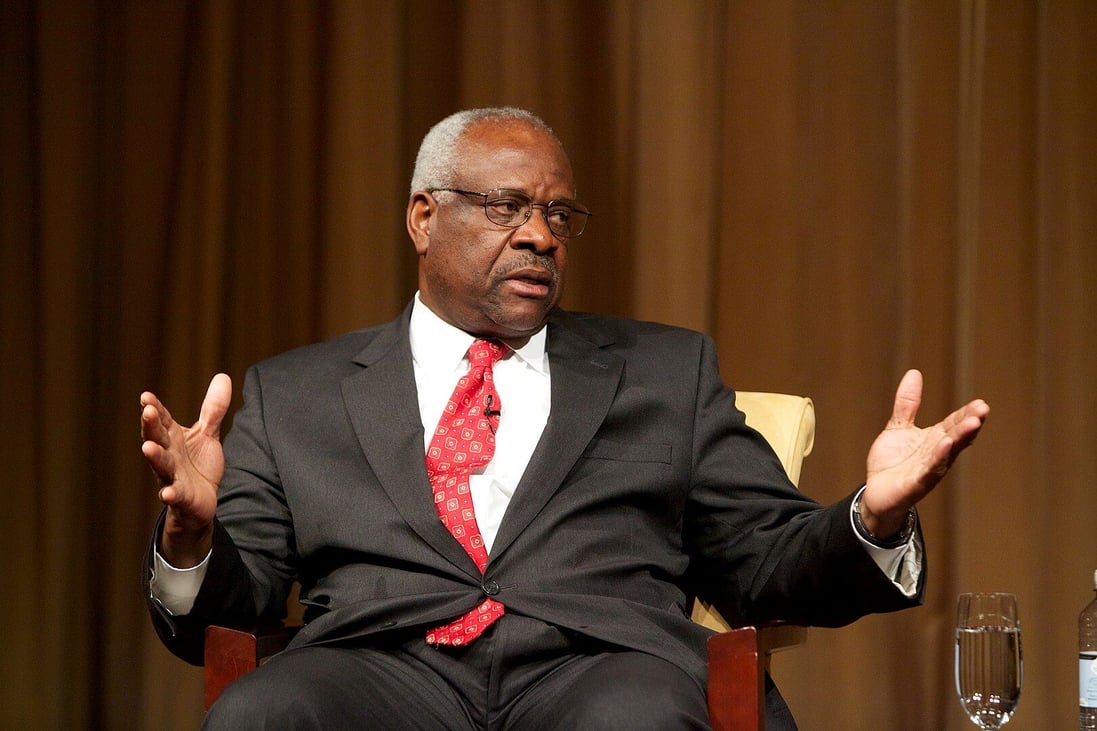
Clarence Thomas: Implicit Bias Training Dissent Warns of Compelled Speech
Summary
- The Supreme Court declined to review a challenge to California's mandatory implicit bias training for healthcare workers.
- Justice Clarence Thomas, joined by Justice Samuel Alito, dissented, arguing the state's requirement constituted "compelled speech" under the guise of continuing medical education.
- Thomas warned that the lower courts' broad interpretation of the government-speech doctrine could allow states to force private instructors to convey state-preferred messages on controversial topics.
- He called for a re-examination of First Amendment jurisprudence to prevent states from regulating private expression under the guise of government speech.
- Justice Neil Gorsuch also indicated he would have granted the petition to hear the case.
What Happened
The Clarence Thomas implicit bias training dissent, though not a binding ruling, signals a significant concern among some Supreme Court justices regarding the potential for states to mandate specific viewpoints through professional training.
The U.S. Supreme Court recently declined to hear a challenge concerning mandatory implicit bias training for California healthcare professionals, a decision that prompted a notable dissent from several conservative justices. This refusal to review the case on Monday ignited a strong reaction, particularly from Justice Clarence Thomas, who characterized the state's use of continuing medical education courses as a “cloak for compelled speech.” The underlying dispute involved a requirement for state licensing courses to include instruction on how implicit bias can contribute to unequal treatment and foster healthcare disparities.
The challenge to this mandate was brought by Azadeh Khatibi, an ophthalmologist who also teaches continuing education, alongside the nonprofit organization Do No Harm. Their lawsuit contended that this requirement infringed upon free speech principles. However, two lower courts dismissed their claims, ruling that the training requirement constituted “government speech.” This classification, according to the lower courts, exempted the mandate from First Amendment scrutiny, despite the fact that private instructors deliver these continuing education courses. The appeals court reasoned that California was utilizing these educational requirements to convey its official stance on medical practices within the state.
Legal Context
Justice Thomas, joined by Justice Samuel Alito, vehemently disagreed with the lower courts' interpretation, arguing that their ruling unduly expanded the government-speech doctrine. In his dissent, Thomas warned that a state cannot circumvent First Amendment oversight through regulation, asserting that the government-speech doctrine should not serve as a “cover for censorship” or a means of compelled speech. He emphasized the necessity for the high court to re-examine its First Amendment jurisprudence concerning government speech, asserting that the current application allowed the state to regulate private expression under the guise of its own message.
Thomas advocated for a more precise application of the government speech inquiry, focusing on whether the government is genuinely speaking or merely regulating private expression. He articulated that legitimate government speech must be “purposeful communication of a governmentally determined message by a person acting within the scope of a power to speak for the government.” Furthermore, he stressed that the government should not employ methods that curtail the speech of private individuals, as doing so indicates a shift from a speaker to a regulator. Justice Neil Gorsuch also indicated he would have granted the petition, aligning with the dissenters' concerns about the scope of state-mandated training.
Why It Matters
The Clarence Thomas implicit bias training dissent, though not a binding ruling, signals a significant concern among some Supreme Court justices regarding the potential for states to mandate specific viewpoints through professional training. Thomas explicitly warned about the implications of the lower court's logic, suggesting it could empower California to force continuing medical education instructors to disseminate state-preferred messages on contentious topics like abortion availability or the ethics of gender-affirming surgery. He argued that such an outcome, where extensive government regulation converts private messages into unprotected government speech, does not align with established Supreme Court precedents or the Constitution.
This dissent highlights a potential future battleground over the boundaries of government authority in compelling speech, particularly within regulated professions like healthcare. The concerns raised by Justice Thomas regarding “continuing medical education compelled speech” suggest that similar state-mandated training requirements, including those for California healthcare implicit bias training, could face future legal challenges. In a separate but related context, Thomas also recently urged the Court to revisit state laws restricting gun owners from carrying firearms in public, citing laws in New Jersey, New York, and California, and lamenting lower courts' approval of prohibitions on questionable grounds, further underscoring his broader skepticism toward state overreach into individual liberties.
Practical Implications
This Supreme Court dissent, while not a ruling, signals a potential future challenge to state-mandated training requirements, particularly those perceived as compelled speech under the First Amendment. Lawyers advising clients on compliance with state-mandated professional training, especially in healthcare or other regulated sectors, should monitor future cases that could redefine the scope of the government speech doctrine and its implications for mandatory educational content.
Source
How does this affect you?
Get an AI analysis of this article grounded in your jurisdictions, practice areas, and any policy documents you've uploaded to Wansom.
Finish Reading the Full Story and the Expert Analysis.
Get the latest legal & regulatory intelligence in United States
Wansom is AI and can make mistakes.