
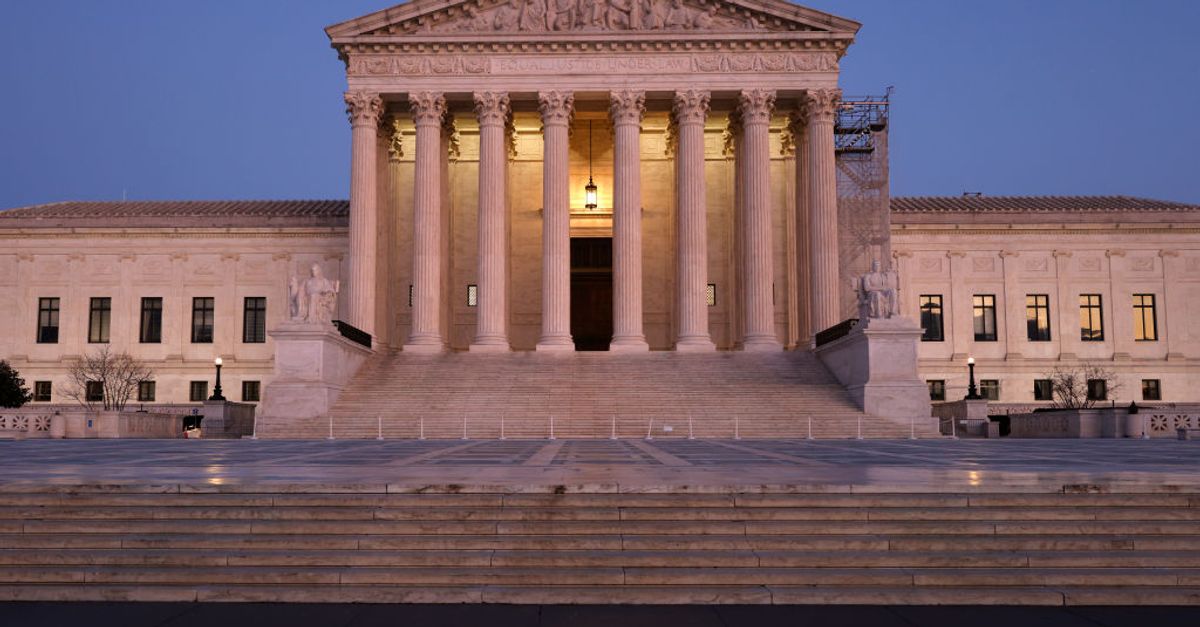
Trump v Slaughter Supreme Court Holding Leaves Scholars Scratching Heads
Summary
- The Supreme Court's decision in Trump v. Slaughter has left many law students and scholars confused about the court's holding.
- The Constitution does not contain a single 'separation of powers clause,' but rather multiple specific provisions that enforce the separation of powers.
- The court's recent decisions have created confusion by relying on an abstract conception of the separation of powers without specifying which particular provision or clause has been violated.
What Happened
The Constitution reflects many particular decisions about how to allocate and condition federal power, rather than adopting a freestanding principle of separation of powers.
The Supreme Court's decision in Trump v. Slaughter has left many law students and scholars scratching their heads, as the court's holding is not clearly articulated in its majority opinion. The chief justice's description of the court's ruling as finding statutory removal protections for Federal Trade Commissioners to be 'contrary to the separation of powers enshrined in the Constitution' only provides a partial answer to this question. This incomplete conclusion highlights a recurring issue in the court's recent separation of powers decisions, where the justices often rely on an abstract and freewheeling conception of the separation of powers without specifying which particular provision or clause has been violated.
Legal Context
The Constitution does not contain a single 'separation of powers clause.' Instead, it comprises multiple specific provisions that enforce the separation of powers in distinct ways. As law professor John F. Manning notes, the Constitution reflects many particular decisions about how to allocate and condition federal power, rather than adopting a freestanding principle of separation of powers. This nuanced understanding of the Constitution's structure is essential for accurately evaluating claims of separation of powers violations. By failing to specify which provision or clause has been violated, the court's recent decisions have created confusion among scholars and practitioners alike.
Why It Matters
The implications of this decision extend beyond the specific case at hand, as it highlights a broader trend in the Supreme Court's separation of powers jurisprudence. The court's failure to clearly articulate its holdings and specify which particular provision or clause has been violated raises concerns about the allocation and conditionality of federal power. Lawyers should be aware of these implications, particularly in relation to future separation of powers cases, where the court may continue to rely on an abstract conception of the separation of powers without providing clear guidance on how to apply this principle in practice.
Practical Implications
Lawyers should watch for the implications of this decision on future separation of powers cases, particularly in relation to the allocation and conditionality of federal power.
Source
How does this affect you?
Get an AI analysis of this article grounded in your jurisdictions, practice areas, and any policy documents you've uploaded to Wansom.
Wansom is AI and can make mistakes.