
Trump Threatens Mexico: Double Tariffs Over Migrant Caravans
Summary
- Donald Trump threatened to double tariffs on Mexico if it does not stop migrant caravans currently traversing its territory.
- Mexican President Claudia Sheinbaum stated no caravans have reached the U.S. since Trump's second term began and detailed two current caravans.
- On January 20, 2025, Trump issued executive orders suspending U.S. refugee and asylum programs, effectively ending possibilities for migrants at the border.
- Existing tariffs on Mexico include 25% on vehicles, 50% on certain metals, and 17% on tomatoes, with 25% also applied to goods not meeting USMCA rules-of-origin.
- The U.S.-Mexico-Canada Agreement is currently under annual review after the U.S. declined its renewal in July.
Renewed Tariff Threats Amid Migrant Surge
Donald Trump issued a stark warning to Mexico this week, threatening to double existing tariffs if the nation does not immediately halt the progression of migrant caravans through its territory.
Former President Donald Trump issued a stark warning to Mexico this week, threatening to double existing tariffs if the nation does not immediately halt the progression of migrant caravans through its territory. Speaking via social media on Thursday, Trump asserted that "Huge CARAVANS are forming and beginning their illegal march through Mexico," and insisted that Mexico must stop them, or face "IMMEDIATELY DOUBLED" tariffs. This aggressive stance directly links trade penalties to Mexico's migrant policy Trump seeks to enforce.
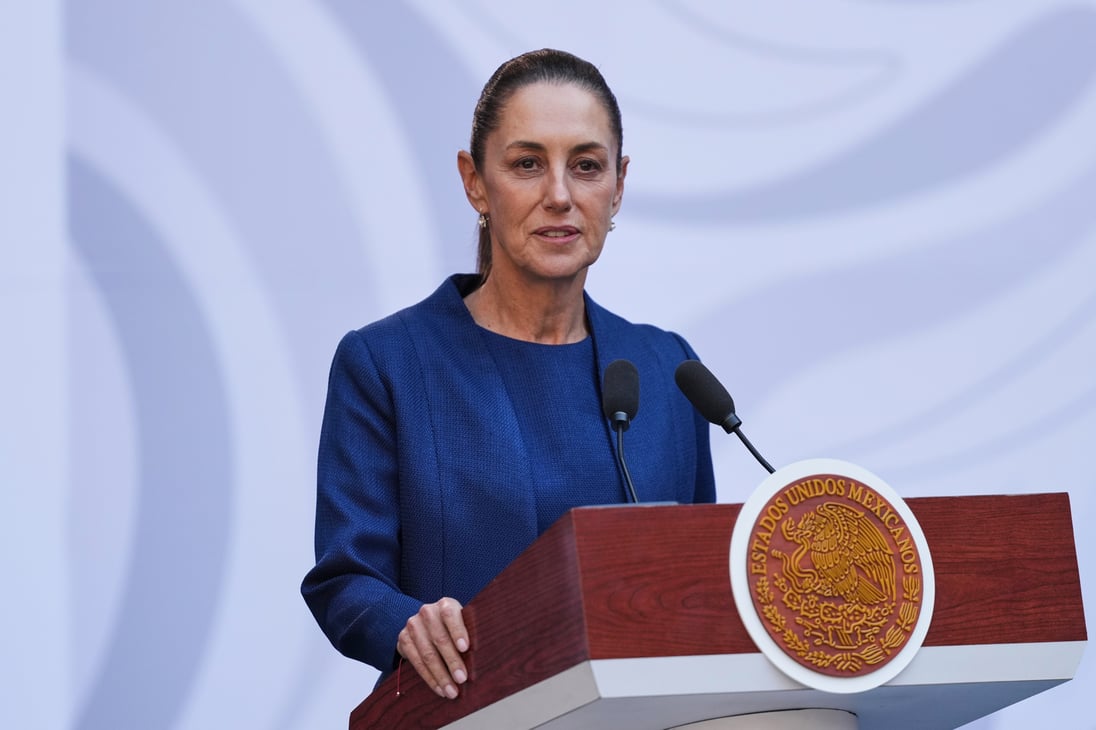
Mexican President Claudia Sheinbaum, during her morning press conference on Thursday, directly addressed Trump's concerns. She confirmed that no migrant caravan has successfully reached U.S. soil since the commencement of his second presidential term. Sheinbaum further detailed the current situation, noting the presence of two distinct caravans within Mexico. One, originating in the southern state of Chiapas, initially comprised approximately 600 individuals but has since diminished to about 100. The second, larger group consists of roughly 1,500 people, predominantly Honduran nationals.
Echoing the U.S. administration's firm stance, U.S. Homeland Security Secretary Markwayne Mullin also took to social media on Thursday, stating, "We will utilize all assets to make sure our borders are secure. This illegal migrant caravan will NOT be allowed to enter our country. Full stop." Meanwhile, President Sheinbaum had also presented a new security strategy aimed at addressing violence in Michoacan state just days prior, on Sunday, November 9, 2025, at the National Palace in Mexico City.
Mexico's Approach to Migrant Caravans
The Mexican government actively engages with individuals within these migrant caravans, communicating the significant challenges and near impossibility of gaining entry into the United States. President Sheinbaum articulated this policy, explaining, "We inform people who are in the caravan that it is very difficult to move to the United States; that if their goal is to reach the United States, they will not be able to achieve it because there is no such possibility."
She further clarified that while options exist for migrants to remain in Mexico under specific conditions, the vast majority ultimately choose to return to their home countries once they comprehend the insurmountable obstacles to crossing the U.S.-Mexico border. Mexico's National Migration Institute, supported by the National Guard, maintains contact with these groups, with Sheinbaum emphasizing that the human rights of migrants are respected and that no repressive measures are employed.
Broader Context of US-Mexico Trade and Immigration
These renewed Trump Mexico tariffs migrant caravans threats arrive in a complex political and legal landscape. On January 20, 2025, Trump had already implemented two significant executive orders: one suspending the U.S. Refugee Admissions Program and another halting the use of the U.S. Customs and Border Protection’s CPB One app. These actions effectively eliminated avenues for refugee or asylum status for migrants arriving at the U.S. border, underscoring a stringent approach to immigration.
The timing of Trump's latest tariff warnings, coming shortly after a major Democratic victory in midterm elections that secured majorities in both the House and Senate, has been noted by experts. Despite the shift in congressional power, analysts suggest this outcome is unlikely to alter Trump's consistent stance on Mexico, particularly concerning his immigration and trade policies. Throughout his previous presidential term, Trump frequently leveraged the threat of increased tariffs against Mexico over immigration and security issues.
The U.S.-Mexico-Canada Agreement (USMCA) currently governs trade relations between the two nations and is set to remain in effect until at least 2036. However, the U.S. declined to renew the agreement in July, opting instead for annual reviews or until all three signatory countries agree to an extension. Existing Trump trade threats Mexico have already resulted in tariffs, including a 25% levy on imported passenger vehicles and light trucks, a 50% tariff on steel, aluminum, and copper, and a 17% tariff on tomatoes. Additionally, goods failing to meet USMCA rules-of-origin requirements are subject to a 25% tariff, highlighting the potential for significant USMCA tariff implications should Trump's latest threats materialize.
Practical Implications
Lawyers advising clients on US-Mexico trade must monitor these political developments closely, as renewed tariff threats could significantly impact import/export costs and supply chain stability under the USMCA. Compliance officers should assess potential tariff exposures and review existing trade agreements for clauses related to such political pressures.
Source
Source: Original reporting via CN
How does this affect you?
Get an AI analysis of this article grounded in your jurisdictions, practice areas, and any policy documents you've uploaded to Wansom.
Finish Reading the Full Story and the Expert Analysis.
Get the latest legal & regulatory intelligence in United States
Wansom is AI and can make mistakes.