
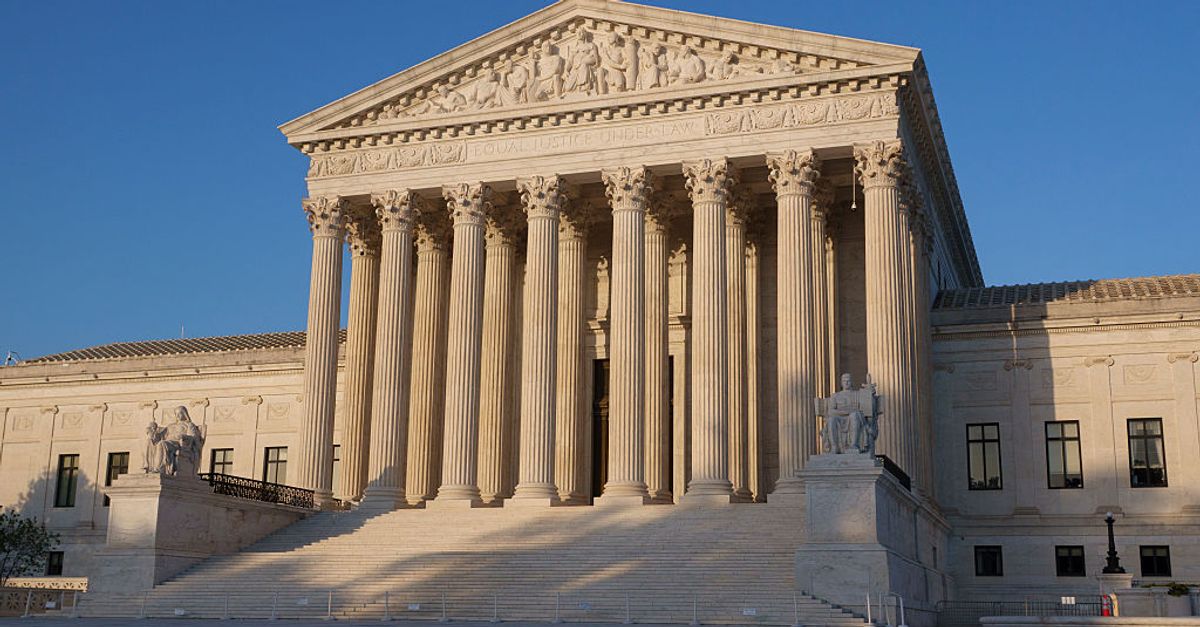
Trump Admin, Texas: Urge SCOTUS to Uphold Deportation Agreement
The Trump administration and Texas on Thursday afternoon urged the Supreme Court to maintain their consent agreement, which abolished a Biden-era regulation allowing immigration judges to suspend some deportation proceedings. U.S. Solicitor General D. John Sauer argued that challengers—three cities led by Baltimore and an immigrant legal services group—are improperly attempting to leverage their request to join the case into a broader attack on the merits of the district court's approval of the agreement. Texas, for its part, contended that granting the challengers' request would revive a rule declared unlawful, renew fiscal and sovereign injuries to the state, and unsettle a final judgment accepted by the actual parties. The Biden-era regulation, adopted by the Executive Office for Immigration Review (EOIR) in 2024, provided for "administrative closure," allowing judges to suspend deportation proceedings in specific scenarios, such as when a crime victim or witness seeks immigration relief while their appeal is ongoing. Texas had initially sued in June, arguing the EOIR lacked the authority to adopt this rule.
This case holds significant legal implications for immigration law, administrative law, and the balance of power between federal agencies and states. The availability of administrative closure is a critical procedural tool for immigration judges to manage their dockets and provide relief in humanitarian cases, directly impacting the lives of non-citizens facing deportation. The dispute also raises important questions about the standing of third-party entities, such as cities and advocacy groups, to intervene in and challenge consent decrees reached between states and the federal government. The Supreme Court's decision on this request will shape the procedural landscape for immigration courts and the scope of executive authority in immigration policy.
The legal context primarily involves the authority of the Executive Office for Immigration Review (part of the Department of Justice) to promulgate regulations governing immigration court procedures, specifically concerning administrative closure. This implicates principles of administrative law and the scope of agency rulemaking power. The case is currently before the Supreme Court, following a federal district court's approval of the consent agreement. Key parties include the Trump administration (represented by U.S. Solicitor General D. John Sauer), the State of Texas, the Supreme Court of the United States, the Executive Office for Immigration Review (EOIR), and the challenging parties: three cities (led by Baltimore) and an immigrant legal services group. The federal district court in Wichita Falls, Texas, initially approved the agreement.
Immigration attorneys should closely monitor the Supreme Court's decision regarding this request, as it will directly influence the availability and application of administrative closure in deportation proceedings. The ability of immigration judges to suspend cases is a vital mechanism for managing caseloads and allowing individuals to pursue other forms of relief. Attorneys representing municipalities or advocacy organizations should pay close attention to the arguments concerning standing and intervention in cases involving federal-state consent decrees. The broader implications for executive branch authority in immigration matters remain a key area of focus for all legal professionals in this field. The outcome of the challengers' request to pause the district court's ruling is not yet reported.
How does this affect you?
Get an AI analysis of this article grounded in your jurisdictions, practice areas, and any policy documents you've uploaded to Wansom.
Finish Reading the Full Story and the Expert Analysis.
Get the latest legal & regulatory intelligence in United States
Wansom is AI and can make mistakes.