
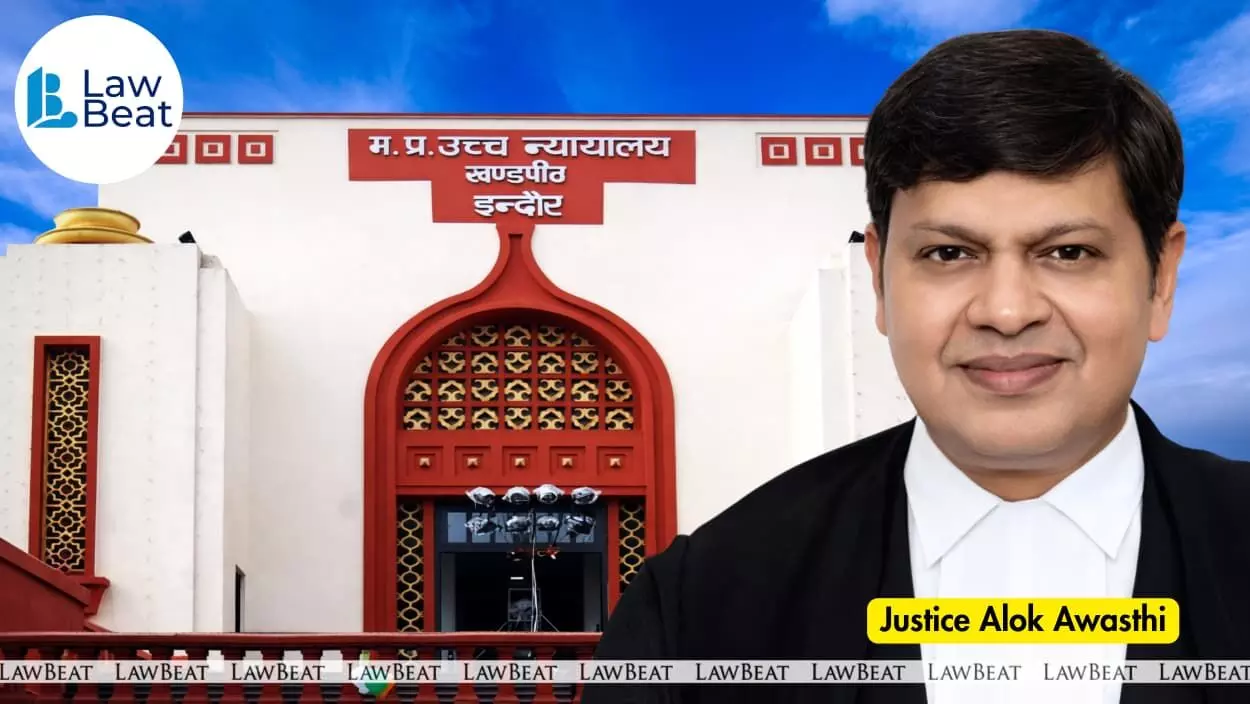
Touching Private Parts Not Necessary: MP HC Says Holding A Child's Hand With Sexual Intent Is Sexual Assault U
What Happened
Home / News updates Touching Private Parts Not Necessary: MP HC Says Holding A Child's Hand With Sexual Intent Is Sexual Assault Under POCSO X Catching a Minor Girl's Hand With Sexual Intent Is Sexual Assault Under POCSO, Rules MP High Court The MP High Court has held that holding a minor girl's hand with sexual intent is itself "sexual assault" under Section 7 of the POCSO Act, upholding a mason's three-year sentence. The Madhya Pradesh High Court at Indore has held that catching hold of a minor girl's hand with sexual intent is enough to amount to "sexual assault" under Section 7 of the Protection of Children from Sexual Offences (POCSO) Act, even where no private part of the child is touched. Justice Alok Awasthi dismissed an appeal filed by a mason, Yusuf, against his conviction and three-year rigorous imprisonment. The appeal was heard on 28 October 2026 and decided on 16 November 2026 under Section 374 of the Code of Criminal Procedure, 1973, read with Section 415 of the Bharatiya Nagarik Suraksha Sanhita, 2023. The court affirmed the 30 July 2024 judgment of the 13th Additional Sessions Judge/Special Judge (POCSO Act), Indore, and directed him to surrender immediately to serve the remaining sentence. According to the prosecution, the incident took place on 23 September 2020 in Raoji Bazar, Indore. Yusuf had been working as a mason at the girl's home since the previous day. The girl, a Class 7 student aged about 12 years, was alone on the first floor as her parents and elder sister had gone to the market. The accused went upstairs, caught hold of her hand with sexual intent, and did not let go despite her protests. She screamed, freed herself, ran to the gallery and bolted the door. He allegedly threatened to kill her if she disclosed it. She called her mother, narrated everything to her parents on their return, and an FIR was lodged the same day. The trial court convicted Yusuf under Sections 354 and 354-A(1)(i) of the Indian Penal Code and Sections 7/8 and 11/12 of the POCSO Act. It acquitted him under Section 506 (Part II) IPC and the SC/ST (Prevention of Atrocities) Act, as it was not proved that he knew the girl's caste, and the specific threat was missing from her court testimony. Applying Section 42 of the POCSO Act, it sentenced him only under Section 7/8 , to the minimum three years with a fine of Rs 5,000. Court Rejects the "Only Caught the Wrist" Argument Before the High Court, advocate Aman Patidar, appearing for Yusuf, argued that there was no allegation of sexual assault, as the only allegation was of catching hold of the wrist. He submitted that Section 7 was not attracted and the sentence was excessive. Government Advocate Ambuj Patel appeared for the State and supported the conviction. The court found the girl's age "conclusively proved" by a birth certificate and school scholar register, which were never challenged. It found her testimony consistent on all material points, backed by her mother and an independent witness who confirmed Yusuf's presence at the spot and his flight afterwards. Minor variations in the evidence were held to be natural and not material. The bench reiterated that the "sole reliable testimony of the victim" of a sexual offence can sustain a conviction. On the central legal question, the court looked at Section 7 , which also covers any "other act with sexual intent which involves physical contact without penetration." Noting that the girl was alone, was asked personal questions about her age and class, and that the accused refused to release her hand despite protest, the bench held that the act "squarely constitutes" sexual assault. It added: "The act of catching the hand with sexual intent is itself sufficient." The court said the presumptions under Sections 29 and 30 of the POCSO Act further strengthened the prosecution case, and the defence of false implication over a wage dispute was "unsubstantiated." The bench also clarified that the acquittals under the SC/ST Act and Secti
Source
Source: Original reporting via LawBeat
How does this affect you?
Get an AI analysis of this article grounded in your jurisdictions, practice areas, and any policy documents you've uploaded to Wansom.
Finish Reading the Full Story and the Expert Analysis.
Get the latest legal & regulatory intelligence in India
Wansom is AI and can make mistakes.