
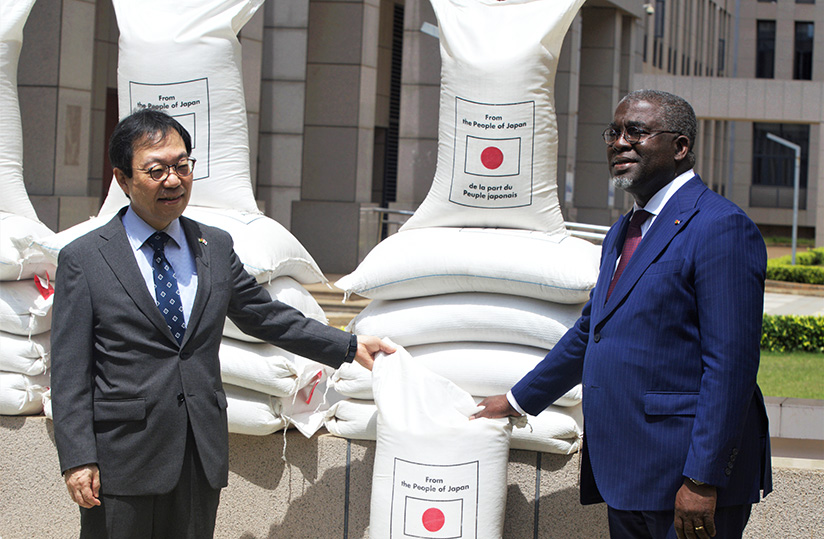
Togo Government: Japanese Rice Kovié Rots Amid State-Sold Imports
Summary
- Tonnes of locally grown Kovié rice are currently spoiling in storage facilities across Togo.
- Simultaneously, the Togo government is actively commercializing Japanese rice within the domestic market.
- This government action is creating unfair competition, negatively impacting local rice farmers.
- The policy is seen as inconsistent with the government's role in protecting local producers and with national food sovereignty objectives.
What Happened
Lawyers representing local agricultural producers in Togo could assess potential legal avenues to challenge government import policies that demonstrably create unfair competition, particularly when they prioritize the commercialization of foreign goods over local produce.
A stark contradiction has emerged within Togo's agricultural landscape, drawing attention to the challenges faced by local producers. Reports indicate that substantial quantities of Kovié rice, cultivated domestically, are currently left to rot in various storage facilities across the nation. This unfortunate situation represents a significant loss for the local farming community and the broader economy.
Concurrently, the Togo government has embarked on a program to commercialize Japanese rice within the domestic market. This initiative involves the active sale of imported rice by governmental entities. The simultaneous occurrence of these two events — the spoilage of local produce and the promotion of foreign goods by the state — has ignited a debate regarding fair market practices and support for indigenous agriculture.
Policy Contradictions
This governmental strategy has been widely criticized for creating an environment of unfair competition, directly impacting the livelihoods of Togo's rice farmers. The commercialization of Japanese rice by the state is perceived as undermining the economic viability of local rice cultivation, making it difficult for domestic producers to compete effectively.
Critics argue that this approach stands in direct opposition to the principles of food sovereignty, a policy framework that emphasizes a nation's right to define its own food and agriculture systems. The government, which is ostensibly responsible for protecting and promoting local producers, appears to be pursuing a Togo rice import policy that inadvertently harms these very stakeholders, raising questions about the coherence of its overall Togo agricultural policy.
Legal and Economic Ramifications
The current scenario, where Kovié rice is rotting in Togo while the government actively sells Japanese rice, highlights a significant issue of market distortion. This direct intervention by the state in favor of imported goods creates an uneven playing field, constituting a form of unfair competition within the agricultural sector. Such practices can have profound economic consequences for local farmers, potentially leading to reduced incomes, market share loss, and disincentives for future investment in domestic production.
From a legal and compliance standpoint, this situation warrants close examination. Lawyers representing local agricultural producers in Togo could assess potential legal avenues to challenge government import policies that demonstrably create unfair competition, particularly when they prioritize the commercialization of foreign goods over local produce. Furthermore, compliance officers should diligently monitor government procurement and trade policies to ensure adherence to fair competition principles and to evaluate their potential impacts on domestic industries, ensuring that national policies genuinely support the growth and sustainability of local agriculture.
Broader Impact and Future Outlook
The undermining of local initiatives by the very government tasked with their protection poses a serious threat to Togo's long-term food sovereignty goals. The contradiction between the stated aim of supporting local agriculture and the practical outcome of promoting imported rice while local harvests spoil, reveals a critical policy gap. This dynamic not only affects the immediate economic well-being of individual rice farmers but also erodes confidence in the agricultural sector as a whole.
Addressing this fundamental incoherence is essential for fostering a resilient and equitable agricultural landscape in Togo. A coherent Togo agricultural policy would prioritize the effective commercialization and utilization of local produce, thereby strengthening national food security and ensuring that the efforts of domestic farmers are duly valued and supported. The current situation serves as a stark reminder of the challenges in balancing trade policies with the imperative of nurturing local industries.
Practical Implications
Lawyers representing local agricultural producers in Togo should assess potential legal avenues to challenge government import policies that create unfair competition, particularly concerning the commercialization of foreign goods over local produce. Compliance officers should monitor government procurement and trade policies for adherence to fair competition principles and potential impacts on domestic industries.
Source
Source: Original reporting via Icilome
How does this affect you?
Get an AI analysis of this article grounded in your jurisdictions, practice areas, and any policy documents you've uploaded to Wansom.
Finish Reading the Full Story and the Expert Analysis.
Get the latest legal & regulatory intelligence in Togo
Wansom is AI and can make mistakes.