
Togo: 2026 2027 Finance Laws Adoption by Council
Summary
- Togo's Council of Ministers adopted rectifying finance laws for 2026 and the main finance law for 2027 on October 22, 2026.
- The 2026 rectifying budget was revised to 2,744.2 billion CFA francs, a 0.3% decrease from the initial figure, with a projected deficit of 3.4% of GDP.
- The 2027 budget is set at 2,684.1 billion CFA francs, a 2.5% reduction from the initial 2026 budget, influenced by international economic conditions.
- Key priorities for the 2027 budget include security, social cohesion, economic transformation, and significant investment in the 2026-2031 Government Roadmap.
- The Council also approved the ratification of the Samoa Agreement, a new partnership framework signed on November 15, 2023, between the EU and African, Caribbean, and Pacific States.
Key Legislative Decisions in Togo
The adopted rectifying finance law for 2026 revises the state budget to 2,744.2 billion CFA francs.
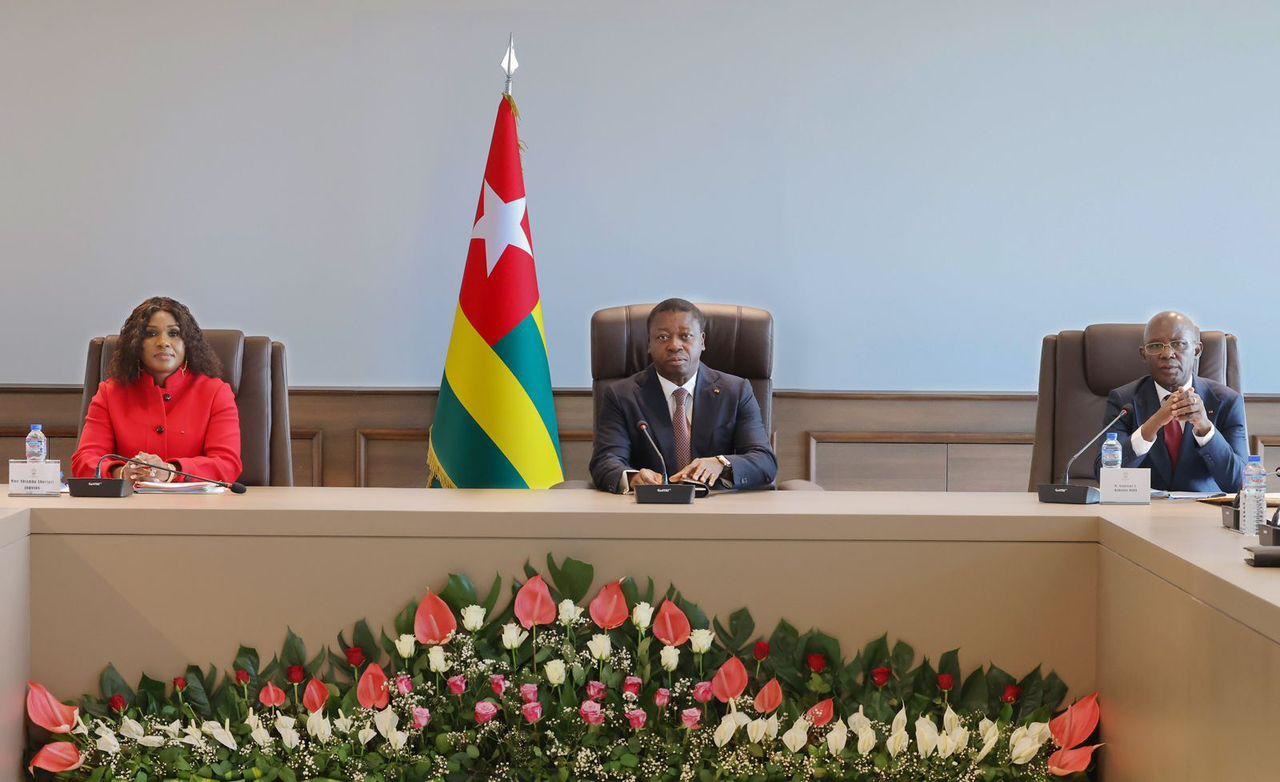
Togo's Council of Ministers convened on Thursday, October 22, 2026, under the leadership of President of the Council of Ministers Faure Essozimna GNASSINGBE. During this session, the Council undertook a comprehensive agenda, which included the examination and adoption of four distinct draft laws, the review of one draft decree, listening to a communication, and making several nominations. A central focus of the meeting was the approval of two critical financial legislative instruments: a rectifying finance law for the current fiscal year, 2026, and the primary finance law for the upcoming fiscal year, 2027.
The adopted rectifying finance law for 2026 revises the state budget to 2,744.2 billion CFA francs. This figure represents a marginal decrease of 0.3% from the initial budget of 2,751.5 billion CFA francs. Concurrently, the projected budget deficit for 2026 is set at 247.6 billion CFA francs, which corresponds to 3.4% of the nation's Gross Domestic Product. These adjustments reflect a responsive approach to current economic conditions.
Looking ahead, the Council also approved the draft finance law for 2027. This budget is balanced in both resources and expenditures at 2,684.1 billion CFA francs. This figure marks a 2.5% reduction compared to the initial 2026 budget of 2,751.5 billion CFA francs, a change primarily attributed to the prevailing international economic climate. Beyond these financial measures, the Council also authorized the ratification of a significant international partnership agreement.
Navigating Economic Headwinds and Strategic Adjustments
The decision to implement a rectifying finance law for the 2026 fiscal year was made within a challenging global economic landscape. This environment is characterized by ongoing geopolitical tensions, a notable surge in hydrocarbon prices, and an anticipated deceleration in worldwide economic growth. The primary objective of this revised legislation is to recalibrate the state's budgetary projections, ensuring they accurately reflect the evolving economic situation and its direct implications for public finances.
The adjustments embedded within the 2026 rectifying budget are designed to achieve several critical goals. Foremost among these is the mitigation of the adverse effects stemming from increased hydrocarbon prices on the populace's living standards. Furthermore, the government aims to redirect specific internal resources towards bolstering efforts in the fight against terrorism. A key strategic component involves mobilizing additional external financing to ensure the continued execution of development projects and structural reforms, all of which are integral to the government's 2026-2031 Roadmap.
Forward-Looking Fiscal Strategy for 2027
The formulation of the 2027 finance law occurred against a backdrop of international geopolitical and commercial tensions, persistent economic uncertainties, and increasingly stringent financing conditions. This legislative framework is fundamentally aligned with the broader implementation of the government's 2026-2031 Roadmap, outlining a strategic vision for the nation's development over the medium term.
National priorities underpinning the 2027 budget are diverse and comprehensive, encompassing security, social cohesion, economic transformation, enhanced access to basic social services, job creation initiatives, and targeted support for vulnerable populations. To advance these objectives, a substantial 490 billion CFA francs has been earmarked for investment spending dedicated to programs within the 2026-2031 Government Roadmap. This investment is strategically distributed across key areas: 227.2 billion CFA francs for the “Protect” axis, 143.5 billion CFA francs for the “Transform” axis, 97 billion CFA francs for the “Gather” axis, and 22.4 billion CFA francs allocated to transversal programs. These allocations underscore the government's commitment to fortifying national security and resilience, improving access to essential services, consolidating social and territorial cohesion, and accelerating economic transformation through sectors like agriculture, industrialization, infrastructure development, and job creation. The government also intends to reinforce budgetary discipline, optimize revenue mobilization, and enhance the efficiency of public expenditures, while simultaneously accelerating digitalization, monitoring projects, and ensuring transparency in public financial management to deliver tangible benefits to the population.
Strengthening International Partnerships
In addition to the critical financial legislation, the Council of Ministers also adopted a draft law authorizing the ratification of a significant international partnership agreement. This agreement, known as the Samoa Agreement, establishes a new framework for collaboration between the European Union and its member states, on one side, and the members of the Organization of African, Caribbean, and Pacific States, on the other. The formal signing of this pivotal accord took place on November 15, 2023, in Apia, Samoa. Its ratification by Togo signifies the nation's commitment to fostering and leveraging these international relationships for mutual benefit.
Source
How does this affect you?
Get an AI analysis of this article grounded in your jurisdictions, practice areas, and any policy documents you've uploaded to Wansom.
Finish Reading the Full Story and the Expert Analysis.
Get the latest legal & regulatory intelligence in Togo
Wansom is AI and can make mistakes.