
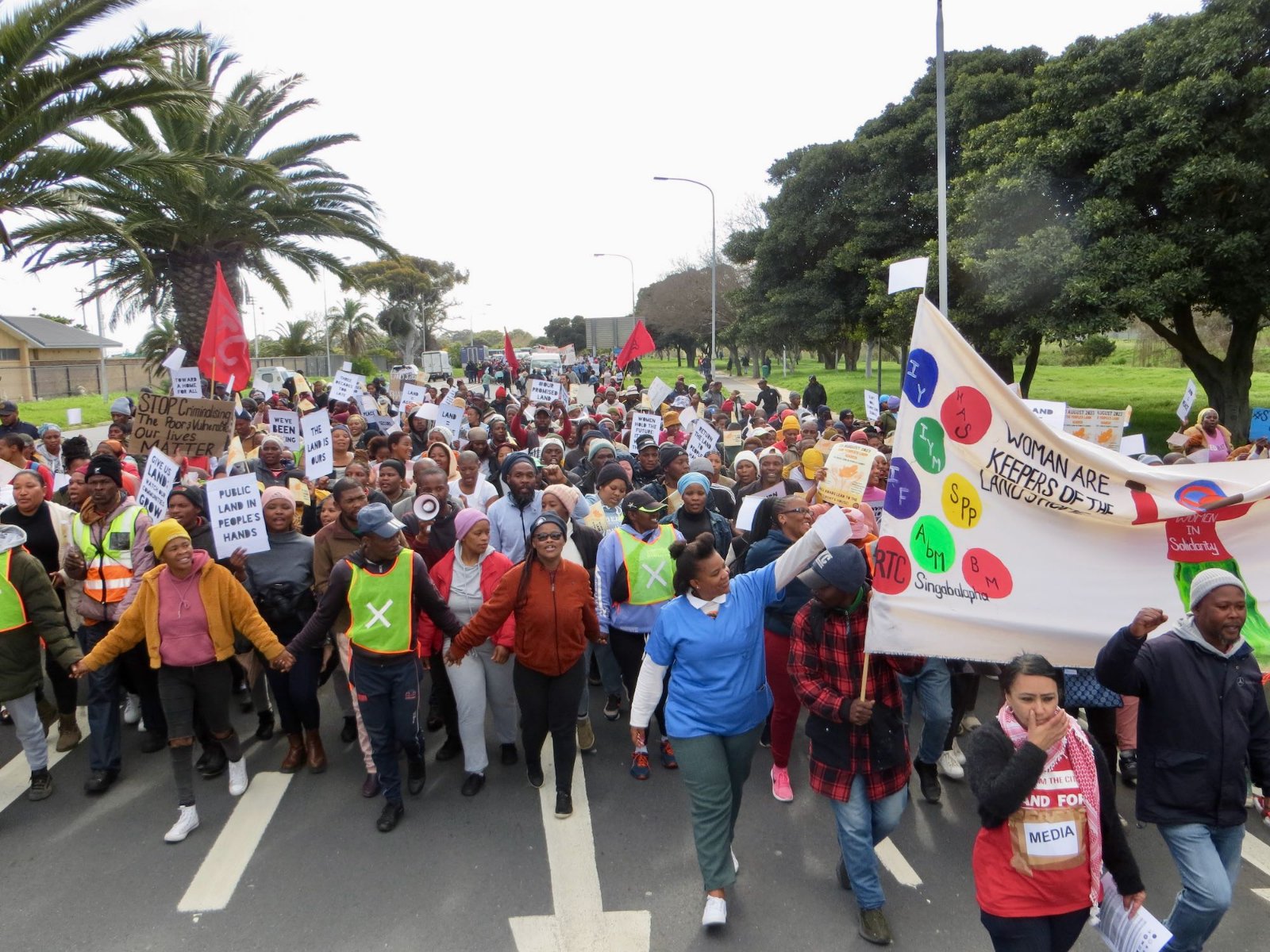
Three Years of Silence On State Land, Communities Pay the Cost
Summary
- Communities applied for 24 state land parcels across three provinces under the State Land Disposal Act of 1961 on August 23, 2023.
- Three years later, these applicants, including groups like Reclaim The City, are still awaiting a response from government departments.
- Despite presidential instructions and the HDA identifying 12 suitable sites, the process has stalled due to alleged non-cooperation from various government entities.
- Formal correspondence to Public Works Director-General Sifiso Mdakane requesting intervention has gone unacknowledged.
- The inaction by the HDA, DPWI, and DHS has left communities in precarious living conditions, absorbing the costs of governmental coordination failures.
Three Years of Unanswered Applications for State Land
The prolonged silence from government entities, despite formal applications and repeated follow-ups, has left communities bearing the significant human and social costs of systemic inaction.
Communities across South Africa, including those in the Western Cape, Gauteng, and KwaZulu-Natal, formally applied for access to 24 parcels of state-owned land for housing on August 23, 2023. These applications were submitted in accordance with the State Land Disposal Act of 1961, following prescribed procedures. Despite diligently engaging with government processes and repeatedly seeking updates from key institutions such as the Housing Development Agency (HDA), the Department of Public Works and Infrastructure (DPWI), and the Department of Human Settlements (DHS), these communities have been met with a prolonged silence for three years.
This extended period of inaction has persisted despite applicants adhering to every requested step, including participation in government engagements and assessments. A formal letter, specifically addressed to Public Works Director-General Sifiso Mdakane, sought an update and intervention regarding the significant delays. However, this crucial correspondence, concerning the homes and futures of thousands, has never been acknowledged by the department. This lack of response underscores a broader issue of governmental accountability and communication.
The initial applications were part of a concerted effort by social movements and civil society organizations to secure land for housing, highlighting the urgent need for accessible and affordable accommodation. The subsequent silence from the responsible government bodies, particularly the HDA, DPWI, and DHS, has effectively stalled a process that was initiated by the communities themselves in good faith, under the established legal framework.
Inter-Departmental Stalling and Identified Sites
Following a march and direct engagement with government officials on the same day the applications were lodged, August 23, 2023, President Cyril Ramaphosa issued an instruction for the DHS and DPWI to establish an Inter-Ministerial Task Team. This team was intended to process the land applications efficiently. Concurrently, the HDA was tasked with assessing the suitability of the applied-for parcels for housing development.
The HDA subsequently identified 12 of the 24 parcels as suitable for housing. However, despite this positive assessment, these identified sites remain either vacant or currently occupied, with no progress towards implementation. The HDA has attributed this lack of advancement to difficulties in securing cooperation from other government entities. Specifically, the agency reported that the Department of Public Works and Infrastructure, the Western Cape Government, and the City of Cape Town have not responded to invitations for meetings, thereby impeding the HDA's ability to move the process forward.
Communities and civil society organizations, including groups like Reclaim The City, engaged constructively with the HDA on the proposed Terms of Reference for the process, submitting amendments aimed at ensuring transparency and accountability. Despite these efforts and the HDA's own findings, the overall process has stalled, with the HDA citing internal challenges with other government departments and the City of Cape Town as a primary reason for the ongoing delays.
The Human Cost of Bureaucratic Inaction
The prolonged silence from government entities, despite formal applications and repeated follow-ups, has left communities bearing the significant human and social costs of systemic inaction. Many of the applicants currently live in precarious conditions, including overcrowded backyards, informal settlements, and insecure tenancies, often without security of tenure. One prominent example is the Reclaim The City community, whose residents occupy Ahmed Kathrada House in Green Point, Cape Town, and are directly impacted by these delays.
These communities were not consulted on the internal disagreements or institutional wrangling occurring between the HDA, DPWI, DHS, and the City of Cape Town. They are not responsible for the failures of government departments to coordinate effectively, yet they are the ones absorbing the consequences of this administrative paralysis. Every month that passes without a resolution means families continue to endure substandard living conditions, waiting on a process that the government itself initiated and for which communities have fulfilled all requirements.
This situation highlights a critical systemic issue where inter-departmental coordination failures directly impede the progress of vital housing initiatives, leaving vulnerable communities in limbo. The cost of these State Land Disposal Act 1961 application delays is not neutral; it is a burden disproportionately carried by those who followed the rules and are most in need of secure housing.
Practical Implications
Lawyers advising clients on state land applications under the State Land Disposal Act 1961 should anticipate significant delays and inter-departmental coordination challenges, potentially necessitating proactive engagement or legal remedies to compel government action. This article highlights a systemic issue that could impact client timelines and strategies for securing state-owned land.
Source
How does this affect you?
Get an AI analysis of this article grounded in your jurisdictions, practice areas, and any policy documents you've uploaded to Wansom.
Finish Reading the Full Story and the Expert Analysis.
Get the latest legal & regulatory intelligence in South Africa
Wansom is AI and can make mistakes.