
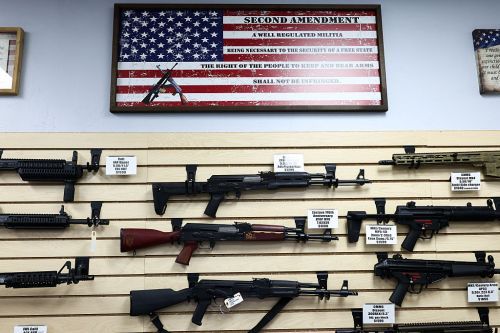
The Second Amendment and an "unusually Dangerous" Approach to Dicta
What Happened
Please note that SCOTUS Outside Opinions constitute the views of outside contributors and do not reflect the opinions of SCOTUSblog or its staff.***On November 10, The New York Times published an article suggesting that a major piece of the Supreme Court’s Second Amendment jurisprudence is premised on a misquote by the late Justice Antonin Scalia in his 2008 majority opinion in D.C v. Heller, in which the court held that there was an individual right to possess firearms. The essence of the piece is that Scalia used the phrase “dangerous and unusual” to describe those weapons not protected by the right to keep and bear arms, attributing this terminology primarily (or perhaps solely) to the 18th century British jurist William Blackstone. Yet Blackstone’s writings instead use the phrase “dangerous or unusual.”According to the Times piece, “[t]he consequences of Justice Scalia’s use of ‘and’ rather than ‘or’ have been profound”: “Since all guns are dangerous, courts have had to focus instead on determining whether a type of firearm is unusual, often parsing marketing data and consumer surveys to gauge a weapon’s popularity.” Presumably, if Scalia had used the phrase “dangerous or unusual,” it would be easier for legislatures to ban even certain commonly owned firearms because dangerousness alone would be sufficient to bring a category of weapons outside the amendment’s protective sphere.The Times story has reverberated quickly, with strong backlash from conservative lawyers and s
Source
How does this affect you?
Get an AI analysis of this article grounded in your jurisdictions, practice areas, and any policy documents you've uploaded to Wansom.
Finish Reading the Full Story and the Expert Analysis.
Get the latest legal & regulatory intelligence in United States
Wansom is AI and can make mistakes.